
Blog
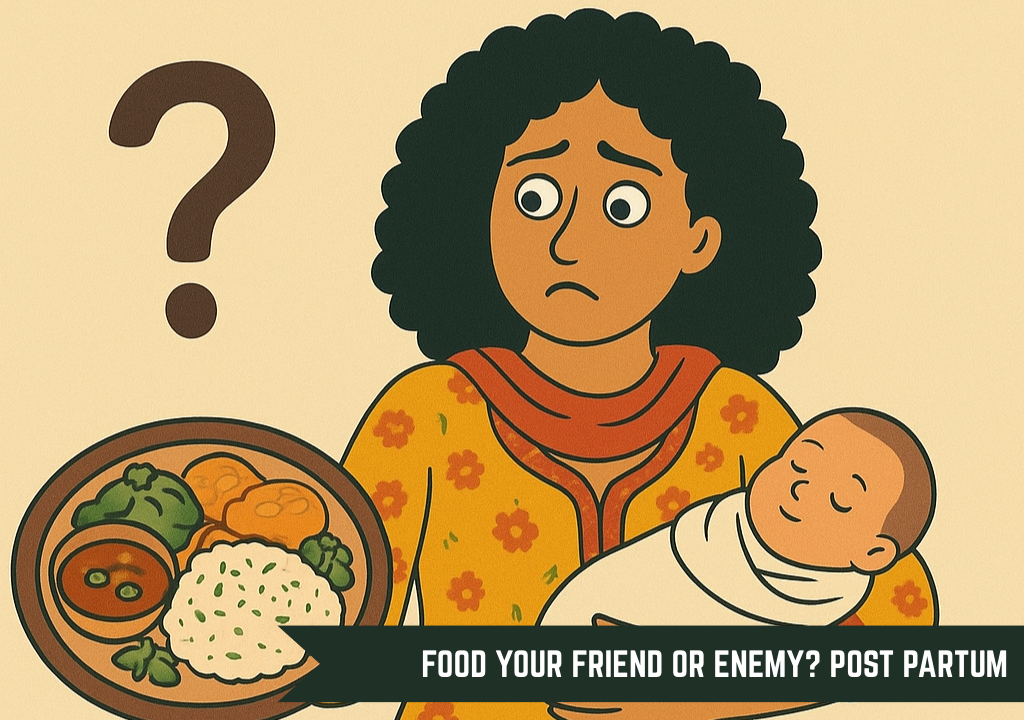
Food — Your Friend or Enemy After Postpartum?

The Postpartum Food Dilemma: –
The postpartum stage is a season of extremes — love so deep it feels overwhelming, exhaustion so heavy you can’t remember the last time you slept well, and emotions that can swing from joy to tears in minutes.
In the middle of all this, there’s food.
Some days, food feels like the warm hug you need — a bowl of soup, a piece of chocolate, or the comfort of your favourite bread. Other days, food feels like an enemy — causing bloating, sugar crashes, or guilt after overeating on something you didn’t really want in the first place.
But here’s the truth: after giving birth, food becomes more than “just” fuel. It’s a partner in your recovery. The choices you make in your kitchen can help you heal faster, boost your mood, and provide the energy you need for both your baby and yourself.
Why Food Matters More After Birth: –
During pregnancy, your body works 24/7 to grow a baby. After birth, the focus shifts to healing and restoring your own body while still possibly providing nourishment through breastfeeding.
You’ve likely experienced:
Hormonal shifts that affect mood, appetite, and digestion
Blood loss can cause low iron and fatigue
Weakened muscles from pregnancy and labor
Increased calorie needs if breastfeeding
Interrupted sleep, which changes hunger and fullness signals
All of these make postpartum nutrition not just important, but essential.
When Food Becomes a Friend: –
A friend is someone who supports you, lifts you, and helps you become your best self. Food can do exactly that when you choose options that nourish and heal.
1. Healing from Within: –
Whole, unprocessed foods provide the nutrients your body needs to repair tissues, regulate hormones, and support mental health. Think:
Fresh fruits & vegetables for vitamins, minerals, and antioxidants
Lean proteins like chicken, fish, lentils, and eggs for tissue repair
Healthy fats like avocado, ghee, nuts, and olive oil for hormone production
2. Steady Energy Levels: –
Nutrient-dense meals prevent sugar highs and crashes, giving you consistent energy for diaper changes, feedings, and the unpredictable schedule of new motherhood.
3. Mood Support: –
Certain nutrients — especially omega-3 fatty acids, vitamin D, and magnesium — play a role in brain health and can help reduce the risk of postpartum depression. Salmon, walnuts, chia seeds, pumpkin seeds, and leafy greens are excellent sources.
Example “Friend Foods” for Postpartum Recovery
Oats with nuts and seeds — boost milk supply, provide fiber for digestion, and keep you full
Lentil soup — gentle on the stomach, high in plant-based protein and iron
Steamed vegetables with ghee — supports hormone balance and gut health
Greek yogurt with berries — improves gut flora and supports immunity
Bone broth — rich in collagen for tissue repair and joint health
When Food Feels Like the Enemy: –
An enemy drains your energy, makes you feel worse, or slows down your healing. Unfortunately, certain foods can do just that during postpartum recovery.
1. Processed & Sugary Foods: –They may give a temporary boost, but they cause blood sugar spikes and crashes, leaving you more tired and irritable.
2. Highly Salty Snacks: –
Chips, instant noodles, and packaged soups can cause bloating and water retention.
3. Excess Caffeine: –
Too much coffee or tea can make it harder to sleep (and if you’re breastfeeding, it may affect your baby’s sleep too).
4. Greasy, Fried Foods: –
This slow digestion contributes to inflammation and can make you feel sluggish.
The Emotional Side of Eating After Birth: Postpartum eating isn’t just about hunger — it’s deeply tied to your emotions. Sleep deprivation, stress, and hormonal fluctuations can lead to:
Cravings for quick comfort foods
Mindless snacking while feeding the baby
Eating too little because you’re too busy or trying to prepare meals
This is why mindful eating matters. Pausing to ask, “Am I truly hungry, or am I
stressed, bored, or lonely?” can help you make better choices.
A mother I once spoke to shared her turning point:
“I realized I was skipping lunch most days and then eating an entire bag of
Cookies/ Makhana at night. Once I started prepping simple meals in the morning, my
energy and mood completely changed.”
Cultural Wisdom in Postpartum Foods:
Many cultures have traditional postpartum foods that focus on healing:
India: Ghee, fenugreek, garlic, and warming spices to support digestion
and milk supply
Mexico: chicken soup with vegetables for nourishment
, Middle East: Dates and nuts for energy and nutrient replenishment
These traditions often align with modern nutritional science — focusing on warmth, hydration, and easily digestible, nutrient-rich meals.
Practical Tips for Making Food Your Ally: –
1. Stock Healing Foods — Keep fresh produce, whole grains, eggs, and protein sources ready.
2. Prep in Batches — Soups, casseroles, and overnight oats save time and energy.
3. Hydrate Often — Aim for at least 2–3 liters of water daily; add lemon or cucumber for flavor.
4. Include Protein at Every Meal — Supports tissue repair and keeps you satisfied longer.
5. Forgive Slip-Ups — One indulgent meal doesn’t undo your progress. Balance is key.
Sample One-Day Healing Postpartum Meal Plan: –
Breakfast: Oatmeal with almond butter, flaxseeds, and banana
Snack: Greek yogurt with honey and blueberries
Lunch: Lentil soup with whole grain bread and a side salad
Snack: A handful of walnuts and a cup of herbal tea
Dinner: Grilled salmon, steamed spinach, and sweet potato mash
Evening: Warm chamomile tea with a slice of dark chocolate
The Bottom Line: –
Food can be a loyal friend or a silent enemy during the postpartum period. Choosing nutrient-rich, healing foods gives your body the best chance to recover, support emotional health, and fuel you for the beautiful — and demanding — journey of motherhood.
Be gentle with yourself. Eat with intention. Remember — every bite is an act of self-care that benefits both you and your baby