
Blog
Natural Remedies for Teething Pain That Actually Work

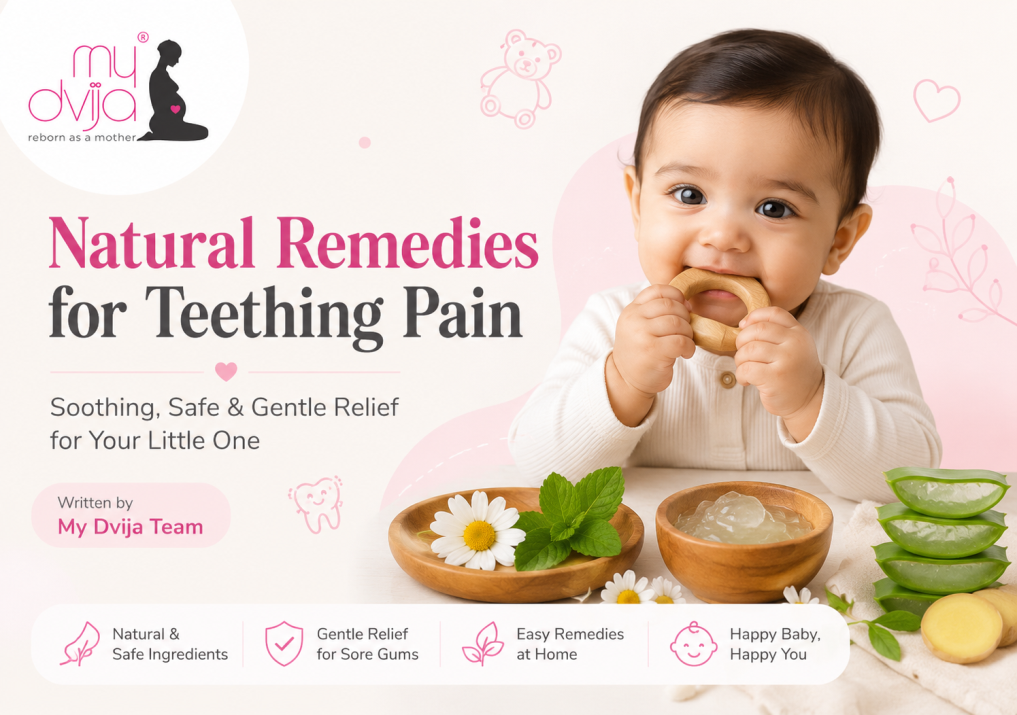
Natural Remedies for Teething Pain That Actually Work (And Ones to Avoid)
My daughter was teething her first molars at 14 months and I was desperate.
Two weeks of broken sleep, a baby who’d stopped eating properly, and a gum so swollen I could see the ridge of the tooth under the surface. I’d already tried the chilled teething ring. I’d done the gum massage. I’d used one of those teething gels from the medical store and it worked for approximately four minutes.
That’s when I went down the rabbit hole of teething remedies — and found a bewildering mix of things that genuinely help, things that do nothing, and a few things that are actually dangerous. Nobody had separated them out clearly for me, so I’m doing it here.
The good news: Indian households have been managing teething pain effectively for generations, long before there was a teething section at the pharmacy. Most of what works is already in your kitchen or your grandmother’s recipe box. You just need to know which is which.
Why Teething Hurts — The Actual Mechanism :-
Understanding why it hurts helps you understand which remedies address the cause and which ones just temporarily mask it.
When a tooth is erupting, it pushes upward through the jawbone and then through the gum tissue. This creates localised inflammation — the gum swells, blood flow to the area increases, and the tissue becomes tender and sensitive. The internal pressure of the tooth pushing outward is constant, which is why teething discomfort doesn’t come and go the way hunger does. It’s a dull, persistent ache that spikes when anything presses on the gum — including sucking and biting.
Effective remedies work in one of two ways: they either reduce the inflammation in the gum, or they provide counter-pressure that offsets the internal pressure of the erupting tooth. The ones that do neither — that only numb or distract briefly — are the ones that stop working after a few minutes and leave you back where you started.
1. Cold Pressure — The Most Effective Natural Remedy :-
Cold does two things at once: it reduces inflammation (the same reason you ice an injury) and the firm pressure of something cold on the gum provides counter-pressure against the erupting tooth. This is why it works better than most commercial remedies and why the effect lasts longer than a teething gel.
How to use it:
- Chill a clean, damp muslin cloth in the fridge — not the freezer. Frozen is too intense for a baby’s gum and can actually cause tissue damage with prolonged contact. Chilled, not frozen, is the rule for everything teething-related
- A chilled teething ring — again, fridge not freezer. Hold it against the swollen gum or let the baby gnaw on it
- For babies 8 months and older who are on solids: a chilled banana, cucumber stick (peeled, chilled), or a cold piece of soft fruit held in a mesh feeder. The chewing action plus the cold is very effective
- Your own cold finger — wash your hands, run cold water over your finger, and press firmly along the swollen gum. The warmth comes back quickly but you can re-cool as needed
The key word with all of these is firm. Gentle stroking doesn’t help much. Firm, direct pressure on the swollen area is what provides relief.
2. The Ajwain Potli — An Indian Remedy That Actually Has Science Behind It :-
This one comes from traditional Indian practice and it works — not just anecdotally, but because of what’s actually in it.
Ajwain (carom seeds) contains thymol, which has proven anti-inflammatory and mild analgesic properties. When a warm potli of ajwain is pressed gently against the cheek or jaw on the side where the tooth is erupting, the warmth improves circulation and the thymol absorbs transdermally — through the skin — to the tissue underneath.
It’s also soothing for the tummy troubles that often accompany teething. Babies swallow more saliva during teething, which can cause digestive discomfort and loose stools. Ajwain pressed gently in circles on the tummy addresses both problems at once.
The MyDvija Herbal Ajwain Potli is pre-made with ajwain, sendha namak, and other traditional herbs — you warm it (in a dry pan or microwave for a few seconds), test on your inner wrist so it’s comfortably warm not hot, and apply. No preparation, no measuring, no worrying about whether you’ve used the right amount. Many parents keep one on the counter during the teething months.
3. Something Safe to Chew On :-
Biting provides direct counter-pressure on the erupting tooth and gum, which is instinctively what teething babies are trying to do with everything they touch. The question is just what you give them that’s effective and safe.
The problem with most commercial teething toys is that they’re designed for earlier teething — the front teeth at 6–10 months — when the bite force is relatively light. By the time first molars arrive at 13–19 months, many plastic teething rings get bitten through. And a bitten-through toy becomes a choking hazard.
What works better at the molar stage:
- Firm, food-based chews that dissolve safely. MyDvija’s Wheat Teething Baked Sticks are made from whole wheat flour, jaggery, cow ghee, ajwain, and jeera — baked firm enough to give the gum real counter-pressure but they dissolve without posing a choking risk. The ajwain again helps with the digestive side effects of teething. Safe from 7 months, and one of the few snacks you can give specifically before a feed to ease gum pressure before latching
- A chilled carrot stick for babies over 9 months — held by the parent, not given independently. The firmness is excellent for molar pressure. Never leave a baby unsupervised with raw carrot
- A frozen banana in a mesh feeder for younger babies — the cold plus the texture plus the sweetness makes this one of the most universally accepted teething remedies
4. Clove — With Important Caveats :-
Clove oil is one of the oldest known dental remedies. Eugenol — the active compound in cloves — is genuinely analgesic and anti-inflammatory. It’s used in actual dental procedures. Your grandmother recommending clove for toothache was not wrong.
The caveats matter, though:
- Undiluted clove oil is far too strong for a baby’s mouth and can cause chemical burns to the gum tissue. This is not a theoretical risk — it happens
- Even diluted clove oil should be used sparingly and is more appropriate for toddlers over 2 than for young babies
- The correct application if you choose to use it: one drop of clove oil in a tablespoon of coconut oil. Dip a cotton bud, wipe off the excess, apply to the swollen gum — not all over the mouth
For most babies under 18 months, the ajwain potli and cold pressure are safer and effective enough that clove oil isn’t necessary. Keep it as an option for older toddlers when the back molars are erupting and the discomfort is genuinely severe.
5. Chamomile — Gentle and Genuinely Calming :-
Chamomile has mild anti-inflammatory properties and is well-established as a gentle calming herb for babies. A weak chamomile tea — very diluted, cooled to room temperature — can be given to babies over 6 months in small amounts during teething. A teaspoon to a tablespoon is enough.
You can also soak a clean cloth in cooled chamomile tea, chill it in the fridge, and use it as a gum cloth. The anti-inflammatory effect is mild but real, and the ritual of the cold cloth can itself be soothing.
Keep it weak. Chamomile tea for a baby should look pale yellow, not the strong cup you’d make for yourself.
6. Coconut Oil Gum Massage :-
Pure coconut oil has natural anti-inflammatory and antimicrobial properties, and it’s gentle enough for newborn skin and gums. Applied to a clean fingertip and massaged firmly along the swollen gum, it does two things: the oil provides a slight anti-inflammatory effect, and the firm pressure of the massage provides the counter-pressure the gum needs.
This works best as part of a routine — after the evening bath, before the bedtime feed, a two-minute gum massage with coconut oil. It gives you a chance to check what’s happening with the gums, it’s calming for the baby as part of a settling routine, and it’s genuinely helpful for the inflammation.
It also transitions naturally into teeth-cleaning once the tooth appears — the same position, the same routine, just with a finger brush instead of just your fingertip.
What Doesn’t Work — And What to Actively Avoid :-
1. Amber teething necklaces: –
These have been popular in certain parenting communities for years, and the claim is that succinic acid released from Baltic amber is absorbed through the skin and acts as a natural analgesic. There is no clinical evidence supporting this. No study has demonstrated that succinic acid is released in meaningful amounts from amber at body temperature or that it’s absorbed transdermally in concentrations that would have any analgesic effect.
What amber necklaces are, practically, is a strangulation and choking hazard. Paediatric and dental associations in India, the UK, the US, and Australia have all issued warnings against them. The theoretical benefit is unproven. The physical risk is very real. They’re not worth it.
2. Teething gels with benzocaine or lidocaine: –
These are the gels you’ll find most commonly at Indian medical stores. They contain topical anaesthetics that numb the gum — and also the throat. The effect wears off in minutes, and with repeated application, there’s a small risk of methemoglobinaemia — a condition where haemoglobin can’t carry oxygen properly — particularly in babies under 2. Paediatric associations have moved away from recommending these entirely for young babies.
If you’ve used one once or twice before reading this, don’t panic. The risk is with frequent, repeated application. But as a daily or several-times-a-day teething remedy, they’re not a good choice.
3. Whisky, brandy, or alcohol on the gums: –
Still recommended in some Indian households as “a little won’t hurt.” It will. Alcohol is toxic to babies in any amount and their livers cannot process it the way adult livers can. The old remedy of brandy on the gums is exactly the kind of thing that was passed down before we understood infant physiology. Don’t.
4. Teething crackers and commercial teething biscuits with refined sugar: –
The irony of giving a baby something sweet and sticky to chew on during teething — when the teeth are at their most vulnerable — is real. Most commercial teething biscuits are high in refined sugar and refined flour, which stick to the new tooth surfaces and accelerate the exact decay you’re trying to avoid. Check the ingredients before assuming it’s safe just because it’s sold in the baby aisle.
Managing Teething at Night :-
Night teething is genuinely harder than daytime teething because the distraction of the world is gone and the discomfort is all there is. A few things that help:
- A gum massage or cold cloth immediately before bed — not at 2am when everyone is exhausted, but as part of the bedtime routine before anything has escalated
- The Herbal Ajwain Potli on the jaw and tummy just before settling — warm, calming, and addressing both the dental and digestive discomfort at once
- Slightly elevating the head end of the mattress (a folded towel under the mattress, not a pillow in the cot) — lying flat can increase blood flow to the inflamed gum and worsen the ache
- For breastfeeding mothers: offer the breast for comfort but watch for biting at the end of feeds. The swollen gum pressure makes biting more likely during teething — ending feeds before the baby starts to drift off prevents this and protects your nipples
Get the Complete Teething Guide :-
If you want everything in one place — the full tooth-by-tooth timeline, natural and medical remedies for each stage, how to manage the molar phase specifically, oral hygiene by age, when to worry about spacing and gaps, and how to handle the first dental visit — MyDvija’s Complete Infant & Toddler Teething and Oral Care Course covers it all. It’s a recorded course with 6 months’ access, designed specifically for Indian parents, and available in Hindi.
For free guidance from My Dvija on teething, sleep, and baby development — subscribe to our MyDvija YouTube channel and browse the baby care playlist. Practical, in Hindi, and designed for real Indian family situations.
Or if you’re in the thick of a bad teething phase right now and need someone to tell you exactly what to try for your specific baby — book a 30-minute consultation with Shrreya Shah.
Also Worth Reading: –
- The Real Teething Timeline — Which Tooth Comes When
- Why Milk Teeth Matter — The Mistake of Thinking They’re Just Temporary
- Why Your Baby Is Biting During Breastfeeding (And How to Stop It)
- What Your Baby’s Crying Is Actually Trying to Tell You
- Subscribe to our MyDvija YouTube channel →
- Explore all blogs →
Teething is one of those phases that feels relentless when you’re in it. The cold cloth, the ajwain potli, the teething sticks — none of these are magic, and you’ll still have some hard nights. But they work consistently, they’re safe, and they address the actual mechanism of what’s hurting rather than just numbing it for four minutes.
Your baby’s gums have been doing this since the first tooth. By the time the last molar comes through somewhere around age 2 or 3, you’ll have learned exactly what works for your child specifically. Hold onto that knowledge — and pass it on to the next parent you know who’s standing in a medical store at 9pm reading the back of a teething gel box.