
Blog
Screen Time for School-Age Kids: How Much Is Too Much

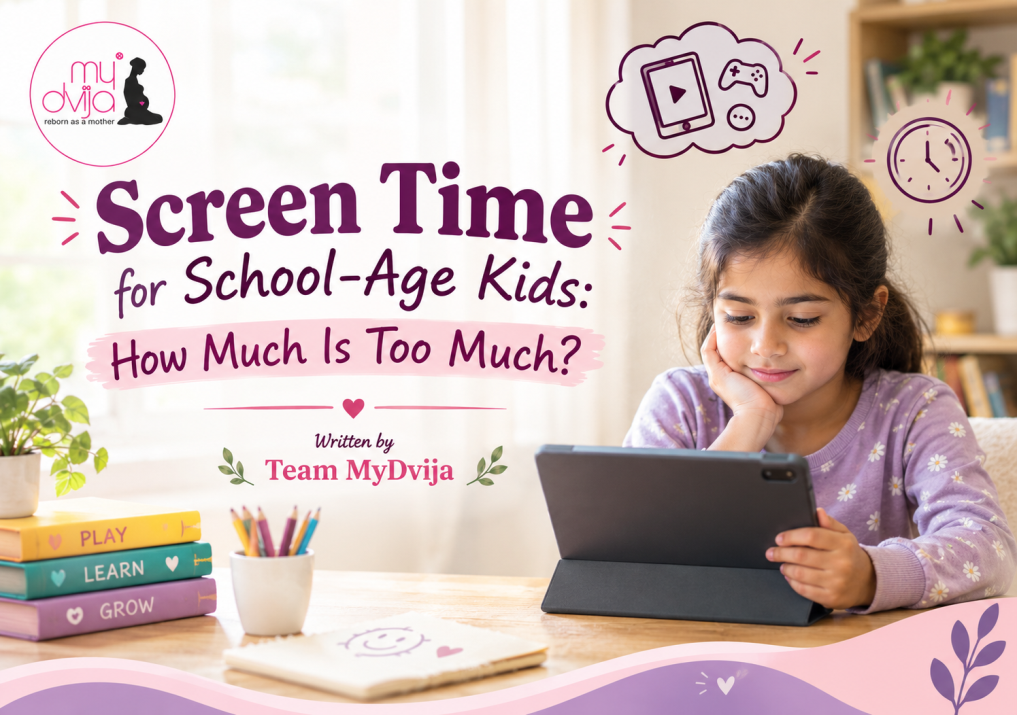
How Much Screen Time Is Too Much for School-Age Kids?
My son once asked me to pass the remote control to “close the app.” He was seven. A TV without an app-based interface genuinely confused him.
That was the moment I stopped pretending screen time was a toddler-only conversation. Somewhere between preschool and second grade, screens had quietly become his default way of resting. Entertaining himself, connecting with friends – all of it, screen-first. I hadn’t handed over that much control on purpose. It happened one “just twenty more minutes” at a time.
If you’re wondering whether your school-age child’s screen time has quietly become too much, here’s a clearer way to answer that.
Why the Toddler Rules Don’t Apply Anymore: –
Most screen time guidance people remember is really about toddler’s strict hour limits, no screens before two.
- School-age children use screens differently for homework, communication with friends, and genuine learning, not just entertainment.
- A flat “one hour a day” rule stops making sense once school assignments and typing practice are involved.
- What matters more at this age is the type of screen use, and what it’s replacing not just a strict number of minutes.
- Paediatric guidance has shifted accordingly. The focus for 6+ is now consistent limits that protect sleep, physical activity, and family time not one universal hour count.
WATCH: Shrreya Shah on Screen Time for School-Age Kids
Signs Screen Time Has Become the Problem, Not Just a Habit: –
- Meltdowns or intense resistance specifically when screens are taken away, disproportionate to the situation.
- Declining interest in activities your child used to genuinely enjoy without a screen involved.
- Sleep problems that trace back to screen use close to bedtime.
- Screens replacing in-person play with siblings or friends, rather than supplementing it.
- Your child negotiating, sneaking, or lying about screen use. It’s a sign the current limits feel like a battle, not a routine.
One or two of these on an occasional bad day isn’t a red flag. A consistent pattern across most days is worth actually addressing.
What Actually Works Better Than Strict Time Limits: –
- Screen-free zones and times work better than a single daily minute count – no screens during meals, none in the hour before bed.
- Co-viewing or co-playing sometimes, so screen time occasionally becomes shared time rather than only solitary time.
- Clear, consistent house rules stated in advance, rather than decisions made in the moment during a negotiation.
- Offering a genuinely appealing alternative before removing the screen, not just taking it away and hoping boredom sorts itself out.
- Modelling it yourself – children notice quickly when the household rule doesn’t apply to the adults in the room.
What’s Genuinely Fine, Not Just Tolerated: –
Not all screen time carries the same weight. Educational apps used with intention, video calls with family, and even some collaborative gaming with friends serve real social and learning purposes. The goal isn’t eliminating screens entirely – it’s making sure they’re not quietly replacing sleep, movement, and face-to-face connection.
Quick Reference: –
- Toddler rules: don’t directly apply to school-age kids, whose screen use is more varied.
- Watch for: meltdowns at removal, lost interest in other activities, sleep disruption.
- What helps most: screen-free zones and times, consistent rules, and adults modelling the same limits.
For Ongoing Support, Not Just One Article: –
MyDvija’s Advance Gurukul — A Step to Make Child Life Ready (3yr–9yr) includes a dedicated module on healthy family screen time habits, alongside broader parenting skills for exactly this age group.
If screen time has become a recurring fight in your house, a 30-minute consultation with Shrreya Shah can help you build a plan that actually fits your family, rather than a generic rule that doesn’t stick.
Also Worth Reading: –
- How to Manage Mommy Guilt: A Gentle Guide for Every Mom
- Simple Activities That Build Your Baby’s Brain Before Age 1
- Supplements for Kids (4–12 Years): What They Really Need
My son still doesn’t fully understand that a TV once needed a person to physically change the channel. I’ve made peace with that.
What I haven’t made peace with is screens quietly running the household by default. That part is still worth the effort to change.