

Blog
Why Does My Baby Sweat So Much While Sleeping

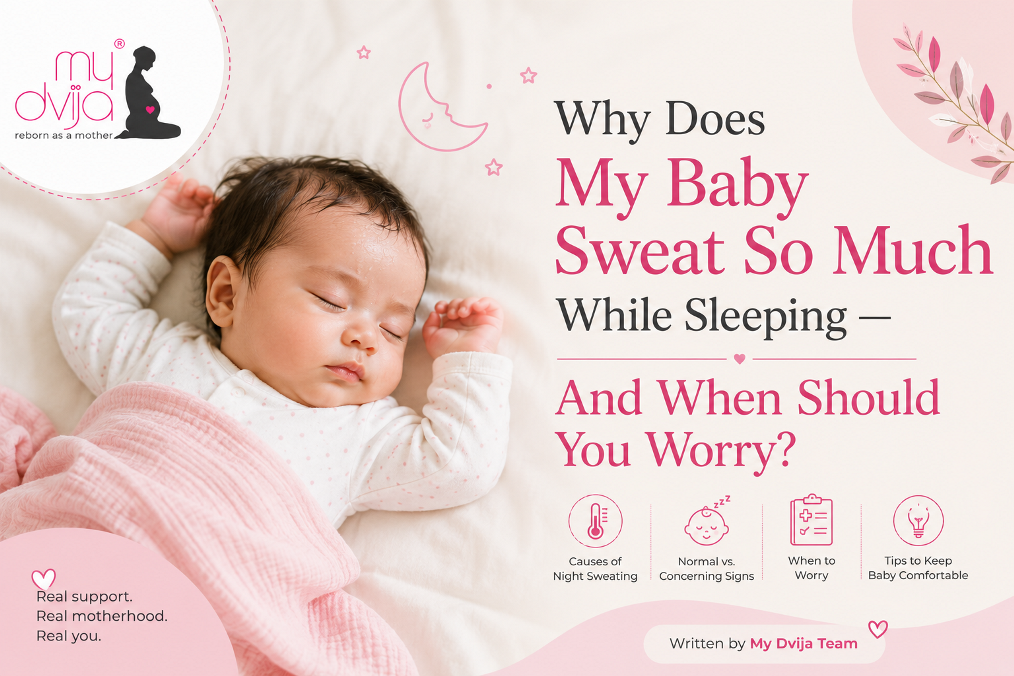
Why Does My Baby Sweat So Much While Sleeping — And When Should You Worry?
I used to check my daughter every time I walked past her cot at night. By 11pm, damp hair at the temples. By 2am, a wet patch on the sheet where her head had been. By morning, her vest was soaked like she’d been for a run.
She slept well, she fed well, she had no temperature. But the sweating worried me in that specific 3am way where everything worrying feels more serious than it probably is.
My mother said it was normal. My paediatrician glanced at her and agreed. Neither of them explained why — and the why, it turns out, is actually reassuring. Babies sweat during sleep for biological reasons that make complete sense once someone explains them. Here’s what I wish I’d known before those weeks of checking damp hair in the dark.
Why Babies Sweat More Than Adults During Sleep :-
Sweating during sleep is a thermoregulation mechanism — the body’s way of releasing excess heat. When core temperature rises above optimal, sweat glands activate and the evaporation of moisture from the skin cools the body down. This happens in adults too. In babies, it’s just more pronounced — for several specific reasons.
1. Their temperature regulation system is still immature: –
Adult bodies have a sophisticated, well-calibrated thermostat. Babies — particularly newborns and young infants — don’t. Their autonomic nervous system, which controls the sweating response, is still developing. This means the temperature regulation response can be slightly overdone — sweating more than necessary, or sweating in response to smaller temperature changes than would trigger an adult response.
This immaturity improves gradually over the first year and into toddlerhood. A 3-month-old sweats more readily than a 12-month-old for this reason alone, without any underlying issue.
2. Babies spend more time in deep sleep: –
Sleep has two main phases: light (REM) sleep and deep (non-REM) sleep. Deep sleep is when the body does the most growth and repair work. It’s also when core body temperature is at its highest — the body generates heat during the metabolic activity of deep sleep restoration.
Babies spend proportionally more time in deep sleep than adults. More deep sleep means more heat generated, means more sweating. The damp hair and wet pillow patches are often simply the signature of a baby sleeping well and deeply — not a sign of anything wrong.
3. Their head-to-body ratio is different: –
A baby’s head is proportionally much larger relative to their body than an adult’s head. And the head is the primary site of heat release in young infants — most of their sweat glands are concentrated on the scalp. So when a baby overheats even slightly, the response shows up most visibly at the head and neck. A sweaty head in an otherwise comfortable baby is almost always just efficient heat release, not a problem.
4. The sleep environment may be too warm: –
In many Indian homes — especially in winter or in joint family households where elders set the temperature — babies are dressed warmly, covered generously, and kept in rooms that adults find comfortable but that are too warm for a sleeping infant. The recommended room temperature for infant sleep is between 20°C and 22°C. Many Indian bedrooms in winter run considerably warmer than this.
A baby who is too warm will sweat. This is functional — the sweating is protecting them. But sustained overheating is a SIDS risk factor, so the environment is worth checking even when the sweating itself seems normal.
How to Tell If Your Baby Is Actually Too Hot :-
This matters because a baby who is sweating due to appropriate thermoregulation is fine. A baby who is sweating because they’re too hot needs the environment adjusted.
The most reliable temperature check is not the hands or feet — those are often cool even in a warm baby. Check the back of the neck or the chest. If it’s sweaty, warm, and flushed — the baby is too hot. If it’s just slightly warm with damp hair but the body feels comfortable — they’re probably regulating normally.
Signs of overheating to watch for:
- Skin that is red, hot, and flushed across the face and body (not just the cheeks, which can redden during any deep sleep)
- Rapid breathing that seems effortful
- Unusual fussiness or difficulty settling that isn’t resolved by feeding or holding
- Feeling hot to the touch on the chest and back, not just the head
Signs that are normal and not concerning:
- Damp or wet hair at the temples and back of head
- A slightly damp sheet under the head
- Cool or normal-temperature hands and feet while the head is sweaty
- Baby is sleeping soundly, breathing normally, and settles easily after feeds
The Overheating and SIDS Connection — What Parents Need to Know :-
This is worth addressing directly because it’s the underlying anxiety behind most parental concern about infant sweating.
Overheating is a recognised risk factor for Sudden Infant Death Syndrome (SIDS). Research consistently shows that babies who sleep in environments that are too hot, or who are overdressed, have a higher risk. The mechanism is not fully understood, but the association is well-established.
The practical guidance from every major paediatric and SIDS prevention body is consistent:
- Room temperature: 20–22°C ideally, no warmer than 24°C
- Clothing: one more layer than an adult would wear comfortably in the same room — not two more, not bundled. In summer or in warm rooms, just a nappy and a light vest is often enough
- No loose blankets, quilts, pillows, or stuffed toys in the sleep space for babies under 12 months
- Never put a hat on a baby for indoor sleep — the head is how they release heat, and covering it prevents this
- Place baby on their back to sleep — this is the single most evidence-based SIDS prevention measure, regardless of sweating
The Indian tendency to bundle babies — thick blankets, hats indoors, multiple layers — comes from genuine care and the instinct to keep the baby warm. But for sleep specifically, less is more. A baby who is dressed appropriately for the room temperature and sleeping on a firm, flat surface without loose bedding is as safe as current evidence can make them.
What About Sweating During Breastfeeding? :-
Many babies sweat during feeds — particularly during night feeds. This is normal and happens for the same reasons: the physical effort of feeding generates body heat, the close contact with the mother’s warm body adds heat, and for breastfed babies in particular, the let-down and active suckling are physically demanding.
The sweating during feeds is not a sign of low milk supply, overheating concern, or illness. If the baby is actively feeding, gaining weight, and not showing any other signs of illness, sweating during a feed is just a sweating-during-a-feed.
Heat Rash — What It Looks Like and What Actually Helps :-
When a baby sweats consistently and the sweat doesn’t evaporate properly — because of tight clothing, synthetic fabrics, or humid conditions — sweat glands can become temporarily blocked, leading to heat rash (miliaria). It appears as small red bumps or clear blisters, most commonly on the neck, chest, in skin folds, and behind the ears.
Heat rash is not dangerous and resolves on its own once the skin is kept cool and dry. What helps:
- Loose, breathable cotton clothing — not synthetic fabrics
- Keeping the affected areas cool and dry — a gentle lukewarm bath, patting dry thoroughly, letting the skin breathe
- Avoiding heavy creams or oils on the affected area during the rash — these can block the pores further
For skin that has become irritated or inflamed from heat and sweat — particularly in the nappy area and skin folds — MyDvija’s Baby Aloe Vera Diaper Rash Cream provides a breathable, protective barrier with aloe vera and neem that soothes irritation without occluding the skin. Safe from newborn age, free of parabens and harsh chemicals, it works on heat-related skin irritation as effectively as it does on nappy rash.
When the Sweating Is Actually Something to Investigate :-
In the vast majority of cases, infant sweating during sleep is normal and requires no intervention beyond checking the sleep environment. But there are situations where persistent, excessive sweating warrants a conversation with your paediatrician:
- Sweating accompanied by a temperature above 38°C — this is fever, not just thermoregulation
- Sweating heavily during feeds alongside poor weight gain, rapid breathing, and fatigue while feeding — in rare cases this can indicate a cardiac issue that affects feeding effort
- Night sweats alongside persistent snoring, pauses in breathing, or obvious breathing difficulty during sleep — this pattern can indicate obstructive sleep apnoea, which is uncommon in infants but worth investigating if present
- Sudden change in sweating pattern in a baby who didn’t previously sweat much, alongside other changes in behaviour, feeding, or development
These are uncommon. The most common reason your baby is sweaty at night is that they are a baby sleeping deeply in an environment that is probably a little warmer than ideal. Check the room temperature, remove a layer, switch to cotton, and check the back of the neck. That solves it most of the time.
The Sleep Environment Checklist for Indian Homes: –
Because the Indian context matters here — Indian homes in summer can be very warm, and in winter the instinct is to over-layer babies. A practical room-by-room check:
- Is the AC or fan running? A fan at low speed in the room significantly improves air circulation and reduces the risk of overheating — it does not make babies sick
- How many layers is the baby wearing? One more than you. In a 23–24°C room in summer, that means a nappy and a cotton onesie. In winter at 20°C, add one light layer
- Is anyone in the room adding body heat? In joint family sleeping, multiple adults in a room raise the ambient temperature significantly. Check the actual temperature near where the baby sleeps
- Is the mattress breathable? A thick foam mattress can trap heat. A firm, flat surface with a breathable cotton sheet is safer and cooler
- Has anyone put a hat on the baby for sleep? Remove it. The head needs to be uncovered for heat release
A daily morning massage — part of the traditional Indian malish practice — done with MyDvija’s Baby Massage Oil before the bath, helps maintain healthy circulation and skin condition. It also gives you a daily, full-body check of your baby’s skin — noting any heat rash, dryness, or irritation early before it becomes a problem.
If Sleep Is the Bigger Concern: –
Sweating is usually a sleep environment issue, not a sleep quality issue. But if you’re also dealing with a baby who wakes frequently, won’t settle, or has inconsistent nap and night patterns — the MyDvija Sweet Sleep — Sleep Training & Day Routine course covers the full picture of infant sleep: environment, routine, wake windows, settling techniques, and how to handle the 4-month regression and beyond. It’s built for Indian family situations — joint households, warm climates, no separate nursery — and is the most practical sleep resource available in this format for Indian parents.
Shrreya Shah covers baby sleep, temperature, and newborn care in detail on the MyDvija YouTube channel — including the 0–3 month sleep and day-night routine which is essential viewing for the newborn phase.
Also Worth Reading: –
- Nap Schedules by Age — A No-Nonsense Guide for Indian Moms
- What Your Baby’s Crying Is Actually Trying to Tell You
- Why Your Baby Won’t Sleep (And What Actually Works)
- Your Newborn’s Skin — What’s Normal and What Needs a Doctor
- Subscribe to the MyDvija YouTube channel →
- Explore all blogs →
Your baby sweats at night because they are sleeping deeply, their thermoregulation is still maturing, and their head is doing the job of releasing heat efficiently. In a warm Indian bedroom with a well-meaning extra layer from a grandparent, that sweating is going to be visible.
It is almost never a problem. Check the environment, not the baby. Remove a layer, check the neck temperature, confirm they’re comfortable and breathing normally — and then go back to sleep yourself.
The 3am worry is real. The sweating, usually, isn’t.