

Blog
Longevity for Indian Women — What to Do in Your 30s to Feel Good at 60

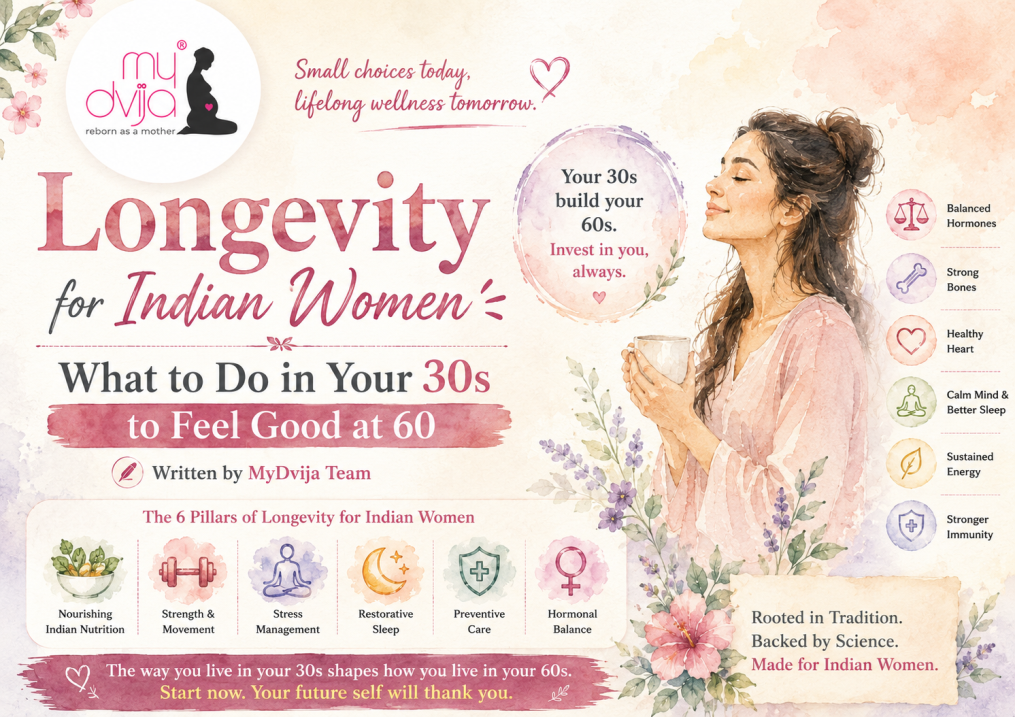
Longevity for Indian Women — What to Do in Your 30s to Feel Good at 60
My grandmother is 79 years old and she still walks 4 kilometres every morning.
My mother is 58 and her knees hurt going down stairs. She stopped exercising in her early 40s when the children’s schedules took over, and then kept meaning to start again and never quite did. She eats well but the back pain is constant, the sleep has been broken for years, and when I ask her how she feels, she says: “this is just getting older.”
My grandmother would disagree with that. She’d say this is what happens when you stop moving.
The science of longevity has moved dramatically in the last five years — away from the idea that ageing is something that happens to you, and toward understanding that the quality of your later decades is substantially determined by what you do in your 30s and 40s. The decisions that matter most aren’t dramatic. They’re not expensive supplements or biohacking protocols. They’re specific, unglamorous habits built consistently at the time of life when women are usually focused on everyone and everything except their own long-term health.
This is what the research actually says about what those habits are — and why the 30s specifically are when they matter most.
Why the 30s Are the Most Important Decade for Longevity: –
Most women think of health in their 30s as maintenance — keeping the weight manageable, sleeping when possible, managing stress. The reality is more urgent: your 30s are the last window in which you can actively build the biological foundations that will determine your function at 60, 70, and beyond. After the mid-30s, you are largely preserving what exists, not building new.
Bone density peaks in the early-to-mid 30s: –
Peak bone mass is achieved by approximately 30 years of age. After that, the body can maintain bone but not significantly add to it. Indian research has demonstrated that a 10% increase in peak bone mass corresponds to a reduction in osteoporotic fracture risk of up to 50% in later life. For Indian women specifically — who reach menopause at an average of 46–47 years, three to five years earlier than Western women — the post-menopausal bone loss window arrives earlier. The bone bank you build in your 30s is the one you draw from when oestrogen drops in your 40s. The window to maximise deposits is closing.
Muscle mass peaks in the early 30s: –
Stanford Medicine research published in January 2026 confirmed what sports scientists have known for years: muscle mass peaks in the early 30s and then begins a slow, steady decline — accelerating after 40 if not actively addressed. After 40, women can lose 3–8% of muscle mass per decade without intervention. This isn’t just about strength or aesthetics. Muscle is the primary tissue for insulin-driven glucose uptake — declining muscle mass is a direct driver of insulin resistance, metabolic syndrome, and type 2 diabetes. Muscle also supports bone, protects joints, and is the single strongest predictor of functional independence in older age
Cardiovascular health foundation is laid now: –
Heart disease is the number one killer of Indian women — not breast cancer, not diabetes, not stroke. It’s heart disease. And the plaques in coronary arteries that cause heart attacks at 55 or 60 were building quietly through the 30s and 40s. The cardiovascular habits that prevent this — regular aerobic movement, blood pressure awareness, cholesterol management, not smoking, managing blood sugar — need to be established now, not started as crisis management at 52
Hormonal foundation is built here: –
The hormonal environment of the 30s — the quality of ovulation, the oestrogen-progesterone balance, the cortisol and insulin picture — creates the template for how smoothly or roughly the perimenopausal transition unfolds. Women who enter their late 30s with good hormonal health navigate perimenopause differently from women who enter it nutritionally depleted, chronically stressed, and sleep-deprived. The 30s are when that foundation is either built or undermined
Pillar 1 — Strength Training Is Not Optional: –
This is the most important single habit in this entire blog. Not yoga, not walking, not any amount of clean eating. Strength training — resistance exercise that progressively challenges muscle — is the longevity intervention with the broadest evidence base for women.
Research has shown that women who do regular muscle-strengthening exercise have a 30% reduction in cardiovascular mortality — a number that outperforms most pharmaceutical interventions. Strength training also:
- Preserves and builds muscle mass, slowing the post-30 decline
- Directly loads bone, stimulating the bone-remodelling process that maintains density
- Improves insulin sensitivity more effectively than cardio alone
- Reduces visceral fat — the metabolically dangerous abdominal fat that drives inflammation, cardiovascular risk, and hormonal imbalance
- Supports the pelvic floor — directly relevant for the postpartum years and for long-term continence and comfort
- Improves cognitive function — the muscle-brain connection through BDNF (brain-derived neurotrophic factor) is well established
You don’t need a gym membership. Bodyweight squats, lunges, push-ups, planks, and resistance band exercises — done 2–3 times a week, pushing to near-fatigue — build the muscle and bone stimulus needed. Near-fatigue is the key phrase. Two sets of ten squats where you could easily do twenty more builds very little. The adaptation comes from the final few reps where the muscle is genuinely challenged
MyDvija’s Strength Exercises + Diet + Emotional Management course for New Mothers is specifically designed for Indian women in the postpartum years — building strength safely, at home, with no equipment, during nap windows. If you’re in or recently past the postpartum phase, this is the
The most structured route back to strength training in the Indian context
Pillar 2 — Protein: The Most Under consumed Nutrient in Indian Women’s Diets: –average Indian woman consumes approximately 30–40g of protein per day. The requirement for maintaining muscle mass is approximately 1.2–1.5g per kilogram of body weight daily — for a 55kg woman, that’s 66–82g. There is a significant gap.
Protein provides the amino acids from which muscle is built and repaired. Without adequate protein, even a consistent strength training programme produces limited results — you’re creating the muscle-building stimulus but not providing the raw material. Protein also:
- Stabilises blood sugar — reducing insulin spikes that drive fat storage, PCOS symptoms, and energy crashes
- Supports liver detoxification — the liver uses amino acids for the enzymatic processes of hormone and oestrogen metabolism
- Maintains hair, skin, and nail structure — all protein-dependent
- Keeps you full — reducing the calorie overconsumption that commonly drives mid-30s weight gain
The Indian vegetarian diet is not automatically low in protein — dal, rajma, chana, paneer, dahi, eggs (for those who eat them) are all reasonable protein sources. The problem is consistency and quantity. Dal at one meal a day doesn’t hit the target. Dal at every main meal, with paneer or dahi at another, plus eggs or nuts as snacks — this gets closer
At every main meal: a fist-sized portion of protein. This is the simplest, most actionable rule. Not a macro calculator. Just: protein, every meal, every day
Pillar 3 — Bone Health: The Investment Nobody Makes Until It’s Too Late: –
Osteoporosis affects approximately 1 in 3 Indian women over 50. It develops silently over decades — there are no symptoms until a fracture occurs. By the time the fracture happens, the window for prevention has closed
The three things that build and protect bone:
1. Calcium — 1000mg daily: –
Ragi is the single best plant-based calcium source in the Indian diet — higher calcium content per gram than milk. MyDvija’s Nachani Satva (Sprouted Ragi) — a daily bowl of sprouted ragi porridge provides significant calcium alongside iron, fibre, and easily digestible complex carbohydrate. Sesame (til), leafy greens, dairy, and almonds are additional calcium sources. The problem is consistency — calcium needs to come in every day, not in a single calcium-rich meal once a week
2. Vitamin D — the most deficient nutrient in urban Indian women: –
Vitamin D is required for calcium absorption in the gut. Without adequate vitamin D, the calcium you eat is poorly absorbed regardless of quantity. Studies consistently show severe vitamin D deficiency in 70–90% of urban Indian women — from indoor office work, full coverage clothing, and limited outdoor time. 10–15 minutes of direct sun on arms and legs between 11am and 2pm (not through glass) produces meaningful vitamin D. Most Indian women need to supplement: 1000–2000 IU of D3 daily alongside dietary sources
3. Vitamin K2 and weight-bearing exercise: –
Vitamin K2 is the cofactor that directs calcium into bones rather than arteries. It’s found in fermented foods and — importantly — in ghee. Dvija Cow Ghee (Vedic Style) provides both vitamin K2 and butyrate — the gut-health short-chain fatty acid — in a form that is bioavailable and traditional. The practice of adding a teaspoon of ghee to every main meal is not just flavour. It’s a daily vitamin K2 and fat-soluble vitamin delivery system. Weight-bearing exercise — strength training, walking on hard surfaces — creates the mechanical stress that stimulates bone-building activity
Pillar 4 — Sleep: The Longevity Intervention Nobody Is Selling You: –
Sleep is where the biology of ageing is either accelerated or slowed. During deep sleep:
- Growth hormone is released — the primary driver of cell repair and muscle recovery
- The glymphatic system clears amyloid plaques from the brain — the same plaques associated with Alzheimer’s disease
- Cortisol resets — sleep is the only true cortisol recovery. Chronically poor sleep means chronically elevated cortisol, which drives abdominal fat storage, bone loss, muscle breakdown, and hormonal imbalance
- Immune function consolidates — the immune “memory” of vaccines and infections is strengthened during sleep
Research is unambiguous: sleeping less than 6 hours per night consistently is associated with a 13% higher all-cause mortality. Sleeping 7–8 hours is the target. Not aspirationally — as a health priority that sits alongside nutrition and exercise in importance
For Indian mothers in their 30s, adequate sleep is the single most violated health recommendation. The cultural expectation of being the last one to sleep and first to wake, of being available at night for children without a partner sharing the load equitably, of powering through on 5 hours because everyone else is managing — this is a long-term health debt being accumulated quietly
Sleep isn’t just rest. It’s the repair cycle without which every other health intervention is less effective
Pillar 5 — Blood Sugar Management: The Foundation of Metabolic Longevity: –
India has the world’s largest population of people with type 2 diabetes — and Indian women are disproportionately affected. More than that: the metabolic dysfunction that produces diabetes doesn’t begin at diagnosis. It begins with years of insulin resistance — high blood sugar spikes after meals, followed by crashes, followed by sugar cravings, followed by more spikes. This pattern, repeated for years in the 30s and 40s, produces the metabolic and cardiovascular disease of the 50s and 60s
What manages blood sugar and therefore metabolic longevity:
- Protein and fat before carbohydrates at every meal — the sequencing of macronutrients within a meal significantly affects the glycaemic response
- Fibre at every meal — soluble fibre from dal, flaxseeds, vegetables slows glucose absorption and feeds the gut bacteria that improve insulin sensitivity. MyDvija’s Flax Seeds Powder — one tablespoon in water, dahi, or dal — provides soluble fibre, omega-3s, and lignans that support both blood sugar regulation and oestrogen metabolism
- Walking after meals — a 10-minute walk after lunch and dinner reduces post-meal glucose spikes by 30–40%. The most underused, most accessible metabolic tool available
- Replacing refined carbohydrates with whole grains — jowar, bajra, ragi, oats instead of maida and white rice in excess
- Replacing refined sugar — replacing sugar in tea and cooking with MyDvija’s Natural Jaggery Powder provides a lower glycaemic sweetener that also contributes iron and trace minerals that refined sugar provides none of
Pillar 6 — Hormonal Health as Longevity Strategy: –
Everything covered in the PCOS, perimenopause, and hormone-balancing blogs connects here: the hormonal environment of the 30s determines the hormonal environment of the 40s and beyond. Chronic insulin resistance, untreated thyroid dysfunction, nutrient deficiencies, and ongoing stress-driven cortisol elevation all age the hormonal system faster
The single most impactful herbal addition to a longevity-focused health practice for Indian women in their 30s is shatavari. Dvija Natural Shatavari taken daily as a long-term tonic:
- Supports the HPO axis — the hypothalamic-pituitary-ovarian signalling that drives regular ovulation and hormonal balance
- Protects ovarian function — its adaptogenic properties reduce cortisol’s suppressive effect on ovarian health
- Supports the gut-hormone axis — shatavari’s prebiotic properties improve the estrobolome function that determines how efficiently oestrogen is metabolised and eliminated
- Provides calcium and iron — directly contributing to two of the most critical nutritional deficiencies in Indian women
This is not a supplement for a specific symptom. It’s a tonic for the reproductive system — analogous to fish oil for the cardiovascular system. You take it consistently, for years, as maintenance. ½ teaspoon in warm milk with black pepper and ghee, daily
Pillar 7 — Gut Health: The Root System of Everything Else: –
The gut microbiome declines in diversity with age — a process accelerated by refined food diets, antibiotics, stress, and poor sleep. This decline is associated with systemic inflammation, declining immune function, worsening hormonal metabolism, and cognitive decline
The gut habits that matter most for long-term health:
- Fermented foods daily — homemade dahi, idli, dosa, kanji. The Indian fermented food tradition is one of the most gut-supportive dietary patterns in the world and is being abandoned in urban kitchens
- Fibre diversity — the more types of plant food you eat in a week, the more diverse your microbiome. Eating the same five vegetables on rotation doesn’t build microbial diversity
- Moringa — MyDvija’s Moringa Powder has emerging prebiotic evidence alongside its exceptional micronutrient profile. One teaspoon daily addresses iron, calcium, magnesium, and vitamin C deficiencies while supporting gut health simultaneously
- Ghee — provides butyrate, the primary fuel for gut lining cells, maintaining intestinal integrity across the decades. Dvija Cow Ghee (Vedic Style) made by traditional Vedic methods retains the full nutritional profile that industrial ghee processing degrades
Pillar 8 — Stress: The Silent Longevity Thief :-
Chronic psychological stress shortens telomeres — the protective caps at the ends of chromosomes that are one of the primary biological markers of cellular ageing. A landmark 2004 study found that women with the highest perceived stress had telomeres as short as those of women 10 years older. This finding has been replicated repeatedly. Chronic stress, biologically, ages you faster
The Indian woman in her 30s is one of the most chronically stressed demographics in any country. The simultaneous load of career, children, household management, marital relationship maintenance, and often the care of ageing parents — without the social support structures that previous generations had — creates a cortisol burden that is biologically ageing
What measurably reduces stress and protects telomere length:
- Daily pranayama — 5–10 minutes of anulom-vilom activates the parasympathetic nervous system and measurably reduces cortisol within a single session. Over months of consistent practice, it recalibrates the HPA axis’s resting baseline
- Social connection — genuine friendship and emotional intimacy have longevity effects comparable to not smoking. Social isolation is a stronger predictor of early mortality than obesity
- Rest — not passive screen consumption, but genuine restoration. Reading, sitting in silence, a walk without a phone. The nervous system requires genuine recovery, not just a different form of stimulation
- Boundaries — delegating, saying no, asking for help. These are not soft self-care suggestions. They are directly relevant to cortisol and telomere biology
What Longevity Actually Looks Like in a Real Indian Woman’s Life :-
The longevity interventions that matter are not expensive. They’re not exotic. They are, almost entirely, practices that Indian women’s traditional health wisdom already contained — and that modern research is now confirming with mechanisms and numbers
What it looks like practically:
- Breakfast with protein and no refined carbohydrates as the first item — eggs, paneer, besan chilla, dahi — not just chai and rusk
- Ragi porridge with ghee three to four times a week — calcium, iron, complex carbohydrate, butyrate
- One tablespoon of flax seeds daily — fibre, omega-3s, blood sugar regulation
- 30 minutes of walking every day — cardiovascular protection, blood sugar management, mental health
- 2–3 sessions of strength training per week — muscle mass, bone density, insulin sensitivity
- Homemade dahi at one meal — fermented food, gut health
- Shatavari in warm milk before bed — hormonal support, calcium, adaptogenic protection of the HPO axis
- 7–8 hours sleep — the non-negotiable
- 5 minutes of pranayama — cortisol management, vagus nerve activation
That is a longevity programme. It fits into a normal Indian life. It requires no specialist food, no expensive supplements, and no gym membership. It does require consistency and the decision to treat your own health as something worth protecting — not because you’ll feel immediate rewards, but because the woman you will be at 60 is being built right now
Your Personalised Starting Point :-
If you’re not sure where your biggest gaps are — nutrition, movement, hormonal health, postpartum recovery — a 30-minute consultation with Shrreya Shah gives you a personalised assessment of what to prioritise for your specific situation. The longevity interventions that matter most for you depend on where you currently are
For structured fitness support: MyDvija’s 100 Days Weight Loss and Fitness Challenge provides 100 days of guided nutrition and exercise — structured, accountable, designed for Indian women’s lives and Indian food
Shrreya Shah covers women’s nutrition, fitness, hormonal health, and postpartum recovery — the full picture of women’s health through the 30s and beyond — on the MyDvija YouTube channel. Subscribe for free, practical guidance in Hindi
Also Worth Reading :-
- Perimenopause in Your 30s — It Starts Earlier Than Every Indian Woman Thinks
- How to Balance Hormones Naturally — A Complete Guide for Women
- Iron Deficiency in Indian Women — Signs You’re Ignoring
- Gut Health for Women — Skin, Mood, Hormones
- Cycle Syncing — The Wellness Trend That Actually Has Science Behind It
- Subscribe to the MyDvija YouTube channel →
- Explore all blogs →
My grandmother walks 4 kilometres every morning because she never stopped. She built the habit at 30 and never had a reason to give it up. She probably didn’t think of it as a longevity strategy. She thought of it as how she took care of herself
The science has caught up to what she intuitively knew: moving, eating real food, sleeping, managing stress, maintaining connection — these are not complementary health practices. They are the medicine. And the 30s are when the prescription matters most
The woman you will be at 60 is being decided right now. Not dramatically, not in a single choice. In the accumulated effect of small habits, repeated consistently, across the decade you’re currently in