
Blog
Perimenopause in Your 30s — It Starts Earlier Than Every Indian Woman Thinks


Perimenopause in Your 30s — It Starts Earlier Than Every Indian Woman Thinks
I was 36 when my periods started doing strange things.
They’d always been predictable. 28 days, reliable, manageable. Then suddenly one cycle was 21 days, the next was 34. One month was heavier than anything I’d experienced since my early twenties. I started waking at 3am — not from my child, not from noise — just awake, warm, heart beating slightly faster than felt right for 3am. My mood in the week before my period became something I started dreading. Not sadness exactly. More like a glass jaw. Everything landed harder than it should have.
My gynaecologist checked my thyroid. It was fine. She mentioned stress. She offered the pill. Nobody mentioned the word perimenopause.
I was 36. Nobody talks about perimenopause at 36. That’s the problem. And for Indian women, it’s a problem that arrives earlier than most people realise.
The Fact Indian Women Are Not Being Told: –
Indian women reach menopause at an average age of 46 to 47 years — three to five years earlier than women in Western countries, where the global average is 50 to 51 years. This is not new information. It’s been documented in Indian medical literature for decades.
What follows from this: since perimenopause typically begins four to eight years before menopause, Indian women may begin experiencing the hormonal shifts of perimenopause as early as their late 30s to early 40s. Some women notice changes at 35 or 36, particularly those with a family history of earlier menopause, high stress levels, poor sleep, or a history of thyroid dysfunction.
A 2025 study published in NPJ Women’s Health — analysing data from 4,400 women aged 30 and above — found that 55.4% of women in the 30–35 age group reported moderate to severe symptoms typically associated with perimenopause. Mental health symptoms — anxiety and depression — often appeared before the physical symptoms like hot flashes and night sweats. Most of these women had no idea what was causing them.
This is the gap. Indian women in their mid-to-late 30s are experiencing real, hormonally driven symptoms and being told its stress, or anxiety, or just getting older. The lack of awareness — among women and among many clinicians — means perimenopause is systematically undiagnosed in Indian women at the age when intervention and preparation would be most useful.
What Perimenopause Actually Is: –
Perimenopause is not menopause. Menopause is a single moment in time — defined as 12 consecutive months without a menstrual period. Perimenopause is everything that leads up to that moment — the transition phase, sometimes lasting 4 to 10 years, during which the ovaries gradually produce less oestrogen and progesterone.
The hormonal change isn’t a steady, linear decline. It’s erratic. Oestrogen doesn’t simply go down — it fluctuates unpredictably, sometimes surging higher than premenopausal levels, sometimes dropping steeply. Progesterone, which depends on ovulation, becomes increasingly inconsistent as ovulation becomes less regular. It’s this irregularity — not simply low oestrogen — that drives most perimenopausal symptoms.
You can be in perimenopause and still have regular periods. You can be in perimenopause and still get pregnant (fertility declines but doesn’t disappear until menopause is confirmed). You can have significant symptoms for years before your period changes at all. Perimenopause is a hormonal state, not simply a menstrual calendar event.
Symptoms That Are Actually Perimenopause (That Indian Women Are Being Told Are Something Else): –
This is where the real harm of late diagnosis sits. Each of these symptoms, presented individually, gets a different explanation. Together, they form a recognisable pattern:
Menstrual changes: –
Shorter cycles — from a consistent 28 days to 21–24 days — is often one of the first perimenopausal changes, occurring years before periods become irregular
Heavier periods — progesterone decline causes the uterine lining to build up more than usual in anovulatory cycles
Cycles that suddenly vary — 25 days one month, 40 days the next
Mid-cycle spotting
Sleep: –
Waking between 2 and 4am without any external reason — a specific progesterone-decline pattern
Difficulty falling back asleep despite being physically tired
Night sweats — waking warm and damp, needing to remove covers, sometimes drenching
Mood and cognition: –
Anxiety that arrives in the premenstrual week with a different quality than usual PMS — more like dread than sadness
Rage or irritability that seems disproportionate and that you feel almost observing from outside yourself
Brain fog — forgetting words, losing train of thought, poor short-term memory
Low mood that isn’t situational and doesn’t lift the way previous low moods did
Physical: –
Hot flashes — a sudden wave of heat across the face, neck, and chest, lasting seconds to minutes
Joint pain — particularly the knees, hips, and hands — from declining oestrogen’s anti-inflammatory effect
Vaginal dryness — reduced oestrogen thins and dries vaginal tissue
Skin changes — dryness, reduced collagen, skin that seems to age suddenly
Hair thinning — from the same hormonal shift that causes androgenic alopecia in PCOS
Weight gain around the abdomen — as oestrogen declines, the body redistributes fat from hips and thighs to the abdomen
Palpitations — particularly at night, associated with the hormonal fluctuation affecting the autonomic nervous system
Decreased libido — from declining testosterone alongside oestrogen
The pattern to look for: these symptoms are cyclical — appearing or worsening in the premenstrual phase and improving after menstruation — and they’ve changed compared to what you previously experienced. If your PMS has become significantly worse in the last 1–2 years, if your cycles have shortened, if you’re waking at 3am for no reason — these are worth taking seriously, not writing off as stress.
Why Indian Women Are Particularly Vulnerable to Early Perimenopause: –
The earlier average menopause age in Indian women is partly genetic and partly environmental. Several factors prevalent in the Indian context may accelerate ovarian ageing:
Nutritional deficiencies: iron, vitamin D, calcium, and magnesium deficiencies — all extremely common in Indian women — affect ovarian function. Vitamin D deficiency in particular has associations with earlier menopause in Indian research
Chronic stress: elevated cortisol suppresses the HPO (hypothalamic-pituitary-ovarian) axis, reducing the hormonal signalling that supports regular ovulation. The cumulative stress load of many Indian women — caring for children, elderly parents, and managing careers simultaneously — is directly relevant to ovarian health
Sleep deprivation: melatonin — produced during sleep — has ovarian-protective effects. Women who consistently sleep poorly accelerate hormonal ageing faster than women who sleep well
History of PCOS: paradoxically, women who had PCOS (which involves chronic anovulation) may experience an earlier menopausal transition because of cumulative ovarian stress
Smoking: reduces ovarian blood flow and accelerates ovarian ageing by 1–2 years
Family history: the single strongest predictor of when you’ll reach menopause is when your mother did. If your mother had early menopause, ask her age — it’s relevant to your own timeline
What Perimenopause Is Doing to Your Bones — The Urgency Most Women Miss: –
This is perhaps the most medically significant aspect of perimenopause that receives the least attention in Indian women’s health conversations.
Oestrogen is the primary protector of bone mineral density in women. During perimenopause — particularly in the 2–3 years immediately before menopause and the 2–3 years immediately after — bone loss accelerates dramatically. Studies show bone mineral density can decline by 2–3% per year in this window, compared to 0.5–1% per year in the premenopausal years.
Indian women already have lower baseline bone density than Western women — from a combination of lower average calcium and vitamin D intake, lower sun exposure from clothing practices, and lower peak bone mass from lifetime dietary patterns. An early menopause in a woman who was already borderline on bone density is a serious long-term health risk.
What this means practically: perimenopause is the time to start caring about bone health, not after a fracture at 60. Weight-bearing exercise, adequate calcium (1000mg daily), vitamin D supplementation (most Indian women are deficient), and Dvija Cow Ghee (Vedic Style) — which provides fat-soluble vitamin K2, essential for calcium to reach bones rather than arteries — are all relevant starting now
How to Know If What You’re Experiencing Is Perimenopause: –
The honest answer: it’s not always easy to tell, particularly in the early years. Many perimenopausal symptoms overlap with thyroid dysfunction, iron deficiency, PCOS, anxiety disorders, and burnout. This is why individual symptom management without a hormonal picture can go wrong for years.
The blood tests that help clarify the picture:
FSH (follicle-stimulating hormone): rises as the ovaries produce less oestrogen. An elevated FSH in the early follicular phase (Day 2–4 of the cycle) is a marker of reduced ovarian reserve. A single elevated reading isn’t diagnostic — FSH fluctuates — but a pattern of elevated readings tells a story
AMH (anti-Müllerian hormone): a more stable marker of ovarian reserve that doesn’t fluctuate with the cycle. Declining AMH in your 30s indicates reducing egg supply and is associated with earlier menopause transition
Oestradiol (E2): gives a snapshot of oestrogen levels on the day tested — useful in context
Progesterone (Day 21): confirms whether ovulation occurred in that cycle
TSH, Free T3, Free T4: to rule out thyroid dysfunction, which mimics perimenopause closely
Ferritin: iron deficiency mimics perimenopausal fatigue and mood symptoms almost exactly
A gynaecologist who specialises in women’s hormonal health — not all do — can interpret this panel in the context of your symptoms and age. Don’t accept “everything looks normal” if the panel only includes TSH and FSH. The full picture requires more.
What Actually Helps — Naturally and Medically: –
1. Shatavari — the most important herb for the perimenopausal transition: –
Shatavari is Ayurveda’s foremost herb for female reproductive longevity. Its phytoestrogenic compounds help modulate oestrogen activity during the fluctuating perimenopausal period — not replacing oestrogen, but helping the body’s oestrogen receptors respond more consistently to the erratic supply. Research in 2025 confirmed its role in supporting hormonal balance, improving the FSH-LH relationship, and reducing the vasomotor symptoms (hot flashes, night sweats) associated with declining oestrogen.
Shatavari is also adaptogenic — it reduces cortisol’s suppressive effect on the HPO axis, which is directly relevant to the premature ovarian ageing driven by chronic stress. Unlike HRT, it doesn’t override the body’s hormonal system. It works with it.
MyDvija’s Dvija Natural Shatavari is grown without fertilisers, naturally dried, and appropriate from the reproductive years through the perimenopausal transition. ½ teaspoon in warm milk with a pinch of black pepper and ghee daily — consistently for a minimum of 3 months to assess effect. This is a tonic, not a supplement to take for a week and evaluate
2. Sleep — the non-negotiable: –
Sleep disruption is both a symptom and a driver of perimenopausal hormonal imbalance. Poor sleep raises cortisol, which further suppresses progesterone and oestrogen. Restoring sleep quality is not just symptom management — it’s hormonal management.
Consistent sleep and wake times — even on weekends — regulate the melatonin rhythm that the HPO axis depends on
Cool sleeping environment — lower room temperature significantly reduces the impact of night sweats on sleep quality
No screens for 60 minutes before sleep — blue light suppresses melatonin more severely in perimenopausal women than in younger women
Magnesium glycinate before bed — 200–400mg — has genuine evidence for improving sleep quality and reducing the anxiety and muscle tension that often accompany perimenopausal sleep disruption
3. Exercise — particularly weight-bearing and strength training: –
Weight-bearing exercise — walking, jogging, dancing, strength training — is the most evidence-supported intervention for maintaining bone density during the perimenopausal transition. Muscle mass also declines with declining oestrogen; strength training preserves it. Preserved muscle mass improves insulin sensitivity, which helps with the abdominal weight gain that perimenopausal women commonly experience.
30 minutes of weight-bearing movement, 5 days a week, plus 2 sessions of resistance training — this is the medically recommended minimum for bone and metabolic health during the perimenopausal transition. Not for weight loss. For skeletal and metabolic preservation
4. Nutrition adjustments specific to perimenopause: –
Increase calcium: 1000mg daily from food — dairy, ragi, sesame, leafy greens, Dvija Natural Shatavari (which has significant calcium content). Supplement if dietary intake doesn’t reach this
Vitamin D: get levels tested. Most Indian women are significantly deficient. 1000–2000 IU daily of D3 supplementation is usually needed alongside dietary sources
Phytoestrogens — flaxseeds, soy, sesame — contain plant compounds that bind weakly to oestrogen receptors and can reduce the severity of hot flashes and mood fluctuation. MyDvija’s Flax Seeds Powder — 1 tablespoon daily — provides lignans that specifically support oestrogen metabolism and gut elimination of excess oestrogen through the estrobolome
Reduce refined sugar and refined carbohydrates — insulin sensitivity declines with declining oestrogen, making the blood sugar management that was easy before harder now. The diet that worked at 28 may not work at 38
Protein at every meal — muscle preservation during hormonal decline requires adequate protein intake. 1.2–1.5g per kg body weight daily
Iron and moringa — MyDvija’s Moringa Powder addresses the iron, calcium, and magnesium deficiencies that compound perimenopausal symptoms. 1 teaspoon daily in dal or warm water
5. Stress reduction — genuinely, not performatively: –
Chronic cortisol elevation accelerates the perimenopausal transition. This is not a soft suggestion. For Indian women carrying the simultaneous load of children, ageing parents, careers, and household management in their late 30s and early 40s — cortisol management is an urgent health priority, not a luxury.
Pranayama — specifically anulom-vilom and bhramari — has measurable cortisol-reducing effects within a single session. Five minutes morning and evening is a physiologically meaningful intervention, not just a calming ritual. The vagus nerve connection between controlled breathing and the HPO axis is established and real
6. For joint pain specifically: –
The joint pain that arrives in perimenopause — particularly in the knees, hips, and hands — is driven by declining oestrogen’s anti-inflammatory effect. Dvija Pain Relief Oil — formulated with ashwagandha, neem, and sesame oil — used nightly on affected joints reduces inflammation and the muscle tension that amplifies joint discomfort. Ashwagandha specifically has anti-inflammatory properties that are relevant to the perimenopausal inflammatory picture
When to Consider HRT — An Honest Overview: –
Hormone replacement therapy is the most effective medical treatment for perimenopausal symptoms. Historically, it was avoided after studies in the early 2000s suggested breast cancer risk. Those studies have since been significantly reanalysed — the risks were overstated for most women, particularly for body-identical (micronised) progesterone and transdermal oestrogen. Current medical consensus is that HRT, for most women under 60 without contraindications, has benefits that outweigh risks when started within 10 years of menopause.
The decision is individual and requires a proper gynaecological assessment. What’s not acceptable is declining to discuss it because “it’s too early” when a woman in her late 30s is losing sleep, losing bone density, and losing quality of life — while being told it’s just stress.
Natural approaches and HRT are not mutually exclusive. Many women use both. The question is what your symptom burden is, what your risk profile looks like, and what your gynaecologist can offer you with current evidence — not a one-size-fits-all dismissal in either direction
The Conversation Nobody Is Having With Indian Women in Their 30s: –
Indian culture has a complicated relationship with menopause. It’s not discussed. Symptoms are normalised as getting older. Women in joint families often don’t have the privacy or permission to name what they’re experiencing. And the medical system — pressed for time and underprepared on women’s hormonal health — frequently misses it.
What needs to change: women in their mid-30s should know that if their cycle changes, their sleep changes, and their mood changes simultaneously — that’s a hormonal pattern worth investigating, not just accepting. They should know the average menopause age in India. They should know that perimenopause can start a decade before menopause. And they should know that there are both natural and medical options that can meaningfully improve this transition
For women who want to understand their own hormonal picture and what to do about it — a consultation with Shrreya Shah covers women’s hormonal health across every stage, including the perimenopausal transition, in the context of Indian family life, postpartum history, and natural management options
MyDvija covers women’s health, hormonal balance, and self-care for Indian women on the MyDvija YouTube channel — subscribe for ongoing guidance in Hindi
Also Worth Reading: –
How to Balance Hormones Naturally — A Complete Guide for Women
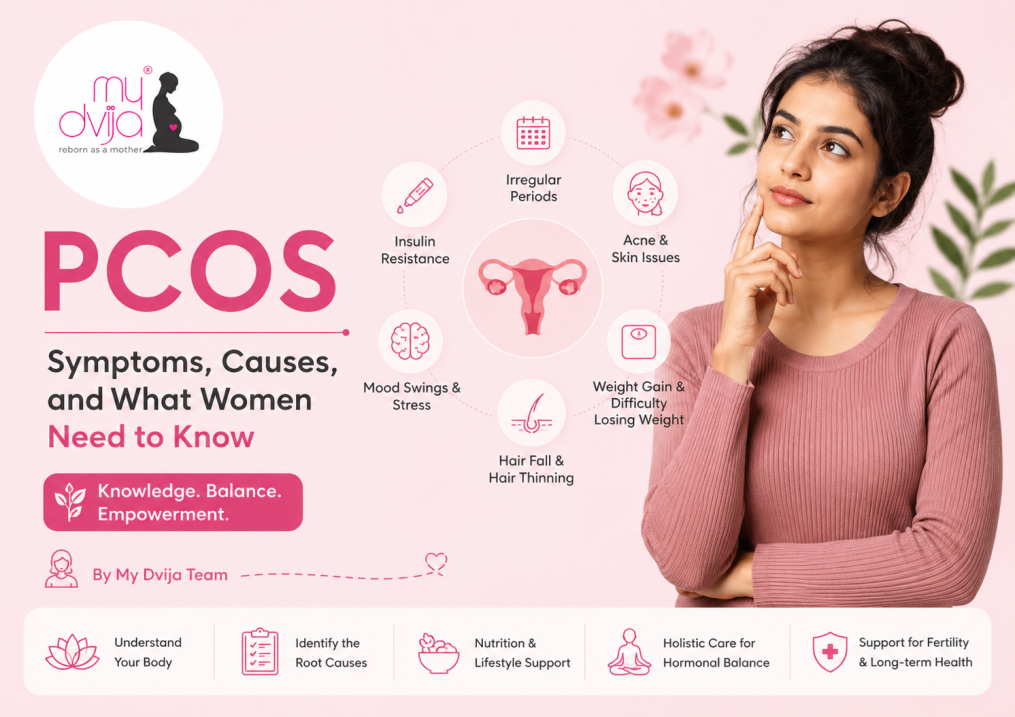
PCOS — Symptoms, Causes and What Every Woman Needs to Know
Iron Deficiency in Indian Women — Signs You’re Ignoring
Gut Health for Women — Skin, Mood, Hormones
Getting Your Period Back After Baby — What’s Normal, What’s Not
Subscribe to the MyDvija YouTube channel →
I wish someone had told me at 36 that what I was experiencing had a name. That it wasn’t stress, or anxiety, or my imagination. That it had a biological explanation, a hormonal timeline, and a range of options for managing it — both natural and medical.
Instead, I spent two years attributing real symptoms to everything but the real cause.
If you’re in your mid to late 30s and something has shifted — in your cycle, your sleep, your mood, your body — take it seriously. Get tested. Understand your hormonal picture. And stop accepting “just stress” as the complete answer to a question that deserves a proper investigation.