
Blog
Cycle Syncing — The Wellness Trend That Actually Has Science Behind It

Cycle Syncing — The Wellness Trend That Actually Has Science Behind It
I rolled my eyes the first time I saw “cycle syncing” on Instagram.
Another wellness trend, I thought, another thing for women to optimise about their own bodies, sandwiched between cold plunges and ice baths and whatever else was trending that week. Eat seed oils on day 3, do pilates on day 19, manifest on the full moon.
Then I actually read the research behind it. And what I found surprised me — underneath the TikTok packaging, there’s a real, growing body of endocrinology research confirming that women’s energy, strength, metabolism, and even cognitive function genuinely do shift across the menstrual cycle in measurable, predictable ways.
Cycle syncing isn’t really a new idea. It’s Ayurveda’s understanding of the female body — the rhythms Indian women’s health traditions have described for centuries — repackaged for a generation that needed a hashtag to take it seriously. Here’s what’s actually backed by evidence, and what to do with it.
What Cycle Syncing Actually Means: –
Cycle syncing is the practice of aligning your diet, exercise, work, and rest to the four distinct phases of your menstrual cycle — rather than living every day of the month the same way and wondering why some days you feel unstoppable and others you can barely get off the sofa.
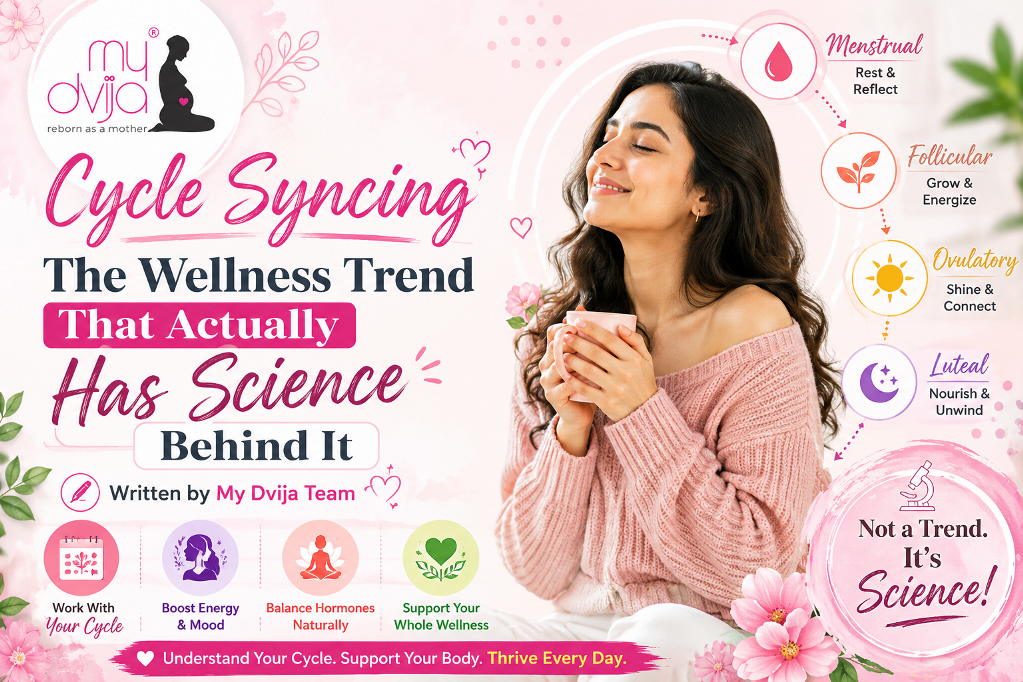
The four phases, based on a typical 28-day cycle:
- Menstrual phase (Days 1–5): Oestrogen and progesterone are at their lowest. The uterine lining sheds
- Follicular phase (Days 6–13): Oestrogen begins rising as the body prepares an egg for release
- Ovulatory phase (Days 14–16): Oestrogen, luteinising hormone (LH), and testosterone all peak as an egg is released
- Luteal phase (Days 17–28): Progesterone rises to prepare the uterus for potential pregnancy; if it doesn’t happen, hormones drop sharply toward the end, often bringing PMS
Most cycles aren’t exactly 28 days — anywhere from 21 to 35 days is considered normal — so these day ranges are a guide, not a rule. Tracking your own cycle for 2–3 months tells you your actual pattern far more accurately than any generic chart.
The Science — What’s Actually Confirmed in Recent Research :-
This is the part most cycle syncing content skips. There’s a difference between wellness-influencer claims and what’s been measured in peer-reviewed research. As of late 2025, here’s what’s genuinely established:
1. Exercise performance does shift across the cycle: –
A comprehensive narrative review published in Frontiers in Endocrinology in December 2025 examined exercise performance across all six sub-phases of the menstrual cycle and confirmed measurable differences in strength, endurance, and metabolic response depending on cycle phase. This isn’t a single small study — it’s a synthesis of the growing body of sports endocrinology research specifically focused on women, a field that has historically been understudied compared to research on men’s athletic performance.
2. Cortisol and fat metabolism respond differently by phase: –
A 2024 study measuring cortisol and metabolic response to identical exercise sessions in the follicular versus luteal phase found that cortisol and fat utilisation after exercise were significantly higher in the follicular phase than in the luteal phase — meaning the same workout produces a measurably different physiological response depending on where you are in your cycle.
3. Sleep architecture changes with luteal-phase training: –
Research published in late 2025 found that resistance training during the luteal phase specifically enhanced nocturnal heat dissipation and deep sleep (delta power) compared to follicular-phase training — suggesting that strength training timed to the luteal phase may have specific sleep-quality benefits beyond the workout itself.
4. The mechanism is well understood, even if causal claims are still developing: –
Oestrogen and progesterone don’t just regulate reproduction — they have receptors throughout the body, including in muscle tissue, the brain, the gut lining, and the skin. Hormonal fluctuation genuinely does influence energy availability, pain perception, inflammation, mood-regulating neurotransmitters, and even core body temperature across the cycle. The biological plausibility is strong, even where large-scale randomised trials are still catching up.
What the science does NOT yet fully support: –
Highly specific claims like “eat these exact 5 foods on day 12” go beyond current evidence. A 2025 academic review examining cycle syncing content across social media found that most online creators making specific cycle-syncing recommendations weren’t citing peer-reviewed research, and the field — while promising — hasn’t yet produced the large randomised controlled trials needed to confirm precise day-by-day prescriptions. The general phase-based pattern has good support. The granular daily detail often doesn’t.
The honest takeaway: cycle syncing as a general framework — adjusting intensity, food, and expectations across four broad phases — is reasonably well supported. Treating it as a precise, rigid daily protocol is overselling what the current research actually shows.
The Four Phases — What to Actually Do :-
Menstrual Phase (Days 1–5) — Rest and Replenish: –
Oestrogen and progesterone are both at their lowest point. This is genuinely a lower-energy phase for most women, and prostaglandins (inflammatory compounds released as the uterine lining sheds) cause the cramping and “flu-like” fatigue many women experience.
- Exercise: Low-impact movement — walking, gentle yoga, stretching. Rest is not laziness here, it’s physiologically appropriate
- Nutrition: Iron-rich foods are essential — you’re actively losing iron through bleeding. Warm, easily digestible food supports a body that’s working hard internally. Ginger and warming spices help with cramping
- In Ayurveda, this phase aligns closely with the concept of rajasvala paricharya — traditional rest practices during menstruation that modern Indian urban life has largely abandoned, but that align surprisingly well with what current research now supports
- For cramping support: Dvija Pain Relief Oil, formulated with ashwagandha, neem, and sesame oil, applied to the lower abdomen and lower back, addresses the muscular and inflammatory component of period pain
Follicular Phase (Days 6–13) — Build and Initiate: –
Rising oestrogen brings rising energy, improved mood, and better insulin sensitivity. This is consistently identified as the highest-energy, most resilient phase of the cycle for most women.
- Exercise: This is the phase to push — higher intensity cardio, new workout challenges, strength training progression. The body recovers faster and tolerates higher training loads
- Nutrition: Fresh, light foods support the rising energy. This is a good window for trying new recipes or slightly more ambitious meal prep — appetite and energy for cooking tend to be higher
- Work and life: Often the best window for starting new projects, important meetings, or anything requiring sharp focus and confidence
- Sleep quality also tends to be best in this phase — a good time to address any sleep debt accumulated during the harder luteal and menstrual weeks
Ovulatory Phase (Days 14–16) — Peak and Connect: –
Oestrogen, LH, and testosterone all peak around ovulation. This combination drives the highest energy, confidence, libido, and social engagement of the cycle for most women.
- Exercise: Peak performance window — this is when personal bests in strength and endurance are most achievable
- Nutrition: Continue with nutrient-dense, antioxidant-rich foods — berries, cruciferous vegetables — which support the liver’s role in processing the oestrogen peak
- This is also typically the most fertile window — relevant whether you’re trying to conceive or trying to avoid it, and worth tracking if either matter to you
Luteal Phase (Days 17–28) — Slow Down and Stabilise: –
Progesterone rises through the first part of this phase, then both oestrogen and progesterone drop sharply in the final days if pregnancy hasn’t occurred — this drop is what drives PMS. Energy typically declines through this phase, along with increased cravings, lower mood tolerance, and reduced heat tolerance.
- Exercise: Moderate intensity — strength training is well tolerated (and per the 2025 sleep research, may specifically support deep sleep), but very high-intensity cardio often feels harder and recovers more slowly in this phase. Pilates, barre, and steady-state movement work well
- Nutrition: Complex carbohydrates — sweet potato, whole grains — help stabilise the mood and energy dips associated with falling progesterone. Magnesium-rich foods (nuts, seeds, dark leafy greens) genuinely help with PMS symptoms, with reasonable evidence behind magnesium supplementation specifically for premenstrual symptoms
- For hormonal support through this phase specifically, Dvija Natural Shatavari — taken consistently as a daily tonic, not just in the luteal phase — supports the progesterone-oestrogen relationship that drives much of luteal phase symptomatology. Adaptogens work on cumulative hormonal rhythm, not single-dose timing
- Sleep often becomes harder in the late luteal phase due to the drop in progesterone, which has a calming, sleep-supportive effect when present. This is the phase to be most protective of your sleep routine, not least
Cycle Syncing and Ayurveda — The Connection Nobody’s Making: –
What’s striking about the current cycle syncing research is how closely it echoes principles that Ayurveda has described for centuries, using a completely different framework.
Ayurveda has long described the menstrual cycle in terms of the three doshas shifting through the month — broadly, a Vata-dominant phase during menstruation (movement, release, requiring grounding and rest), a Kapha-dominant follicular phase (building, nourishing, energy rising), and a Pitta-dominant phase around ovulation and into the luteal phase (heat, transformation, intensity). The specific recommendations — rest during menstruation, building activity through the follicular phase, moderating intensity as the cycle progresses — overlap substantially with what current endocrinology research is now independently confirming.
This isn’t coincidence. It’s two different observational traditions — one ancient and pattern-based, one modern and measurement-based — arriving at similar practical conclusions about how to live in step with a cyclical body.
A Practical Way to Start — Without the Overwhelm: –
You don’t need a colour-coded app, five different supplement protocols, or a complete diet overhaul to benefit from this. Start simply:
- Track your cycle for 2 cycles — just the start date and how you feel each day. Patterns become visible quickly
- Notice, don’t force — pay attention to when you naturally have more energy and when you don’t, rather than imposing a generic phase chart onto your own unique pattern
- Adjust exercise intensity, not exercise entirely — push harder in the follicular and ovulatory weeks, ease back (not stop) in the luteal and menstrual weeks
- Plan demanding work and decisions, where you have the choice, around your higher-energy weeks
- Be more protective of rest in the week before your period — this isn’t indulgence, it’s aligned with what’s actually happening hormonally
Who Should Be Cautious with Cycle Syncing: –
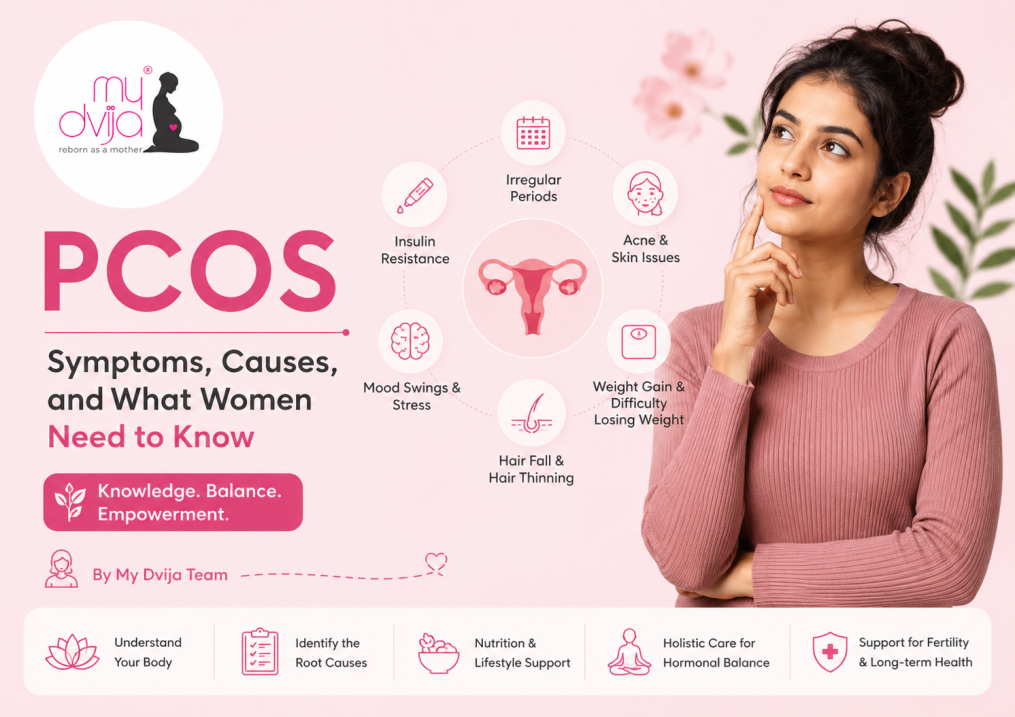
Cycle syncing assumes a regular, predictable ovulatory cycle. For women with PCOS, irregular cycles, or those on hormonal contraception (which suppresses the natural hormonal fluctuation cycle syncing is built around), the standard phase framework doesn’t map cleanly onto their actual hormonal reality. This doesn’t mean the underlying principles — rest when your body signals fatigue, push when you have energy — stop being useful. It means the rigid day-by-day version of cycle syncing content online isn’t built for every woman’s body, and that’s worth knowing before feeling like you’re “doing it wrong.”
If your cycle is consistently irregular and you want to understand what’s driving that before trying to sync anything to it, PCOS — Symptoms, Causes and What Every Woman Needs to Know and How to Balance Hormones Naturally are good places to start.
Support Through Every Phase: –
Building a body that responds well to cycle-aware living starts with the same foundations covered throughout MyDvija’s content — adequate iron (commonly low in menstruating Indian women and directly affecting energy across every phase), stable blood sugar, good sleep, and hormonal support through adaptogens like shatavari used consistently rather than only during symptomatic weeks.
For women wanting structured guidance on nutrition and movement that responds to their actual hormonal patterns — including postpartum cycle return, which has its own distinct rhythm — a consultation with Shrreya Shah can help translate the general framework into something specific to your cycle, your symptoms, and your life.
MyDviha had covered women’s hormonal health and natural cycle support on the MyDvija YouTube channel — subscribe for ongoing guidance.
Also Worth Reading :-
- How to Balance Hormones Naturally
- PCOS — Symptoms, Causes and What Every Woman Needs to Know
- Iron Deficiency in Indian Women — Signs You’re Ignoring and How to Fix It
- Getting Your Period Back After Baby — What’s Normal, What’s Not
- Subscribe to the MyDvija YouTube channel →
- Explore all blogs →
Cycle syncing arrived through Instagram, which makes it easy to dismiss. But underneath the trend cycle is a genuinely useful, increasingly evidence-supported idea: your body is not the same every day of the month, and pretending otherwise — pushing for a personal best on day 26, scheduling your hardest week of work right before your period, ignoring fatigue that has a clear hormonal explanation — isn’t discipline. It’s just working against your own biology.
Your grandmother could have told you this without a single study citation. Now, increasingly, the studies agree with her.