

Blog
Gut Health for Women — How Your Gut Affects Your Skin, Mood, and Hormones

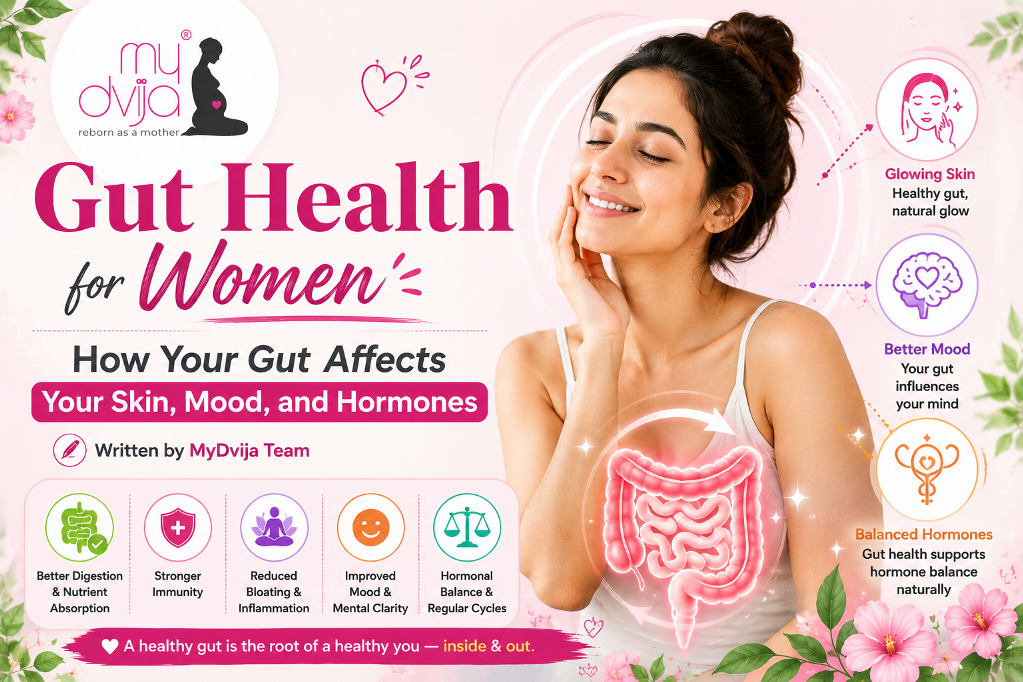
Gut Health for Women — How Your Gut Affects Your Skin, Mood, and Hormones
For three years I had skin that broke out every month like clockwork — always the same spot on my jaw, always the week before my period, always completely resistant to anything I put on my face.
I tried two different dermatologists. I tried changing my cleanser, my moisturiser, my pillowcase. I tried not touching my face. I tried more water. I tried less sugar for approximately eleven days before giving up.
Nobody — not one doctor — asked me about my digestion.
The connection between gut health and skin, mood, and hormonal balance is one of the most significant developments in women’s health research over the last decade. The gut microbiome — the approximately 38 trillion microorganisms living in your digestive tract — influences oestrogen metabolism, neurotransmitter production, inflammatory response, and immune function. When it’s disrupted, the effects show up in your skin, your cycle, your energy, and your mental state simultaneously.
Here’s the full picture.
What the Gut Microbiome Actually Is: –
Your gut contains roughly 38 trillion microorganisms — bacteria, fungi, viruses — collectively called the microbiome. This isn’t a passive colony of residents. It’s an active system that:
- Produces neurotransmitters — about 90% of the body’s serotonin is made in the gut
- Metabolises hormones — particularly oestrogen, through a specific subset called the estrobolome
- Regulates inflammation — a dysbiotic (imbalanced) microbiome produces inflammatory compounds that circulate systemically
- Supports immune function — roughly 70% of the immune system is located in the gut
- Produces short-chain fatty acids — which feed the gut lining cells, regulate appetite, and influence insulin sensitivity
A diverse, well-fed microbiome does all of this efficiently. A depleted, dysbiotic one — disrupted by antibiotic use, processed food, chronic stress, poor sleep, or low fibre intake — fails at all of these functions simultaneously. The downstream effects are not just digestive.
The Gut-Skin Connection — Why It’s Not Just About What You Put On Your Face: –
The gut-skin axis is one of the most researched areas of microbiome science. The connection is bidirectional and operates through several mechanisms:
1. Inflammation: –
A leaky or dysbiotic gut produces lipopolysaccharides (LPS) — fragments of bacterial cell walls that cross the gut lining and enter the bloodstream. LPS triggers a systemic inflammatory response. That inflammation shows up in the skin as acne, redness, eczema flares, and accelerated ageing. Research published in the Journal of Dermatological Science has confirmed elevated intestinal permeability in acne patients compared to healthy controls — meaning acne is not just a skin condition but often a systemic inflammatory one with a gut origin.
2. Hormonal acne and the estrobolome: –
The estrobolome is the collection of gut bacteria specifically responsible for metabolising oestrogen. When these bacteria are depleted or imbalanced — common after antibiotic use, high-sugar diet, or chronic stress — oestrogen is inadequately processed and recirculates in the blood rather than being eliminated.
Elevated circulating oestrogen relative to progesterone contributes to the hormonal acne pattern most Indian women recognise immediately: breakouts on the lower face, jawline, and chin, appearing predictably in the week before menstruation. Treating this with topical products addresses the surface. Addressing the estrobolome addresses the source.
3. Nutrient absorption: –
The gut is where you absorb the nutrients your skin depends on — zinc (essential for skin healing and sebum regulation), vitamin A, vitamin C, omega-3 fatty acids. A compromised gut lining absorbs these poorly regardless of how well you eat. You can have a perfect diet and still be nutritionally deficient at the cellular level if your gut wall is inflamed and permeable.
What actually helps skin through the gut:
- Fibre — feeds the beneficial bacteria that maintain gut lining integrity. Vegetables, legumes, whole grains, flaxseeds
- Fermented foods — dahi, idli, dosa, kanji — traditional Indian fermented foods are prebiotic and probiotic simultaneously. The Indian diet was always gut-friendly. The problem is when it’s replaced with processed food
- Omega-3 fatty acids — anti-inflammatory, directly reduce the LPS-triggered inflammation that drives inflammatory skin conditions. Flaxseeds, walnuts, fatty fish
- MyDvija’s Flax Seeds Powder — ground flaxseeds provide both omega-3s and soluble fibre (lignans) that specifically support oestrogen metabolism and gut lining health. One tablespoon daily in smoothies, dahi, or warm water is a meaningful gut-skin intervention
The Gut-Mood Connection — 90% of Serotonin Is Made in the Gut: –
This is the fact that most people find hardest to believe the first time they hear it.
Serotonin — the neurotransmitter most associated with mood, wellbeing, and emotional regulation — is predominantly produced in the gut, not the brain. The enteric nervous system (the gut’s own nervous system, sometimes called the “second brain”) contains more neurons than the spinal cord and communicates bidirectionally with the brain through the vagus nerve.
When the gut microbiome is dysbiotic, serotonin production is impaired. Research consistently shows associations between gut dysbiosis and anxiety, depression, and mood instability. This is not a metaphor or a vague wellness claim. It is a direct neurochemical consequence of microbial imbalance.
The connection is particularly relevant for women because:
- Women are twice as likely as men to experience anxiety and depression — and oestrogen fluctuations across the cycle affect both gut microbiome composition and serotonin sensitivity
- PMS and PMDD — the mood component especially — are significantly influenced by serotonin availability in the luteal phase, which is gut-microbiome dependent
- Postpartum depression has emerging associations with gut dysbiosis — the microbiome shifts significantly during pregnancy and delivery, and restoration after birth may be relevant to mood recovery
What supports the gut-brain axis:
- Consistent sleep — the microbiome follows a circadian rhythm. Disrupted sleep disrupts microbial balance, which disrupts serotonin production
- Tryptophan-rich foods — the amino acid precursor to serotonin. Found in sesame seeds, pumpkin seeds, oats, eggs, dairy. The gut bacteria convert dietary tryptophan into serotonin — but only when the microbiome is healthy enough to do so
- Stress reduction — chronic stress raises cortisol, which directly alters gut microbiome composition and increases intestinal permeability. Pranayama and meditation are not just emotional tools — they have measurable effects on gut health through the vagus nerve
The Gut-Hormone Connection — Oestrogen, Thyroid, and Insulin: –
Oestrogen and the estrobolome: –
Already mentioned in the skin section, but worth expanding: the estrobolome is perhaps the most important concept in women’s gut health. When gut bacteria responsible for oestrogen metabolism are depleted, the enzyme beta-glucuronidase becomes overactive — this enzyme deconjugates oestrogen in the gut, allowing it to be reabsorbed into the bloodstream rather than excreted. The result is oestrogen dominance — not because you’re producing too much oestrogen, but because you’re not eliminating it efficiently.
Oestrogen dominance drives: heavy periods, breast tenderness, PMS, fibroids, endometriosis, hormonal acne, and difficulty losing weight. All of this with a gut origin that no amount of progesterone cream or period-management medication addresses at its root.
Thyroid and the gut: –
Approximately 20% of thyroid hormone conversion (from inactive T4 to active T3) happens in the gut. A compromised gut lining means compromised thyroid hormone conversion — contributing to hypothyroid symptoms (fatigue, weight gain, brain fog, hair loss) even when thyroid blood tests are within the technically normal range. This is one of the most missed connections in women’s health.
Insulin and gut bacteria: –
Specific gut bacteria — Akkermansia muciniphila in particular — are directly associated with improved insulin sensitivity. Dysbiosis reduces the abundance of these beneficial bacteria, contributing to insulin resistance. Since insulin resistance drives androgen excess in PCOS, the gut is upstream of many of the hormonal disruptions PCOS-affected women experience.
What Destroys Your Gut Microbiome — The Indian Women’s Specific List: –
- Antibiotics: a single course can deplete gut bacterial diversity for months. Indian healthcare frequently overprescribes antibiotics for viral infections where they’re not effective. Every antibiotic course needs active microbiome restoration afterward
- A low-fibre diet: the shift from traditional Indian diets rich in dal, vegetables, and whole grains to refined flour, packaged snacks, and processed food is the single largest driver of gut dysbiosis in urban Indian women
- Chronic stress: raises cortisol, increases intestinal permeability, and alters microbial composition. The load Indian mothers and working women carry — often simultaneously — is a direct gut health risk factor
- Poor sleep: the microbiome follows a circadian rhythm. Women who sleep irregularly or get consistently less than 7 hours have measurably different gut microbiome composition than those who sleep well
- Excess refined sugar: feeds pathogenic bacteria and depletes beneficial ones. The Indian sweet consumption pattern — chai with sugar multiple times a day, mithai at social events, biscuits as snacks — creates a consistent pro-dysbiotic dietary environment
- Antacids: widely used in India without prescription, including PPIs (proton pump inhibitors). Stomach acid is the first line of defence against pathogenic bacteria. Suppressing it long-term allows bacteria to establish in the upper digestive tract where they don’t belong
- Hormonal contraceptives: alter the gut microbiome and estrobolome, which is relevant context for women whose gut and hormonal symptoms began or worsened after starting the pill
What Actually Rebuilds Gut Health: –
1. Fibre — the foundation: –
Gut bacteria feed on fibre — specifically prebiotic fibre that humans can’t digest but bacteria ferment into short-chain fatty acids. The target is 25–30g of fibre daily. The average Indian woman consuming a processed-food-heavy diet gets approximately 10–15g.
The simplest way to increase fibre through Indian food:
- Dal at every main meal — each cup of cooked dal provides 15g+ of fibre alongside complete protein
- Whole grains over refined — jowar roti, bajra roti, ragi porridge instead of maida
- One tablespoon of MyDvija’s Flax Seeds Powder daily — 3g of fibre, omega-3s, and lignans that specifically support oestrogen metabolism through the gut
- Millets replacing refined carbohydrates — Dvija Multi Millet Noodles made from kodo, finger millet, little millet, and jowar provide significantly more fibre than wheat noodles, are free from preservatives, and include a natural spice mix. A practical way to replace a refined-carbohydrate meal with a gut-supportive one without changing what you’re eating entirely
2. Fermented foods — the most underused tool in the Indian kitchen: –
India has one of the richest fermented food traditions in the world, and most of it is being abandoned in urban kitchens:
- Dahi — fresh homemade dahi (not commercial yoghurt with added sugar and thickeners) is a genuinely probiotic food. Making it at home with a small amount of previous batch as starter preserves the live cultures
- Idli and dosa batter — the fermentation process creates lactic acid bacteria with probiotic properties and also reduces phytic acid, improving mineral absorption from the same meal
- Kanji — the fermented carrot drink from North India, particularly Holi season — is one of the most potent naturally fermented drinks in Indian food culture
- Chaas (buttermilk) — particularly made from homemade dahi rather than commercial sources — contains Lactobacillus cultures that directly support gut health
3. Moringa — the gut-supporting superfood most Indian women underuse: –
Moringa has emerging research supporting its prebiotic properties — it feeds beneficial gut bacteria — alongside its anti-inflammatory effects on the gut lining. Its extraordinary nutrient density (iron, calcium, vitamin C, all in one source) makes it particularly relevant for women whose gut health issues are accompanied by nutritional deficiencies.
Both MyDvija’s Moringa Powder (1 teaspoon in warm water, dal, or smoothie) and Dvija Moringa Noodles — made from ragi flour, moringa powder, and wheat flour — are practical daily ways to get moringa’s gut and nutritional benefits without preparing anything from scratch
4. Ghee — the gut healer Indian grandmothers never had to explain: –
Ghee contains butyrate — a short-chain fatty acid that is the primary fuel source for colonocytes, the cells lining the colon. Butyrate maintains gut lining integrity, reduces intestinal permeability (leaky gut), and has anti-inflammatory effects on the gut mucosa. Research on butyrate’s role in maintaining the gut lining is robust and well-established.
The traditional practice of adding ghee to every meal — to dal, to rice, to roti — wasn’t just about taste. It was delivering butyrate directly to the gut with every meal. Dvija Cow Ghee (Vedic Style) is handmade in small batches using the traditional method, chemical-free, and genuinely retains the nutritional properties that factory-processed ghee often doesn’t. One teaspoon in main meals is both sufficient and meaningful
5. Shatavari — for the gut-hormone axis specifically: –
Shatavari’s prebiotic properties — supporting the growth of beneficial gut bacteria — make it relevant for gut health beyond its well-known hormonal benefits. For women dealing with the gut-hormone connection specifically — hormonal acne, PMS driven by oestrogen dominance, irregular cycles connected to microbiome dysbiosis — Dvija Natural Shatavari addresses the gut-estrobolome connection from both sides: supporting the gut environment and the hormonal balance simultaneously
6. Reduce the dysbiosis drivers before adding anything: –
Adding probiotic supplements to a gut environment still flooded with refined sugar, chronic stress, and poor sleep is like mopping the floor while the tap is still running. The sequence matters: reduce the gut-harming inputs first, then build the beneficial ones. The dietary changes — less refined flour and sugar, more fibre, fermented foods, ghee — are more impactful than any supplement taken without changing the underlying environment
Signs Your Gut Health Is Improving: –
These appear in roughly this order, over weeks to months of consistent change:
- Digestion becomes more regular — bowel movements once a day, well-formed, without straining
- Bloating reduces — particularly the post-meal bloating that many women have normalised as just how they feel after eating
- Skin inflammation begins to settle — hormonal breakouts become less severe before they become less frequent
- Energy stabilises — the post-lunch energy crash that drives chai craving #3 starts to diminish
- Mood becomes less reactive in the premenstrual week — not because PMS disappears overnight but because serotonin production and oestrogen metabolism are both improving gradually
- Sleep quality improves — the microbiome’s circadian rhythm and sleep quality are bidirectionally connected; improving one improves the other
These changes take 4–8 weeks of consistent habit before becoming noticeable, and 3–6 months before they’re fully established. This is not a quick fix — it’s a system that took time to disrupt and takes time to restore.
A Simple Daily Gut Health Routine for Indian Women: –
- Morning: warm water with lemon on waking (vitamin C, liver support, gentle gut stimulation). Breakfast with dahi or idli/dosa — fermented base to start the day’s microbial input
- Mid-morning: 1 teaspoon moringa powder in warm water or add to dal later
- Lunch: dal at the main meal. Squeeze of lemon. A tablespoon of ghee. Raw salad or cooked sabzi for fibre
- Afternoon: flaxseed powder in a small glass of water or mixed into dahi
- Evening: chaas or a small portion of homemade dahi if not already had at lunch
- Daily: replace refined sugar in tea and cooking with Natural Jaggery Powder — jaggery contains small amounts of oligosaccharides that have prebiotic properties refined sugar lacks entirely
- Replace one refined-carbohydrate meal weekly: try Dvija Multi Millet Noodles or Dvija Moringa Noodles — whole-grain, no preservatives, fibre-rich alternatives to maida pasta or instant noodles. The same meal format, a completely different nutritional profile
When to Get Proper Help: –
Gut health habits are powerful. They are not a substitute for medical investigation if you have significant, persistent digestive symptoms — chronic diarrhoea, blood in stool, severe bloating that doesn’t respond to dietary changes, significant unexplained weight loss, or persistent pain. These need a gastroenterologist.
For women wanting to understand how their gut health connects to their skin, hormonal, and mood picture specifically — and how to address it in the context of pregnancy, postpartum recovery, or breastfeeding — a 30-minute consultation with Shrreya Shah covers the nutritional and Ayurvedic approach to this connection in a way that integrates with MyDvija’s full maternal and women’s health framework
My Dvija covered women’s nutrition, postpartum recovery, and hormonal health on the MyDvija YouTube channel — subscribe for practical, Hindi-language guidance on gut health and women’s wellness
Also Worth Reading: –
- How to Balance Hormones Naturally — A Complete Guide for Women
- PCOS — Symptoms, Causes and What Every Woman Needs to Know
- Iron Deficiency in Indian Women — Signs You’re Ignoring
- Cycle Syncing — The Wellness Trend That Actually Has Science Behind It
- Ragi for Babies — When to Start and How to Make
- Subscribe to the MyDvija YouTube channel →
- Explore all blogs →
The dermatologist who treated my jaw acne for two years was treating the symptom. The connection between my cycle, my stress levels, my three-coffees-and-barely-any-vegetables diet, and my skin was never discussed once.
Understanding the gut-skin-mood-hormone axis didn’t give me a quick fix. But it gave me a framework — a way of understanding that these systems are connected, and that improving one upstream improves all of them downstream. That framework has been more useful than any topical treatment I’ve ever tried.
Your skin, your mood, and your hormones are not three separate problems. They share a root. And increasingly, that root is in your gut.