

Blog
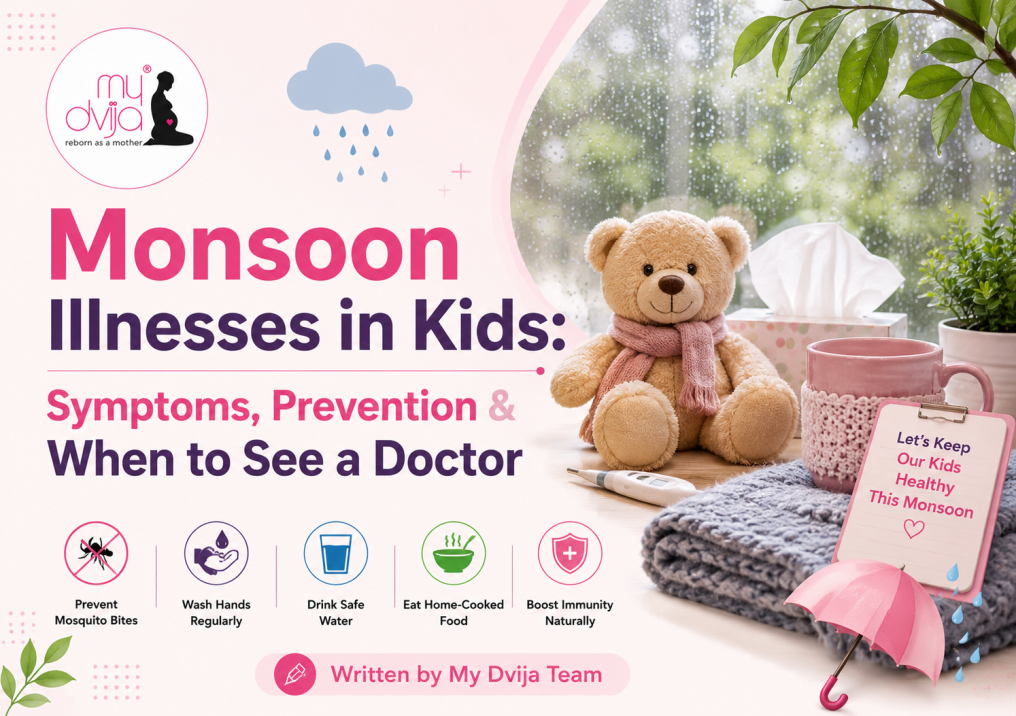
Monsoon Illnesses in Kids: A Complete Parent’s Guide to Dengue, Viral Fever & Prevention

Monsoon Illnesses in Kids: A Complete Parent’s Guide to Dengue, Viral Fever & Prevention
WhatsApp group lit up at 11pm: a classmate had a 103°F fever, and within an hour someone had diagnosed dengue, someone else typhoid, and a third parent was already recommending papaya leaf juice. My daughter had a mild cold. I still didn’t sleep.
Monsoon in India means a predictable spike in a handful of illnesses — most of them manageable at home, a few of them genuinely urgent. The panic usually comes from not knowing which is which. This is that clarity.
The Numbers: –
- Delhi recorded its highest April dengue count in five years this year — doctors now describe dengue as a year-round risk in Indian cities, not just a monsoon one.
- National data showed nearly 7,000 dengue cases by end-February 2026 alone, unusually early transmission for a disease that historically peaked August–October.
- Doctors flag children as especially vulnerable to severe dengue — weaker baseline immunity and a higher chance of the illness worsening suddenly within days.
None of this is cause for panic — it’s cause for knowing the warning signs, which most parents genuinely don’t.
Dengue — The One Worth Actually Worrying About: –
Spread by daytime-biting Aedes mosquitoes that breed in clean, stagnant water — coolers, flowerpot trays, open tanks. Starts like an ordinary fever, which is exactly what makes it dangerous to dismiss.
- Typical symptoms: sudden high fever, severe body/joint pain, headache behind the eyes, rash, fatigue.
- Emergency warning signs — go to a hospital immediately: severe abdominal pain, persistent vomiting, bleeding gums or nosebleeds, blood in vomit/stool, extreme restlessness or lethargy, cold clammy skin.
- Prevention: empty coolers and flowerpot trays every 3–4 days, use mosquito repellent and nets, dress kids in full sleeves at dawn/dusk when Aedes mosquitoes are most active.
Fever with these red flags needs a same-day doctor visit and a platelet count — not home remedies while you wait it out.
Viral Fever — The Common, Usually-Harmless One: –
The most frequent m.onsoon complaint, and the one most parents can manage confidently at home.
- Typical course: fever for 2–4 days, body ache, mild cold/cough, resolves on its own with rest and fluids.
- See a doctor if: fever crosses 3 days, spikes above 103°F, or your child seems unusually lethargic, refuses fluids, or has trouble breathing.
- At home: hydration, rest, and light food — khichdi, dal-rice, warm soups — not a race to the pharmacy for antibiotics a viral fever doesn’t need.
Stomach Infections — Contaminated Food and Water: –
Monsoon runoff contaminates water sources and street food more easily, making diarrhoea, food poisoning, and typhoid all more common this season.
- Watch for: loose motions, vomiting, stomach cramps, or (for typhoid) a fever that climbs steadily over several days with low appetite.
- Home care for mild diarrhoea/vomiting: ORS solution frequently in small sips, bland food, no dairy or oily food until it settles.
- Dehydration red flags — see a doctor: sunken eyes, very little urine, no tears when crying, unusual drowsiness.
- Prevention: boiled or filtered water only, avoid street food and cut fruit during monsoon, wash hands before meals.
Fungal Skin Infections — The Damp-Weather Nuisance: –
Prolonged dampness — wet school shoes, sweaty uniforms, humid weather — makes fungal infections (ringworm, athlete’s foot) far more common in monsoon.
- Fix: dry skin thoroughly after baths, especially between toes and skin folds; cotton clothing; dry shoes fully between wears; see a doctor for anything that’s spreading or not improving in a week.
Eye Flu (Viral Conjunctivitis) — The One That Spreads Fast at School: –
Highly contagious in monsoon, and moves quickly through a classroom once it starts.
- Watch for: red, watery, itchy eyes, sometimes with discharge.
- Fix: cool compresses, no touching/rubbing eyes, separate towels, keep home from school until it clears — a doctor can confirm it’s viral and not needing drops.
Building Immunity — Food First, Not a Bottle: –
No supplement prevents dengue or typhoid. What genuinely helps is a well-fed immune system going into the season:
- Vitamin C-rich fruit: amla, citrus, guava through the week.
- Iron and zinc for a working immune system: ragi (Nachani Satva), dal, Moringa Powder in daily meals.
- Warm, easily digestible food: khichdi and soups over fried/street food through the wet months.
- A spoon of Cow Ghee (Vedic Style) with meals — supports absorption of the fat-soluble vitamins already in the diet.
- Adequate sleep and hydration — unglamorous, and still the two biggest levers for a resilient immune system.
Skip These — The Marketing (and Myth) Trap: –
- “Immunity booster” syrups and tonics: no monsoon-illness prevention evidence — real immunity comes from food, sleep, and vaccination status, not a bottle.
- Papaya leaf juice for platelets: a popular home remedy with no solid clinical evidence — don’t let it delay an actual doctor visit for suspected dengue.
- Self-medicating fever with random antibiotics or high-dose paracetamol: most monsoon fevers are viral; unnecessary antibiotics don’t help and NSAIDs like ibuprofen/aspirin can be genuinely dangerous if it turns out to be dengue — stick to doctor-advised paracetamol until diagnosed.
- Waiting out warning signs at home: the biggest risk isn’t dengue itself — it’s reaching a hospital late after symptoms already turned severe.
A Simple Monsoon Checklist: –
- Weekly: empty and dry all water-collecting containers — coolers, flowerpot trays, buckets.
- Daily: boiled/filtered water only, full-sleeve clothing at dawn and dusk, dry shoes and damp clothes promptly.
- Diet: warm, home-cooked food; skip street food and cut fruit; keep ORS at home as a standing precaution.
- School: keep a child home at the first sign of conjunctivitis or a spreading skin rash — both move fast through a classroom.
Go to a Doctor — Same Day — If: –
- Fever crosses 3 days or spikes above 103°F.
- Any bleeding — gums, nose, blood in vomit or stool.
- Severe abdominal pain or persistent vomiting.
- Signs of dehydration — sunken eyes, minimal urine, unusual drowsiness.
- Your child seems unusually lethargic or difficult to wake.
For guidance tailored to your child — book a consultation with Shrreya Shah, or follow practical, everyday guidance on the MyDvija YouTube channel.
Also Worth Reading: –
- Supplements for Kids (4–12 Years) — What They Really Need
- Supplements for Toddlers — What Indian Children Actually Need
My daughter’s cold cleared up in three days with rest and soup, same as most monsoon fevers do. Her classmate’s fever turned out to be a straightforward viral infection too — but the family that took her in on day one for a platelet check did the right thing regardless of how it turned out.
Know the red flags, skip the panic, and let a blood test settle the guessing — not a WhatsApp group.