
Blog
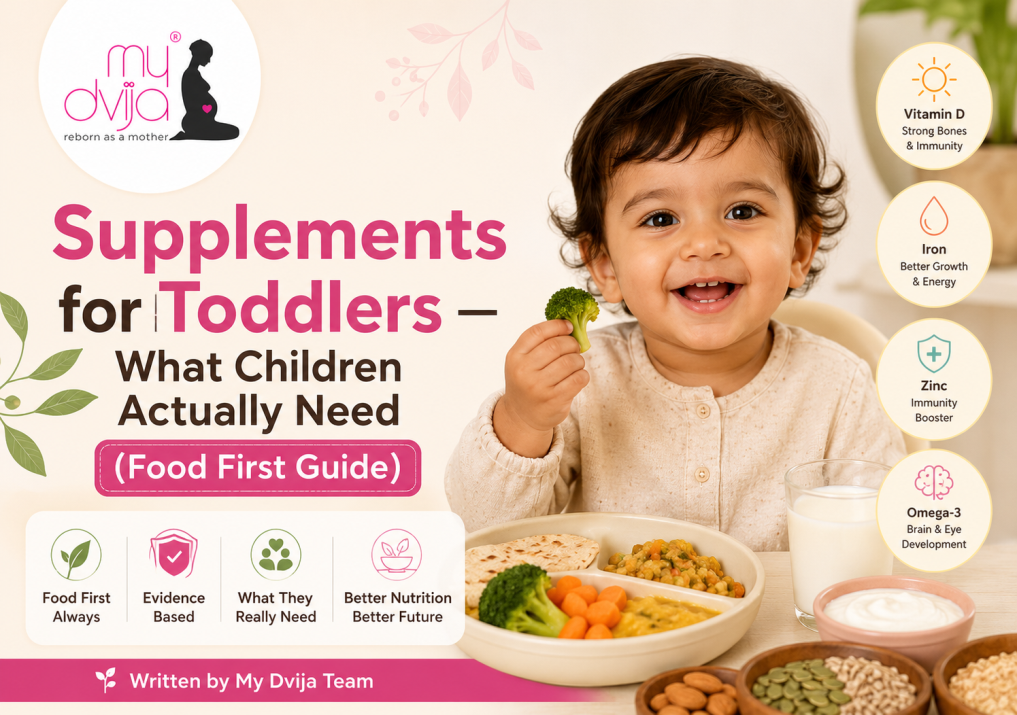
Supplements for Toddlers — What Indian Children Actually Need

Supplements for Toddlers — What Indian Children Actually Need
My son turned one and suddenly the paediatrician’s waiting room felt like a supplement showroom.
The pharmacist recommended a multivitamin syrup. An aunty in the building suggested a calcium powder. My mother-in-law brought a bottle of something called “Brain Tonic” from a medical shop. The paediatric nutritionist I eventually saw recommended none of the above and instead told me to fix his meals first.
She was right. But the confusion is real — and it’s everywhere. The supplement market for Indian toddlers has exploded, and most parents are making decisions based on marketing rather than evidence. What does a toddler actually need? When does diet alone not cover it? And when is a supplement genuinely the answer versus when is fixing the meal the better solution?
This is that clarity, finally.
The Numbers Every Indian Parent Should Know: –
Before we get into specific nutrients, the scale of the problem in India:
- Over 70% of Indian children aged 5–15 have suboptimal vitamin D levels, according to research published in the Indian Pediatrics Journal
- Iron deficiency anaemia affects nearly 50% of children under five — compromising cognitive development, physical stamina, and immune function
- Calcium and zinc deficiencies are widespread, affecting bone density, immune function, and growth patterns
- Omega-3 deficiency is essentially universal in Indian children who don’t eat fish regularly
These are not minor gaps. They are deficiencies large enough to affect how a child grows, thinks, and stays well. And in most cases, they’re preventable — through food first, and supplements where food genuinely cannot fill the gap.
First — Does My Toddler Need Supplements at All? :-
The honest answer: some do, most partially do, and none need the full shelf at the pharmacy.
A toddler eating a varied diet with dal, ragi, dairy, eggs, and colourful vegetables — and getting some daily sunlight — may genuinely need only vitamin D. A toddler who is a highly selective eater, refuses most vegetables, drinks mostly milk and eats mostly biscuits, and is kept indoors — may need iron, vitamin D, zinc, and omega-3 all supplemented.
The supplement question should follow the diet audit, not precede it. What does your toddler actually eat in a week? That answer tells you more about what they need than any generic recommendation.
What always applies regardless of diet:
- Vitamin D: almost universally needed in India, regardless of how well a toddler eats, because urban indoor living cannot be compensated for by diet alone
- Iron: likely needed if the child was breastfed past 12 months without iron-rich solids, is a selective eater, or if screening at 12 months showed low levels
Everything else depends on the actual diet.
Supplement 1 — Vitamin D: The Most Important Toddler Supplement in India: –
The toddler years (1–3 years) are a period of rapid bone mineralisation. Legs lengthen, the spine grows, teeth develop — all of which require calcium. And calcium cannot be properly absorbed without vitamin D. A toddler deficient in vitamin D absorbs less calcium from every glass of milk and every ragi porridge, regardless of how much calcium they consume.
Why Indian toddlers are at highest risk: –
- India receives abundant sunlight — but urban Indian toddlers are often kept indoors through the hottest hours, dressed in full clothing outdoors, and many live in apartments with limited outdoor play time
- Darker skin requires longer sun exposure to synthesise the same vitamin D as lighter skin
- The dietary sources of vitamin D are very limited — fatty fish, egg yolk, and fortified foods — and most Indian toddler diets are low in all three
- A mother who was vitamin D deficient during pregnancy and breastfeeding has passed on lower vitamin D stores to her child from the start
What deficiency looks like in toddlers: –
- Delayed walking or reluctance to bear weight — from bone softness
- Bowing of the legs once walking (rickets) — one of the most visible signs
- Delayed tooth eruption or weak tooth enamel
- Frequent respiratory infections — vitamin D is central to immune function
- Muscle weakness or general low tone
- Excessive sweating of the head during sleep
Recommended dose and form: –
The recommended intake for toddlers aged 1–3 years is 600 IU (15 mcg) of vitamin D daily. Liquid drops are most practical for under-2s. Chewable tablets or drops are both appropriate for 2–3-year-olds depending on what the child accepts
- Choose vitamin D3 (cholecalciferol) over D2 (ergocalciferol) — D3 is more effective at raising blood levels
- Give with a meal that contains fat — vitamin D is fat-soluble and absorbs better alongside dietary fat
- Best time: with the main meal of the day that contains ghee, dairy, or any healthy fat
Sunlight as a source: 15–20 minutes of direct sun on arms and legs between 10am and 2pm, 3–4 times a week, can contribute meaningful vitamin D. Through a window does not count — glass blocks the UVB rays needed for synthesis
Supplement 2 — Iron: The Deficiency Most Affecting Indian Toddler Development: –
Iron deficiency is the most common nutritional deficiency in Indian children and one of the most consequential. The toddler brain is in a critical period of development — myelination of nerve pathways, dopamine system development, and hippocampal growth all depend on adequate iron. Deficiency during this window has effects on cognitive function, attention, and learning that can persist even after iron stores are restored
Signs of iron deficiency in toddlers: –
- Unusual paleness — pale inner eyelids, pale lips and nail beds
- Fatigue and low energy disproportionate to activity
- Poor appetite — iron deficiency itself reduces appetite, creating a difficult cycle
- Frequent infections — from impaired immune function
- Difficulty concentrating or short attention span
- Pica — eating non-food items like soil, clay, or chalk — a classic sign of severe iron deficiency
- Slow weight gain or growth
Toddlers at higher risk of iron deficiency: –
- Toddlers who drink more than 500 ml of cow’s milk daily — cow’s milk is low in iron and high calcium can inhibit iron absorption, crowding out iron-rich foods
- Selective eaters who refuse most iron-rich foods
- Toddlers who were premature or low birth weight at birth
- Toddlers who were breastfed past 12 months without adequate iron-rich solids
- Toddlers in families with vegetarian diets who are not eating dal, ragi, and leafy greens consistently
Food-first iron for toddlers: –
- Sprouted ragi: the single most important iron food in the Indian toddler diet. MyDvija’s Nachani Satva (Sprouted Ragi) is pre-sprouted and ground — a daily bowl of ragi porridge with ghee and a squeeze of lemon provides iron alongside calcium and fibre. Sprouting doubles bioavailable iron by reducing phytic acid
- Dal at every main meal: moong, masoor, chana — each cup provides 15–18g iron alongside protein. With a squeeze of lemon for vitamin C to enhance absorption
- Moringa: a pinch of MyDvija’s Moringa Powder in dal or porridge adds iron alongside calcium, magnesium, and vitamin C — the vitamin C in moringa enhances absorption of the iron in the same meal
- Jaggery over refined sugar: replacing sugar in all toddler food and drinks with MyDvija’s Natural Jaggery Powder adds iron across every meal and snack through the day. The simplest, zero-effort iron intervention
- Dates: iron and B vitamins in a naturally sweet form toddlers love. Dvija Dates Syrup — a teaspoon in warm milk or porridge — provides iron without added sugar
- Eggs (for non-vegetarians): 6g protein and iron per egg, versatile and practical for toddler meals
When to supplement iron: if your toddler’s 12-month screen showed low ferritin or haemoglobin, or if they are in the higher-risk groups above and dietary iron is genuinely inadequate despite your best efforts — iron drops prescribed by your paediatrician are appropriate. Do not supplement iron without a blood test first — excess iron is harmful and can cause constipation, nausea, and in severe cases toxicity
Supplement 3 — Calcium and Vitamin D Together: For Bones and Teeth: –
Calcium is needed in large amounts during toddlerhood — 700 mg daily for ages 1–3, rising to 1000 mg for ages 4–8. Most Indian toddlers who eat dairy, ragi, and sesame regularly get close to this from food. The problem is absorption — calcium requires vitamin D to be absorbed, and most Indian toddlers are vitamin D insufficient, which means calcium eaten is calcium wasted
This is why addressing vitamin D is actually more important than adding calcium supplements in most cases. Adequate vitamin D means the calcium already in the diet gets used properly
Best food sources of calcium for Indian toddlers: –
- Ragi (finger millet): highest calcium grain in the Indian diet. Daily ragi porridge from sprouted ragi provides calcium that is meaningfully bioavailable. MyDvija’s Nachani Satva makes this practical — no soaking, no grinding, just cook
- Sesame seeds (til): particularly black sesame — a tablespoon in chutneys, laddoos, or sprinkled on food provides significant calcium
- Dairy — milk, paneer, dahi: calcium-rich and toddler-friendly. Homemade dahi is best — calcium plus probiotic bacteria for gut health
- Halim seeds (garden cress / aliv): soaked and blended into milk or smoothies — exceptional calcium alongside iron. Traditional toddler tonic in Maharashtra and Gujarat
- Moringa: calcium and iron in one ingredient. A consistent daily pinch in dal makes a meaningful nutritional contribution over weeks and months
When a calcium supplement is needed: toddlers who are dairy-free (due to allergy or intolerance), very selective eaters who consistently refuse calcium-rich foods, or those with confirmed low bone density. Discuss with your paediatrician before supplementing — excess calcium can interfere with iron absorption and is not without risk
Supplement 4 — Omega-3 / DHA: For Brain, Eyes, and Focus: –
DHA (docosahexaenoic acid) is the omega-3 fatty acid that is a primary structural component of the brain and retina. The toddler brain continues growing rapidly — reaching 90% of adult size by age 5 — and DHA is incorporated into brain tissue throughout this entire period. Adequate DHA is associated with better language development, attention, and visual acuity
The Indian toddler diet is almost universally low in DHA: –
- DHA is found primarily in fatty fish (sardines, mackerel, salmon) and in smaller amounts in eggs
- Most Indian toddlers who are vegetarian or from families that don’t eat fish regularly are getting essentially zero preformed DHA
- ALA — the plant-based omega-3 in flaxseeds and walnuts — converts to DHA, but the conversion rate is very low (less than 10%) and variable
Food sources: –
- Fatty fish for non-vegetarian families: sardines, mackerel, rohu — 2–3 servings per week provides adequate DHA
- Walnuts: 2–3 walnuts daily provides ALA omega-3. Soften or powder for toddlers
- Flaxseeds: MyDvija’s Flax Seeds Powder — half a teaspoon in porridge or dahi daily provides ALA omega-3 alongside gut-supporting fibre. Practical and tasteless when added to food
- Eggs: small amounts of DHA, particularly in free-range or omega-3 enriched eggs
When to consider a DHA supplement: –
For toddlers in families that don’t eat fish and where flaxseed and walnut intake is inconsistent — a microalgae-based DHA supplement (the same source from which fish get their DHA) is the most appropriate vegetarian option. Algae-based DHA is vegan, sustainable, and has the same bioavailability as fish-derived DHA. Dose for toddlers: 100–150 mg DHA daily. Discuss with your paediatrician for specific product recommendations
Supplement 5 — Zinc: The Growth and Immunity Mineral: –
Zinc is involved in over 300 enzymatic processes including immune function, protein synthesis, wound healing, and growth. Zinc deficiency in Indian toddlers is common — driven by a diet heavy in phytic-acid-containing grains (roti, rice) that inhibit zinc absorption, and low in zinc-rich animal foods
Signs of zinc deficiency in toddlers: –
- Slow growth — height and weight both affected
- Frequent infections — particularly respiratory and gastrointestinal
- Poor appetite
- Slow wound healing
- White spots on fingernails — a classic but not definitive sign
- Delayed development
Best Indian food sources of zinc: –
- Pumpkin seeds (kaddu ke beej): one of the highest zinc plant sources. Roasted and powdered for toddlers, added to chutneys or dal
- Sesame seeds: zinc alongside calcium and iron — a genuinely multi-nutrient addition to toddler food
- Cashews and almonds: zinc alongside healthy fat and protein
- Legumes: dal, rajma, chana — zinc content increases with sprouting as phytic acid reduces
- Eggs and chicken (for non-vegetarians): the most bioavailable zinc sources
Zinc supplementation in toddlers should be guided by a paediatrician — excess zinc interferes with copper absorption and can cause nausea
Supplement 6 — Probiotics: When and Why: –
Probiotic supplements for toddlers are specifically beneficial in these situations:
- After a course of antibiotics: antibiotics deplete the gut microbiome significantly. A 2–4 week course of Lactobacillus rhamnosus GG or Bifidobacterium strains appropriate for toddlers helps restore balance
- Recurrent diarrhoea or loose stools: probiotics have the best evidence base for reducing duration and recurrence of infectious diarrhoea in children
- Eczema: specific probiotic strains have evidence for reducing atopic dermatitis severity in children
- General immunity support: toddlers in daycare or with older siblings who get frequent infections may benefit from ongoing probiotic support
Best food-based probiotics for toddlers: fresh homemade dahi, soft idli and dosa, chaas. These are sufficient for toddlers without specific probiotic indications and are far preferable to commercial probiotic supplements with sugar and artificial flavouring
What NOT to Give Toddlers — The Marketing Trap: –
This section may save you significant money and unnecessary supplementation:
- Sugar-loaded multivitamin gummies and syrups: the most heavily marketed category in India. Many popular toddler multivitamins contain more refined sugar per serving than the vitamins they deliver. A toddler eating a varied Indian diet does not need a multivitamin syrup — they need the specific gaps filled, not a sugar-delivery vehicle with token vitamins
- “Brain tonic” syrups: widely sold in India with names suggesting they improve intelligence or brain development. Most contain a mix of B vitamins and herbs with no quality clinical evidence for cognitive enhancement in well-nourished children
- Appetite stimulants: this is a significant category in India. Most toddler appetite loss is normal developmental behaviour — the growth rate slows significantly after the first year and appetite naturally reduces. Appetite stimulant syrups medicalise normal toddler behaviour and often contain antihistamines with sedating effects
- Calcium syrups without vitamin D: calcium supplementation without adequate vitamin D is largely pointless — the calcium cannot be absorbed without D. Vitamin D first, then evaluate calcium need
- Iron supplements without confirmed deficiency: excess iron causes constipation, nausea, and interferes with zinc and other minerals. Never supplement iron in a toddler without a blood test first
The MyDvija Toddler Food Range — Food First, Always: –
The most powerful toddler nutrition intervention is not a supplement — it is the daily food. MyDvija’s toddler food range addresses the most common Indian toddler nutritional gaps through whole, traditional ingredients in convenient, no-additive formats:
- Nachani Satva (Sprouted Ragi) — iron, calcium, and fibre daily. The most important single food for Indian toddlers. Add ghee, jaggery, and a squeeze of lemon and you have iron, calcium, fat-soluble vitamins, and vitamin C in one bowl
- MyDvija Moringa Powder — iron, calcium, magnesium, folate, and vitamin C in a tasteless powder that disappears into any dal or porridge
- Dvija Multi Millet Noodles — kodo millet, finger millet, little millet, jowar — a whole-grain alternative to maida noodles that provides fibre and micronutrients. No preservatives, no artificial colour, no MSG
- Dvija Moringa Noodles — ragi flour and moringa powder in noodle form. Iron and calcium in a format toddlers will actually eat
- Natural Jaggery Powder — replace all refined sugar in toddler food with iron-containing jaggery. The lowest-effort nutritional upgrade in the kitchen
- Dvija Dates Syrup — iron and B vitamins in a natural sweet syrup for warm milk or porridge
- Dvija Cow Ghee (Vedic Style) — fat-soluble vitamins A, D, E, K2 and butyrate for gut health. Ensures vitamin D and other fat-soluble nutrients from food are actually absorbed
- Flax Seeds Powder — ALA omega-3, gut fibre, and lignans. Half a teaspoon in dahi or porridge
- Wheat Teething Baked Sticks — whole wheat, jaggery, ghee, ajwain, jeera — iron-containing, no refined sugar, no preservative snack for toddlers 1–3 years
A Practical Daily Nutrition Guide for Indian Toddlers (1–3 Years): –
Morning: –
- Ragi porridge (Nachani Satva) with ghee, jaggery, and a squeeze of lemon — iron, calcium, vitamin C
- Half a teaspoon moringa powder mixed in — if accepted
- A few soaked almonds or walnuts — calcium, zinc, omega-3
Lunch: –
- Dal (moong or masoor) with rice or roti — iron and protein base
- A green vegetable — palak, lauki, beans
- A teaspoon of ghee over everything — fat-soluble vitamin absorption
- Squeeze of lemon on dal — iron absorption enhancement
- Small portion of dahi — calcium and probiotics
Evening: –
- A small portion of fresh fruit — vitamin C for iron absorption across the day
- Wheat Teething Baked Stick or a handful of roasted pumpkin seeds — zinc and iron snack
Dinner: –
- Egg preparation or paneer — protein and iron
- Sabzi with ghee
- Warm milk with a teaspoon of Dates Syrup before bed — iron and calcium
Daily: –
- Replace all sugar in cooking with Natural Jaggery Powder
- Add half a teaspoon Flax Seeds Powder to dahi or porridge
- Vitamin D drops as prescribed by paediatrician
- 20 minutes outdoor play in morning or late afternoon sunlight where possible
When to Talk to Your Paediatrician: –
Supplementation decisions for toddlers should be guided by blood tests and clinical assessment, not marketing or neighbour recommendations. Talk to your paediatrician if:
- Your toddler is not gaining weight on the expected growth curve
- Your toddler is severely selective — eating fewer than 10–15 different foods
- Your toddler has had more than 6 infections in the past year
- You notice pallor, fatigue, or pica behaviour
- Your toddler is dairy-free and you’re concerned about calcium
- Your toddler was premature, low birth weight, or has any chronic health condition
For personalised guidance on your toddler’s nutrition — what to prioritise for your child’s specific eating habits, growth, and health history — a consultation with Shrreya Shah gives you a tailored assessment rather than generic advice
Shrreya Shah covers toddler nutrition, weaning, picky eating, and baby food in practical detail on the MyDvija YouTube channel — subscribe for free, Hindi-language guidance through every stage of your child’s first three years
Also Worth Reading: –
- Supplements for Newborn Babies — What Every Indian Parent Needs to Know
- The Truth About Packaged Baby Food (And What to Use Instead)
- Ragi for Babies — When to Start and How to Make
- Signs Your Baby Is Ready for Solids
- Iron Deficiency in Indian Women — Signs You’re Ignoring
- Subscribe to the MyDvija YouTube channel →
- Explore all blogs →
The pharmacist, the aunty, and the medical shop bottle of Brain Tonic all had one thing in common: none of them had seen my son eat. None of them knew that he actually loved ragi porridge, ate dal every day, and refused nothing except raw tomatoes.
He needed vitamin D drops. That was it. The rest was food.
The supplement conversation for your toddler starts with what they actually eat — not with what’s available at the counter. Fix the meals first, add specific supplements where genuine gaps remain, and give everything a full month before deciding if something’s working. That is the whole approach, and it doesn’t require a single brain tonic