
Blog
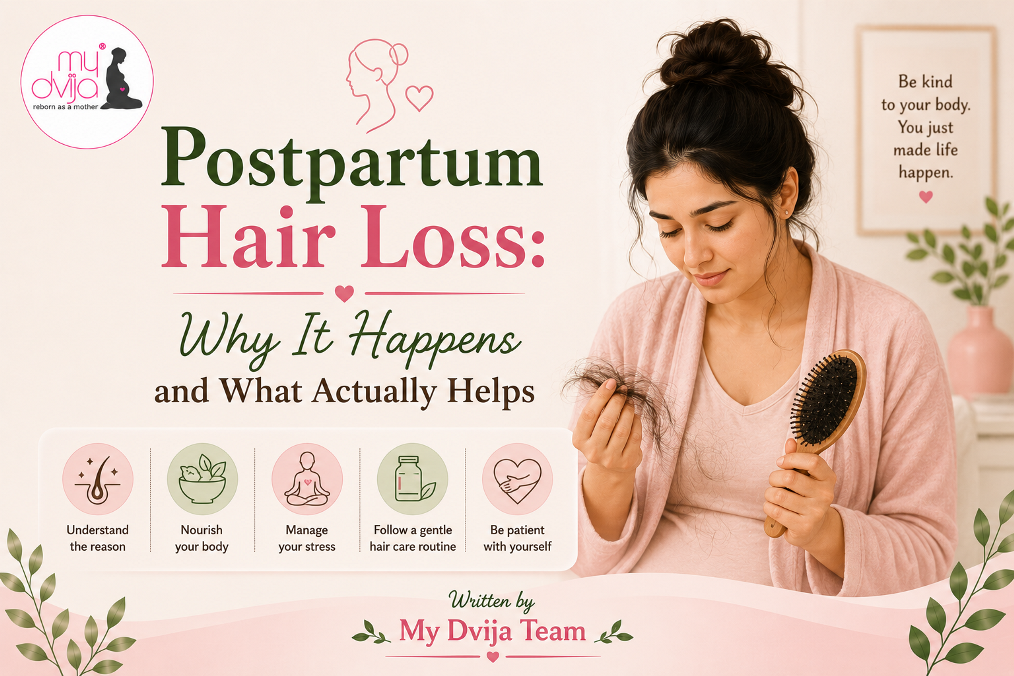
Postpartum Hair Loss: Why It Happens and What Actually Helps

Postpartum Hair Loss: Why It Happens and What Actually Helps
I found a fistful of my own hair in the shower drain when my son was four months old. I actually sat down on the bathroom floor.
It wasn’t a few strands. It was handfuls, every single day, for weeks. I’d had thick, glossy pregnancy hair that everyone kept complimenting, and now it felt like it was leaving all at once, right when I had the least capacity to deal with one more thing changing about my body.
This is postpartum hair loss. It’s far more common than anyone tells you before it happens, and there’s a clear, predictable reason behind it. Knowing that reason won’t grow your hair back faster, but it does make the panic a lot smaller.
Why This Happens – The Hormone Behind It:
Pregnancy hormones and postpartum hormones do very different things to your hair, and the shift between them is what causes this.
- High oestrogen during pregnancy extends your hair’s growth phase, so fewer strands shed than usual.
- That’s why so many women describe their pregnancy hair as the thickest it’s ever been.
- After delivery, oestrogen drops sharply. All the hair that was “paused” in growth phase suddenly shifts into shedding phase, together.
- This condition has a real medical name postpartum telogen effluvium and it affects a large share of new mothers, not just you.
WATCH: Shrreya Shah on Postpartum Hair Loss, Explained Simply
The Timeline – What to Expect and When: –
This follows a fairly predictable pattern for most women.
- 0–3 months postpartum: hair usually still looks normal, sometimes even thick.
- 3–4 months: shedding typically begins, often noticed first in the shower or on the pillow.
- 4–6 months: this is usually peak shedding the most alarming stretch, and also the most temporary.
- 6–12 months: shedding gradually slows down for most women.
- 12–15 months: hair density and growth pattern typically return to normal.
Knowing you’re “on schedule” even during the worst week genuinely helps. This is temporary, not permanent hair loss.
What Actually Helps: –
- Be gentle with wet hair – it’s at its weakest right after a wash. Detangle with a wide-tooth comb, starting from the ends.
- Avoid tight hairstyles for a few months – tight buns and ponytails add tension to hair that’s already shedding.
- Keep up your iron and protein intake – postpartum iron deficiency is common and can make shedding worse than the hormonal shift alone.
- Scalp massage with a nourishing oil improves circulation and can make the regrowth phase feel more comfortable, even if it doesn’t stop the shedding itself.
- A simpler haircut can genuinely help the shedding look and feel less dramatic while it runs its course.
Where a Little Extra Support Helps: –
For scalp nourishment during this phase, Dvija Mothers Hair Fall Oil is formulated specifically for pregnancy and postpartum hair thinning, meant to strengthen from the roots rather than mask the shedding.
Ayurvedic Dvija Kesh Powder is another option some mothers use during this window, applied as a traditional scalp treatment.
If you’re breastfeeding, Dvija Breastmilk Booster also supports hormonal balance and includes ingredients aimed at reducing postpartum hair fall as a secondary benefit, alongside its main purpose.
None of these will stop shedding that’s driven by hormones on their own. What they can do is support the scalp and hair strength through the phase, so regrowth has the best possible foundation.
When to See a Doctor Instead of Waiting It Out: –
Most postpartum hair loss resolves completely on its own. A few signs are worth checking with a doctor instead.
- Shedding that hasn’t slowed down by 15–18 months postpartum.
- Visible bald patches, rather than overall thinning.
- Hair loss paired with fatigue, weight changes, or feeling unusually cold these can point to a thyroid issue, which is common postpartum and very treatable.
- A family history of hair loss unrelated to pregnancy, which may need a different approach entirely.
Quick Reference: –
- Cause: hormone drop after delivery, hair shifting from growth to shedding phase all at once.
- Peak shedding: 4–6 months postpartum.
- Resolves by: 12–15 months for most women.
- See a doctor if: shedding continues past 18 months, or there are bald patches or thyroid symptoms.
Support Through the Whole Postpartum Stretch: –
The Care Club for Mom & Baby covers postpartum nutrition and recovery more broadly — hair loss is rarely the only thing changing in this window, and it helps to have ongoing support rather than tackling each change alone.
If your hair loss feels unusual, or you want a nutrition plan built around this specific phase, a 30-minute consultation with Shrreya Shah can help you figure out what’s actually going on.
Also Worth Reading: –
- Postpartum Nutrition Guide — What Your Body Actually Needs After Delivery
- Postpartum Depression — Signs Indian Families Mistake for “Just Tiredness”
- Why We Forget to Love Ourselves — And How to Start Again
My hair grew back. Not the exact same texture, and not on the exact 12-month mark some article promised me, but it grew back.
The drain full of hair felt like something breaking. It was actually just something resetting. Give it the months it needs.