
Blog
Postpartum Nutrition Guide: Essential Nutrients Every Mother Needs After Delivery

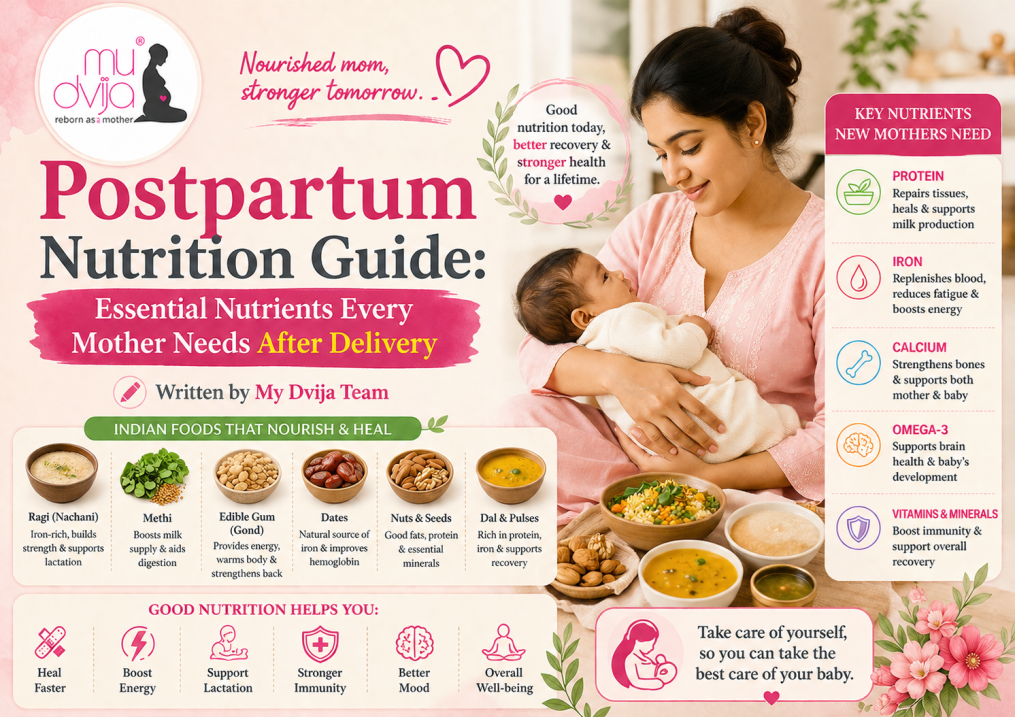
Postpartum Nutrition Guide: Essential Nutrients Every Mother Needs After Delivery
After my C-section, the hospital sent me home with a discharge sheet that listed what to eat in two bullet points.
“Light, easily digestible food. No spicy or oily items.”
That was it. No mention of how much protein a healing surgical incision requires. No mention of the iron I’d lost in the operating theatre. No guidance on calcium for a body producing milk eight times a day, or vitamin D for a woman who hadn’t been in sunlight for weeks, or the omega-3 fatty acids that would go straight into my baby’s developing brain through my milk.
The postpartum period is the most nutritionally demanding phase of a woman’s life — more demanding, calorie for calorie, than pregnancy itself. A breastfeeding mother needs approximately 500 additional calories per day above her non-pregnant baseline. And yet the nutritional guidance most Indian women receive after delivery fits on half a page.
This is that gap, filled properly.
Why Postpartum Nutrition Is More Critical Than Most Women Realise: –
The body after delivery is doing several things simultaneously — all of which require specific nutrients:
- Healing tissue damage from delivery — whether vaginal tears, episiotomy stitches, or a surgical C-section incision, the body is in active wound repair mode
- Rebuilding blood volume — delivery involves significant blood loss, and the haemoglobin and iron lost must be replenished from the diet
- Producing breast milk — up to 700–900 ml per day, drawing calcium, protein, fat, and vitamins directly from the mother’s body
- Supporting hormonal recalibration — oestrogen and progesterone are at their lowest since before puberty; the body needs nutritional support to rebuild hormonal function
- Fuelling the immune system — the postpartum body is vulnerable to infection, and immune function depends directly on micronutrient status
- Supporting mental health — postpartum mood is influenced by neurotransmitter production, which depends on amino acids, omega-3 fatty acids, iron, and B vitamins
All of this happening simultaneously, on broken sleep, in a body that is exhausted. Nutrition is not optional during this phase. It is the infrastructure that makes recovery possible.
Nutrient 1 — Iron: The Most Urgently Needed After Delivery: –
Blood loss during delivery — typically 500 ml in a vaginal birth, 750–1000 ml in a C-section — depletes iron stores significantly. Research published in obstetrics journals confirms that iron deficiency remains the most common postpartum nutritional deficiency, affecting the majority of Indian mothers who were already iron-depleted going into delivery.
Iron deficiency after delivery causes:
- Severe fatigue — the heaviness that doesn’t lift regardless of how much you sleep
- Brain fog and difficulty concentrating — low iron reduces dopamine and serotonin production
- Hair fall at 3–4 months — the most visible sign, and the one most women notice first
- Reduced milk quality — iron-deficient mothers produce milk with lower iron content, affecting the baby’s iron stores
- Postpartum depression risk — iron deficiency is an independent risk factor for postpartum mood disorders
Daily iron requirement postpartum: 9 mg for non-breastfeeding, higher for breastfeeding mothers. Most Indian women need significantly more to replenish depleted stores.
Best Indian food sources of iron post-delivery:
- Sprouted ragi (nachani): one of the highest iron-containing grains in the Indian diet, and sprouting doubles the bioavailable iron by reducing phytic acid. MyDvija’s Nachani Satva (Sprouted Ragi) is pre-sprouted and ground — cook in 5 minutes, add ghee and jaggery, done. A daily bowl from week one postpartum
- Methi seeds and methi leaves: high in iron, also support lactation and digestion — a powerful combination for postpartum recovery
- Halim seeds (garden cress / aliv): exceptionally iron and calcium rich, traditionally prescribed in Maharashtra and Gujarat specifically for postpartum iron recovery. Soak overnight and add to warm milk
- Moringa (drumstick leaves / sahjan): extraordinary iron concentration — MyDvija’s Moringa Powder, 1 teaspoon daily in dal or warm water, provides iron alongside calcium, magnesium, and vitamin C
- Jaggery: replacing refined sugar entirely with MyDvija’s Natural Jaggery Powder adds iron across every meal and snack through the day
- Dates: traditional Ayurvedic iron-rebuilding food. Dvija Dates Syrup — 1 teaspoon in warm milk daily — provides iron and natural B vitamins in an easily absorbed form
- Dal (all types), rajma, chana: the backbone of the Indian vegetarian iron intake. With a squeeze of lemon (vitamin C) at every meal to improve absorption
Always pair iron-rich foods with vitamin C — lemon juice, amla, guava, raw tomato — to convert non-haem iron to its more absorbable form. Separate tea and coffee by at least 60 minutes from iron-rich meals. These two habits together can double the iron actually absorbed from the same meal.
Nutrient 2 — Calcium: For Milk Production and Bone Protection: –
Breast milk contains approximately 250–300 mg of calcium per litre. A mother producing 700–900 ml of milk daily is delivering 175–270 mg of calcium to her baby every day — calcium that comes directly from her body if her dietary intake is inadequate.
If calcium intake is insufficient, the body takes calcium from the mother’s bones to maintain milk composition. This is called postpartum bone resorption, and it is a measurable, documented process — research confirms that lactating women lose 3–5% of bone mass during the breastfeeding period. In a country where Indian women already have lower baseline bone density than Western women, this matters significantly.
Daily calcium requirement postpartum: 1000–1200 mg. Most Indian women consume 400–600 mg. The gap is real.
Best Indian calcium sources postpartum:
- Ragi (finger millet): highest calcium content of any grain — higher than milk on a per-gram basis. A daily bowl of sprouted ragi porridge is one of the most powerful calcium interventions available in the Indian kitchen
- Sesame seeds (til): particularly black sesame — exceptionally calcium-rich. A tablespoon of til in chutneys, laddoos, or on food daily
- Halim seeds: simultaneously high in both calcium and iron — the dual-deficiency solution
- Shatavari: provides calcium alongside its hormonal and lactation-supporting properties — Dvija Natural Shatavari daily in warm milk is both a calcium source and a hormonal recovery support
- Dairy — milk, paneer, dahi: calcium-rich and culturally central. Homemade dahi provides calcium alongside probiotic bacteria that support postpartum gut health
- Moringa: significant calcium alongside iron — another reason Moringa Powder is the most efficient single-ingredient postpartum nutritional addition
- Almonds: 5–6-soaked almonds daily — calcium, healthy fat, and vitamin E for skin healing
Nutrient 3 — Protein: The Foundation of Tissue Repair: –
Protein provides the amino acids required for every aspect of postpartum recovery: healing the uterus back to its pre-pregnancy size, repairing perineal tears or surgical incisions, rebuilding muscle tone, and maintaining breast milk protein content for the baby.
Studies in maternal nutrition journals confirm increased protein needs during postpartum, especially for breastfeeding mothers. The requirement is approximately 1.2–1.5g per kilogram of body weight daily — for a 55 kg woman, that’s 66–82g. The average Indian woman consumes 30–40g. The gap is significant and consistently affects recovery speed, energy, and milk quality.
Protein at every main meal — not once a day — is the goal. Practically:
- Dal at every main meal: moong, masoor, urad, chana — each cup of cooked dal provides 15–18g of protein
- Eggs: 6g of complete protein per egg, rapidly absorbed, easy to cook in early postpartum exhaustion
- Paneer: 18g of protein per 100g, also calcium-rich, versatile in every Indian cooking style
- Dahi: protein, calcium, and probiotic bacteria together — a complete postpartum food
- Sprouted legumes: sprouting increases protein bioavailability by reducing antinutrients
- Nuts and seeds: almonds, walnuts, pumpkin seeds, sesame — protein alongside healthy fat
The MyDvija Post Delivery Low Fat Mixture is a blend of 20+ traditional postpartum ingredients — including ragi, halim seeds, dry coconut, jaggery, and various seeds — specifically formulated to provide protein, iron, and calcium in the proportions needed in the weeks after delivery. Safe from one week postpartum, appropriate throughout breastfeeding. It addresses the nutritional gap that standard postpartum dal and khichdi alone doesn’t cover.
Nutrient 4 — Omega-3 Fatty Acids: For Brain, Mood, and Milk Quality: –
DHA (docosahexaenoic acid) — the omega-3 fatty acid found in breast milk — is essential for the baby’s brain and eye development in the first year of life. The DHA in breast milk comes directly from the mother’s diet and body stores. A mother deficient in omega-3s produces milk with lower DHA content, directly affecting her baby’s neurodevelopment.
Omega-3 fatty acids also significantly affect the mother’s mental health. Low DHA is associated with higher rates of postpartum depression — the brain’s serotonin and dopamine systems depend on adequate omega-3 fatty acids to function properly. Research consistently shows that postpartum depression rates are higher in populations with low fish or omega-3 intake.
Indian omega-3 food sources postpartum:
- Flaxseeds (alsi): the most practical plant-based omega-3 source. MyDvija’s Flax Seeds Powder — one tablespoon daily in warm water, dahi, or dal — provides ALA omega-3s that convert partially to DHA, alongside soluble fibre that supports postpartum constipation and gut health
- Walnuts: 4–5 walnuts daily provide ALA omega-3s, protein, and vitamin E
- Chia seeds: mix into water, dahi, or smoothies — omega-3s, calcium, and fibre together
- Fatty fish (for non-vegetarians): sardines, mackerel, and rohu — the most direct DHA sources. 2–3 servings per week
- Ghee: Dvija Cow Ghee (Vedic Style) provides fat-soluble vitamins A, D, E, K2 and butyrate for gut lining health — the healthy fat foundation that underpins every aspect of postpartum recovery. A teaspoon in every main meal is the traditional Indian postpartum prescription, and it has genuine physiological rationale
Nutrient 5 — Vitamin D: The Deficiency Nobody Tests For: –
Vitamin D deficiency affects 70–90% of urban Indian women. After delivery, this deficiency is compounded: a breastfeeding mother who is vitamin D deficient produces milk with inadequate vitamin D, putting her baby at risk of rickets and impaired bone development. The baby cannot synthesise vitamin D through indirect sunlight in the newborn weeks when they’re indoors.
Vitamin D postpartum matters for:
- Calcium absorption — without adequate vitamin D, calcium eaten is poorly absorbed
- Immune function — vitamin D regulates immune responses and reduces infection risk in the vulnerable postpartum period
- Mood — vitamin D receptors are present throughout the brain; deficiency is associated with depression
- Breast milk vitamin D — directly transferred to the baby
What to do: get vitamin D levels tested at your 6-week postpartum check. Most Indian women will need supplementation — 1000–2000 IU of D3 daily is a standard recommendation, though the precise dose depends on your blood levels. 10–15 minutes of direct sunlight (not through glass) on arms and legs between 11am and 2pm, when you’re able to get outside, provides meaningful natural vitamin D synthesis.
Nutrient 6 — B Vitamins (B12, B6, Folate): For Energy, Mood, and Milk: –
The B vitamin family is critical postpartum for multiple reasons:
- Vitamin B12: essential for neurological function and red blood cell formation. Deficiency is particularly common in vegetarian and vegan Indian women. A B12-deficient breastfeeding mother produces milk with low B12, which can cause serious neurological problems in the baby. Eggs, dairy, and fortified foods are the main vegetarian B12 sources; supplementation is often needed
- Vitamin B6: involved in serotonin and dopamine synthesis — directly relevant to postpartum mood. Found in bananas, chickpeas, potatoes, and whole grains
- Folate: continues to be needed postpartum — for cell repair, red blood cell formation, and continued breast milk quality. The same foods that provided preconception folate — dal, methi, moringa, leafy greens — remain important
Many postpartum women who were on prenatal vitamins during pregnancy stop them at delivery. The postpartum period, particularly while breastfeeding, has nutrient requirements that are as high as or higher than pregnancy. Continuing a good quality prenatal or postnatal vitamin through at least the first 6 months of breastfeeding is evidence-based practice, not overcaution.
Nutrient 7 — Magnesium: The Mineral That Helps Everything Work: –
Magnesium is involved in over 300 enzymatic processes in the body — including muscle relaxation, nerve function, sleep quality, and the regulation of cortisol. Postpartum women are commonly deficient due to the demands of pregnancy and the poor dietary quality of the typical recovery period.
Low magnesium postpartum contributes to:
- Poor sleep quality — magnesium is required for GABA production, the neurotransmitter that enables sleep
- Muscle cramps — including the uterine cramps of postpartum involution, which magnesium helps regulate
- Anxiety and heightened stress response — magnesium modulates the HPA axis cortisol response
- Constipation — magnesium draws water into the bowel and is used therapeutically for postpartum constipation
Best Indian magnesium sources: dark leafy greens, pumpkin seeds, sesame, almonds, cashews, bananas, dark chocolate. MyDvija’s Moringa Powder provides significant magnesium alongside its iron, calcium, and folate content — another reason it earns its place as a daily postpartum addition
Nutrient 8 — Probiotics and Gut Health: The Foundation of Everything Else: –
The gut microbiome shifts dramatically during pregnancy and delivery — particularly with C-section delivery and antibiotic use, both of which are common in Indian hospitals. A depleted postpartum gut microbiome affects nutrient absorption (meaning nutrients eaten aren’t fully absorbed), mood (90% of serotonin is produced in the gut), immune function, and the baby’s own microbiome development through breast milk
Best probiotic sources postpartum:
- Homemade dahi: fresh, made with a live culture starter — not the commercial sweetened varieties. The most practical daily probiotic for Indian households
- Chaas (buttermilk): made from homemade dahi with water and cumin — cooling, digestive, and probiotic
- Idli and dosa: fermented batter — lactic acid bacteria with probiotic properties and reduced phytic acid for better mineral absorption
- Kanji: fermented carrot and beetroot drink — one of the most potent naturally fermented foods in Indian cuisine
Traditional Indian Postpartum Foods — The Nutritional Science Behind Why They Work: –
Indian postpartum traditions — the foods given in the first 40 days — weren’t arbitrary. Each had a nutritional rationale that modern science confirms:
- Methi laddoo: iron, calcium, and galactagogue compounds for lactation support
- Gond laddoo: edible gum that supports joint and ligament recovery alongside protein and energy
- Ajwain in warm water or food: reduces postpartum gas and digestive discomfort; MyDvija’s Herbal Ajwain Potli used on the abdomen supports uterine recovery through warm application
- Khichdi with ghee: easily digestible, complete protein from rice and dal combined, with butyrate from ghee supporting gut lining recovery
- Dry fruits — almonds, cashews, dates, raisins: energy-dense, iron-rich, protein-containing — practical nutrition when cooking capacity is limited
- Ghee in every meal: fat-soluble vitamins, butyrate for gut health, lubrication for joints and tissues in recovery
The 40-day jaapa tradition — the period of rest and focused nourishment — existed because this nutritional recovery actually requires 40 days minimum to make a meaningful difference. Rushing back to normal eating and normal activity before this window closes has real physiological consequences that show up as slow healing, persistent fatigue, and hair fall at 3–4 months.
The MyDvija Postpartum Nutrition Range: –
Everything above — the iron, calcium, protein, omega-3, magnesium, and gut health needs — is addressed by the MyDvija postpartum product range, formulated by a team of mothers specifically for the Indian postpartum context:
- Post Delivery Low Fat Mixture — 20+ traditional postpartum ingredients in one blend: ragi, halim, dry coconut, jaggery, sesame, and more. From one week postpartum, throughout breastfeeding
- Nachani Satva (Sprouted Ragi) — daily iron and calcium from sprouted finger millet. Cooks in 5 minutes
- Dvija Natural Shatavari — hormonal recovery, calcium, lactation support, adaptogenic cortisol management
- Dvija Breastmilk Booster — methi, halim, kalonji, dry coconut — galactagogue blend for supply alongside nutrition
- Moringa Powder — iron, calcium, magnesium, folate, vitamin C in one teaspoon daily
- Flax Seeds Powder — omega-3s and gut-supporting fibre
- Dvija Cow Ghee (Vedic Style) — fat-soluble vitamins, butyrate, healthy fat for every meal
- Natural Jaggery Powder — iron-containing sugar replacement for every cup of chai and every recipe
- Dates Syrup — iron and B vitamins in warm milk daily
A Simple Postpartum Nutrition Day — What It Actually Looks Like: –
Week 1–2 (recovery focus, gentle on digestion):
- Morning: warm water with lemon. Shatavari in warm milk. Ragi porridge with ghee and jaggery
- Mid-morning: soaked almonds (5–6), 2 dates
- Lunch: moong dal khichdi with ghee. A small portion of methi sabzi. Lemon squeezed over everything
- Evening: chaas or warm milk with dates syrup. A small handful of dry fruits
- Dinner: masoor dal with rice or jowar roti. A teaspoon of ghee. Dahi on the side
- Before bed: warm milk with ½ teaspoon shatavari and a pinch of black pepper
Week 3 onwards (gradually increasing variety and quantity):
- Add: moringa powder daily (in dal or warm water)
- Add: flax seeds powder (in dahi or warm water)
- Add: eggs, paneer at meals for protein boost
- Continue: Post Delivery Low Fat Mixture as supplementary nutrition
- Increase: fresh vegetables, fruits with vitamin C at every meal
For Personalised Postpartum Nutrition Support: –
Every woman’s postpartum recovery is different — the delivery type, blood loss, pre-existing deficiencies, breastfeeding intensity, and family food practices all affect what she specifically needs. MyDvija’s Nutrition and Diet Course for New Mothers provides a structured programme covering personalised meal planning, week-by-week dietary progression, and the specific nutritional needs of postpartum recovery and breastfeeding — in an Indian food context, with meal plans you can actually cook.
The Care Club for Mom and Baby includes dietitian-guided nutrition support alongside postpartum exercise, sleep training, and baby development guidance — the most comprehensive postpartum support programme MyDvija offers, from 3 months postpartum through your baby’s third year.
For individual questions about your specific situation — blood test results, specific deficiencies, managing nutrition with dietary restrictions — a 30-minute consultation with Shrreya Shah gives personalised answers rather than generic advice.
Shrreya Shah covers postpartum nutrition, recovery foods, and breastfeeding diet on our MyDvija YouTube channel — subscribe for free, practical guidance in Hindi.
Also Worth Reading: –
- How to Increase Breast Milk Supply — What Actually Works
- Iron Deficiency in Indian Women — Signs You’re Ignoring and How to Fix It
- The Fourth Trimester — What No One Tells You
- Why Your Body Looks Different After Birth (And Why That’s Okay)
- Essential Supplements for Mothers
- Subscribe to the MyDvija YouTube channel →
- Explore all blogs →
The discharge sheet said “light, easily digestible food.”
What it should have said: your body just performed a surgical or physiological feat that requires 3–6 months of targeted nutritional recovery. You need 1000–1200 mg of calcium daily because you’re producing milk eight times a day and your bones will pay for what your diet doesn’t provide. You need iron to replace what you lost in that operating theatre. You need protein to heal every layer of tissue that was cut or torn. You need omega-3s for your mood and your baby’s brain. You need vitamin D because you haven’t seen the sun in weeks.
You needed a complete guide. Here it is. Start today — not at the 6-week check, not when you feel better. Today. The recovery you have at 6 months is being built in the first 6 weeks.