
Blog
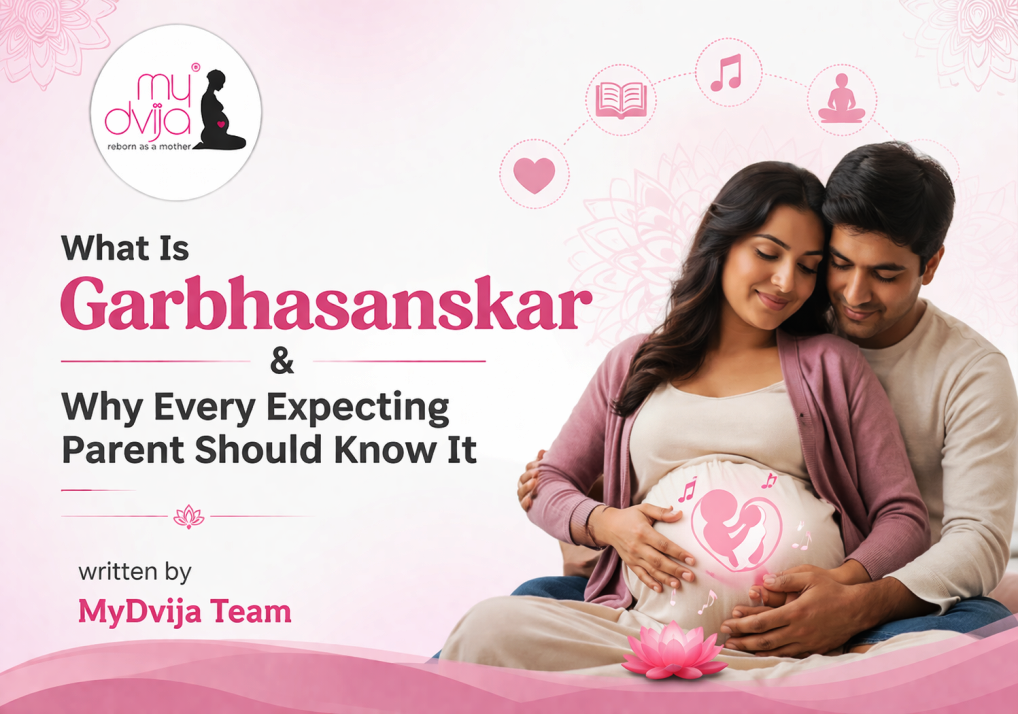
What Is Garbhasanskar & Why Every Expecting Parent Should Know It

What Is Garbhasanskar & Why Every Expecting Parent Should Know It
I remember the first time I heard the word. I was maybe 10 weeks pregnant, barely keeping food down, and my mother-in-law said — very casually, over chai — “beta, Garbhasanskar shuru karo.”
I nodded like I understood. I had no idea what she meant.
If you’re in a similar place right now — pregnant, slightly overwhelmed, and vaguely aware that Garbhasanskar is something you’re supposed to be doing — this is for you. No jargon, no fluff. Just what it actually is and why it’s worth your attention.
Okay, So What Even Is Garbhasanskar? :-
The word is Sanskrit. Garbha means womb. Sanskar means impressions — the values, experiences, and awareness that shape a person. So Garbhasanskar, put simply, is the idea that your baby’s development starts inside the womb. Not just physically. Emotionally and mentally too.
This practice has roots in ancient Indian texts — Ayurveda, the Mahabharata, even stories like Abhimanyu learning battle tactics while still in his mother’s womb. For centuries, Indian families knew intuitively that a mother’s state of mind, her diet, the sounds around her — all of it reached the baby.
Now science is catching up to what our grandmothers already knew.
Does It Actually Have Any Proof? :-
More than most people expect, honestly. Prenatal psychology has grown massively in the last two decades. A few things researchers have found:
- From around 16–18 weeks, babies respond to sound — including the mother’s voice and heartbeat
- Cortisol, the stress hormone, crosses the placenta. Chronic maternal stress has been linked to higher anxiety in infants after birth
- Babies exposed to music and reading in the womb show recognition of those same songs and stories after birth
- A calm, emotionally supported pregnancy is associated with better birth weight, calmer infants, and smoother deliveries
None of this means you need to stress about not doing enough. It means small, consistent things — singing to your baby, taking five minutes to breathe, eating well — genuinely matter more than we used to think.
Mydvija talks about this in detail on the MyDvija by Shrreya shah YouTube channel — worth watching even just to understand the science without the overwhelming medical language.
What Does It Look Like in Real Life? :-
This is the part nobody really explains clearly. Garbhasanskar isn’t a single thing you do at 8pm every night. It’s more of an approach — a way of being during pregnancy.
1. Music & Sound: –
Classical Indian music, soft mantras, even just your own humming. The goal isn’t perfection — it’s consistency. Ten minutes a day of calm sound is more useful than an hour once a week.
2. Breathing & Meditation: –
Pranayama during pregnancy has a direct, measurable effect on reducing stress hormones. Even anulom-vilom for five minutes in the morning counts. Your baby feels the shift in your nervous system when you slow down.
3. Talking to Your Baby: –
It feels a little strange at first. But from about four months, your baby can hear you. Tell them about your day. Sing that old Bollywood song you can’t get out of your head. It doesn’t need to be profound.
4. Movement & Yoga: –
Pregnancy-safe yoga and walking improve circulation, reduce back pain, and prepare your body for labour. It’s not about being fit — it’s about being strong enough for what’s coming.
5. What You Eat: –
Ayurveda has always treated pregnancy nutrition differently from regular nutrition. Warm foods, ghee, seasonal fruits, soaked nuts — these aren’t old wives’ tales. MyDvija’s Pregnancy Special Products are put together with exactly this in mind, if you want something ready-made and trusted.
When Should You Actually Start? :-
The honest answer? Whenever you’re reading this. Conception is ideal, but the third trimester is absolutely not too late.
If you’re in your first trimester, start with just the basics — breathing, eating better, reducing stress where you can. Second trimester, add music and talking to the baby. By the third trimester, you’ll find you’ve built a quiet, consistent practice without it ever feeling like a burden.
The goal isn’t to tick a checklist. It’s to be present with your pregnancy in a way most of us aren’t taught to be.
And What About the Husband? :-
This question comes up a lot. And the answer is — he matters more than he probably realises.
Babies in the womb do recognise and respond to the father’s voice. More importantly, a husband who’s actively involved dramatically reduces maternal anxiety. That has a direct impact on the baby’s development. It’s not emotional support as a nice-to-have. It’s physiologically meaningful.
MyDvija’s 100 Days Garbhasanskar Programme is built for couples for exactly this reason — 55 live sessions covering prenatal fitness, meditation, baby brain stimulation, and bonding practices, designed to be done together. Because this journey isn’t the mother’s alone to carry.
What If You’re Already Overwhelmed? :-
Then do less. Seriously.
Garbhasanskar done anxiously and perfectly is worth less than a calm five minutes a day. Pregnancy is already a lot. You don’t need another thing to feel guilty about not doing correctly.
If you want personalised support — someone to help you figure out what actually fits your schedule, your trimester, your home situation — a 30-minute consultation with Shrreya Shah is the most practical place to start.
Also Worth Reading:-
- Developmental Milestones: Should You Worry If Your Baby Is ‘Late’?
- Starting Solids: A Real Guide for Confused Indian Moms
- Postpartum Weight Loss: Real Talk for Indian Moms
- Explore all blogs →
Your baby is already responding to you. The sounds in your home, the tension in your body when you’re stressed, the warmth when you laugh. Garbhasanskar is just the practice of making that exchange more conscious.
You don’t have to be perfect at it. You just have to show up. Start here →