
Blog
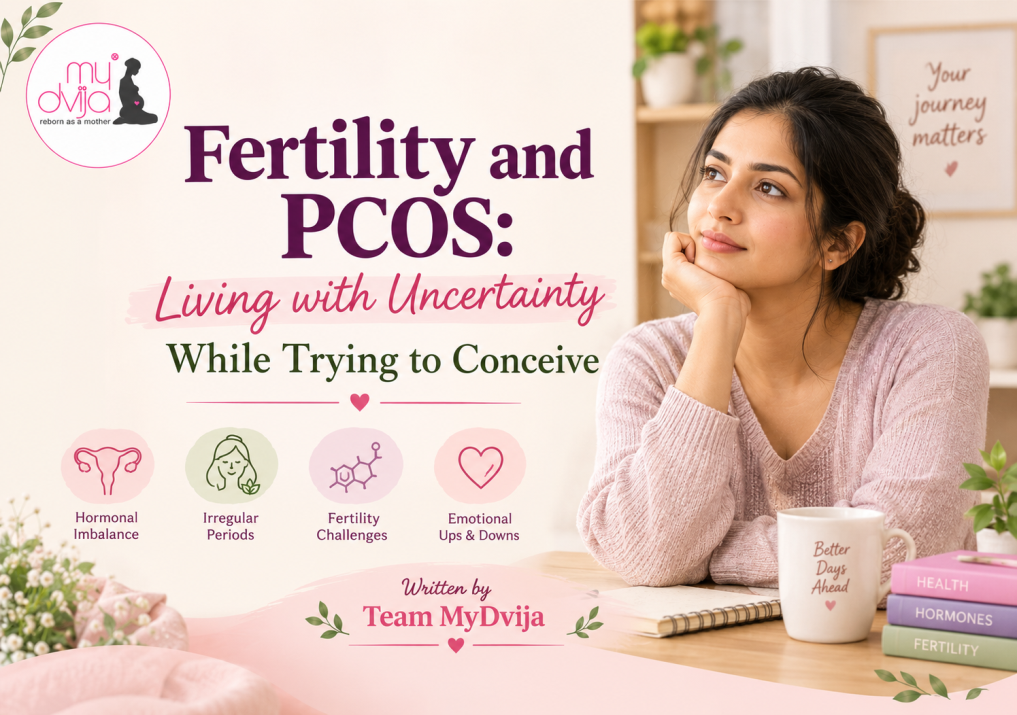
Fertility and PCOS: Living with Uncertainty While Trying to Conceive

Fertility and PCOS: Living with Uncertainty While Trying to Conceive
I used to buy pregnancy tests in bulk, the way you’d stock up on rice.
Every month brought the same routine. Track. Hope. Wait. Test. Cry a little in the bathroom, then wash my face and go make dinner like nothing had happened. My cycles didn’t run on any calendar I could plan around, which meant I never quite knew if I was waiting for good news or bad news. Just waiting.
If you’re in that stretch right now – PCOS, trying to conceive, and living inside a question mark every single month – this isn’t another list of what to eat or which supplement to take. We’ve written that one already. This is about the part in between the appointments. The part nobody prepares you for.
Why the Uncertainty Itself Is So Hard: –
PCOS doesn’t just complicate conception. It complicates predictability, and predictability is what most fertility advice quietly assumes you have.
- Irregular cycles mean you often can’t even identify a fertile window with confidence. That makes “just track your ovulation” advice land as more frustrating than helpful.
- Every month becomes a fresh round of hope. Every negative test can feel like starting from zero again, not just “not this month”.
- PCOS is a common, treatable cause of fertility difficulty, not a guarantee of infertility. That nuance rarely makes the uncertainty feel smaller day to day.
- The waiting itself is its own kind of exhausting, separate from any medical difficulty. It’s the not-knowing that wears a person down.
WATCH: Shrreya Shah on the Emotional Side of PCOS and Fertility
Feelings That Are Completely Normal Here: –
- Grief, every single month a period arrives – this is a real loss, even though nothing visible happened.
- Resentment toward your own body, for not doing something that feels like it should be simple.
- Isolation, especially when friends get pregnant easily, or when someone asks “when are you having kids” without knowing what that question costs you.
- Anger at advice that assumes a regular cycle, a straightforward timeline, or a body that behaves predictably.
- Guilt for feeling anything other than hopeful, as if hope is the only acceptable emotion to have here.
None of these feelings mean you’re handling this badly. They mean you’re a person going through something genuinely hard, for longer than anyone should have to.
What Actually Helps with the Emotional Weight: –
- Separate the months from each other. A hard month doesn’t predict the next one, even though it feels like it should.
- Find one person who knows the full timeline, not just the highlight version. Carrying this alone makes every part heavier.
- Give yourself permission to step back from tracking for a cycle or two, if it’s become a source of dread rather than just information.
- Prepare one honest, short response for “when are you having kids.” You don’t owe anyone your medical history to end an uncomfortable conversation.
- Notice if the waiting is affecting your sleep, appetite, or ability to feel okay most days. That’s worth real support, not just patience.
When to Get Support Beyond the Waiting: –
The stress of trying to conceive is real on its own. But if it’s tipped into something heavier persistent low mood, loss of interest in things you used to enjoy, or feeling this way most days rather than just around your period that’s worth looking at with a professional, separate from the fertility journey itself. We’ve written more about that distinction in.
Am I a Good Parent? Dealing With Mom Guilt and Why We Forget to Love Ourselves — And How to Start Again, both of which touch on carrying more than any one person should carry alone.
Quick Reference: –
- PCOS and fertility: a common, treatable cause of difficulty, not a guarantee of infertility.
- The hardest part: often the uncertainty itself, not just the medical picture.
- What helps: separating each month, honest conversation, and knowing when to seek support beyond patience.
You Don’t Have to Hold This Alone: –
MyDvija’s Family Care programme includes one-on-one sessions covering mental wellness alongside diet and hormonal conditions like PCOS — because the emotional weight of this journey deserves real support, not just a meal plan.
If you want a personalised plan for the medical side, our Getting Pregnant With PCOS — Fix This First, Then Try post covers exactly that. A 30-minute consultation with Shrreya Shah can bring both sides together.
Also Worth Reading: –
- Getting Pregnant With PCOS — Fix This First, Then Try
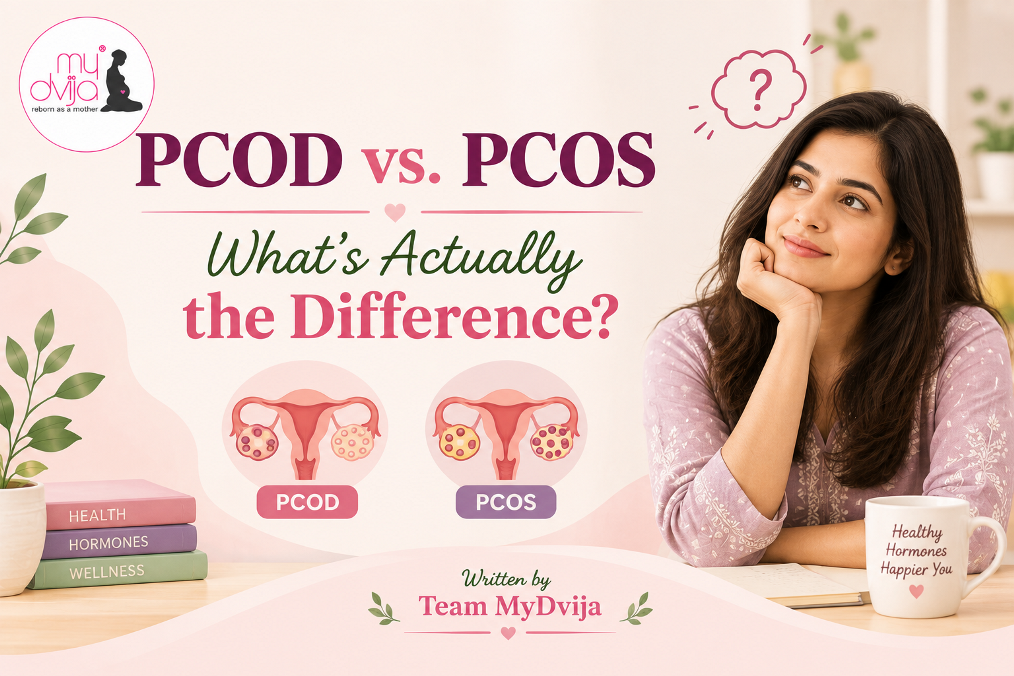
- PCOD vs. PCOS — What’s Actually the Difference
- 90-Day Preconception Plan — Prepare for a Healthy Pregnancy
I still remember exactly which brand of test I was using the month it finally worked. Not because the brand mattered. Because I’d stopped believing that month would be different, and it was anyway.
I can’t promise you the same ending on the same timeline. I can tell you the waiting doesn’t mean you’re doing anything wrong.