
Blog
PCOD vs PCOS: What’s Actually the Difference

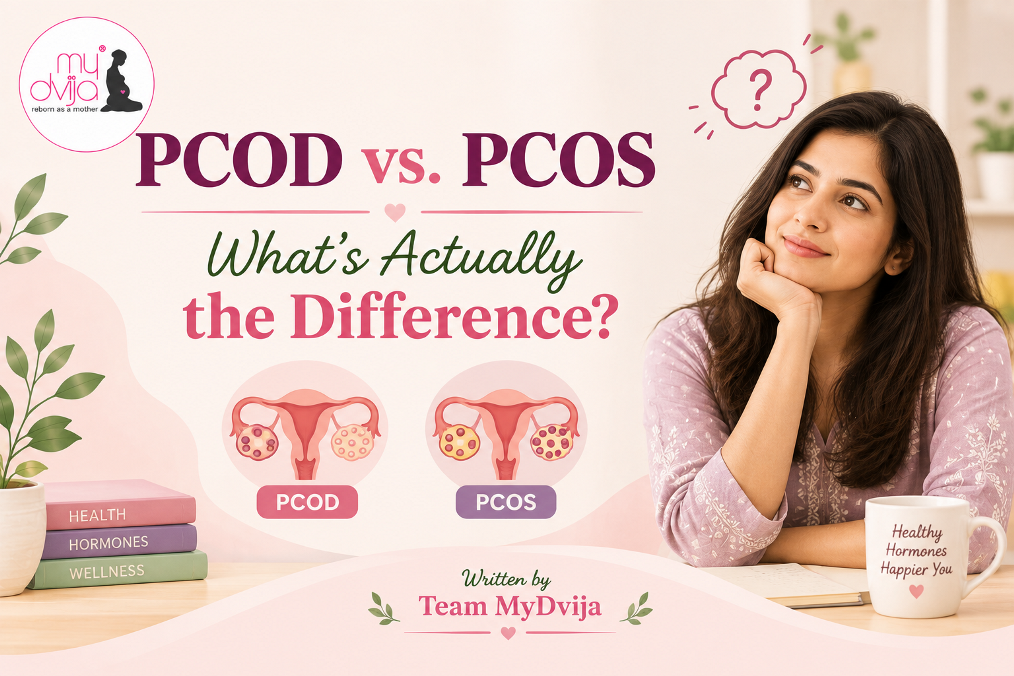
PCOD vs. PCOS – What’s Actually the Difference
My cousin was told she has PCOD. Her friend was told she has PCOS. For two years, they both assumed it was the same thing with two different spellings.
It isn’t. One doctor used one term, another doctor used the other, and neither of them sat down to explain the actual difference. This mix-up is incredibly common. The two terms get used interchangeably by patients, and sometimes even casually by doctors, even though they describe two related but distinct conditions.
If you’ve been told you have one or the other and were never quite sure what it actually meant, here’s the plain-language version.
The Short Answer: –
- PCOD (Polycystic Ovarian Disease) is a common hormonal condition where the ovaries release immature or partially mature eggs, which can develop into cysts. It’s largely manageable through diet and lifestyle changes.
- PCOS (Polycystic Ovary Syndrome) is a more complex metabolic and endocrine disorder, involving higher androgen levels and often linked to insulin resistance. It usually needs a combination of lifestyle changes and medical management.
Both affect the ovaries and cause hormonal disturbances. That overlap is exactly why the two get confused so often.
WATCH: Shrreya Shah Explains PCOD vs PCOS Simply
How Common Each One Is: –
PCOD is considerably more common than PCOS. Roughly one in five menstruating women globally deals with PCOD at some point. PCOS affects a smaller share, though it’s become far more talked about in recent years as awareness has grown.
Where They Actually Differ: –
- Root cause: PCOD is largely driven by lifestyle factors and hormonal imbalance. PCOS is a metabolic-endocrine disorder, often with a stronger genetic component.
- Severity: PCOD is not classified as a disease in the same way PCOS is. It’s considered more manageable and often improves significantly with diet, exercise, and weight management.
- Fertility impact: PCOD may or may not affect ovulation. PCOS more frequently causes anovulation (no egg release), making it a more common contributor to fertility difficulty.
- Long-term health risk: PCOS carries a higher associated risk of insulin resistance, type 2 diabetes, and cardiovascular issues if left unmanaged. PCOD’s long-term risks are generally lower, though not absent.
- Treatment approach: PCOD often responds well to lifestyle changes alone. PCOS frequently needs a combined approach – lifestyle changes plus medical treatment, since it’s a broader metabolic condition.
Symptoms That Overlap – Which Is Why This Gets Confusing: –
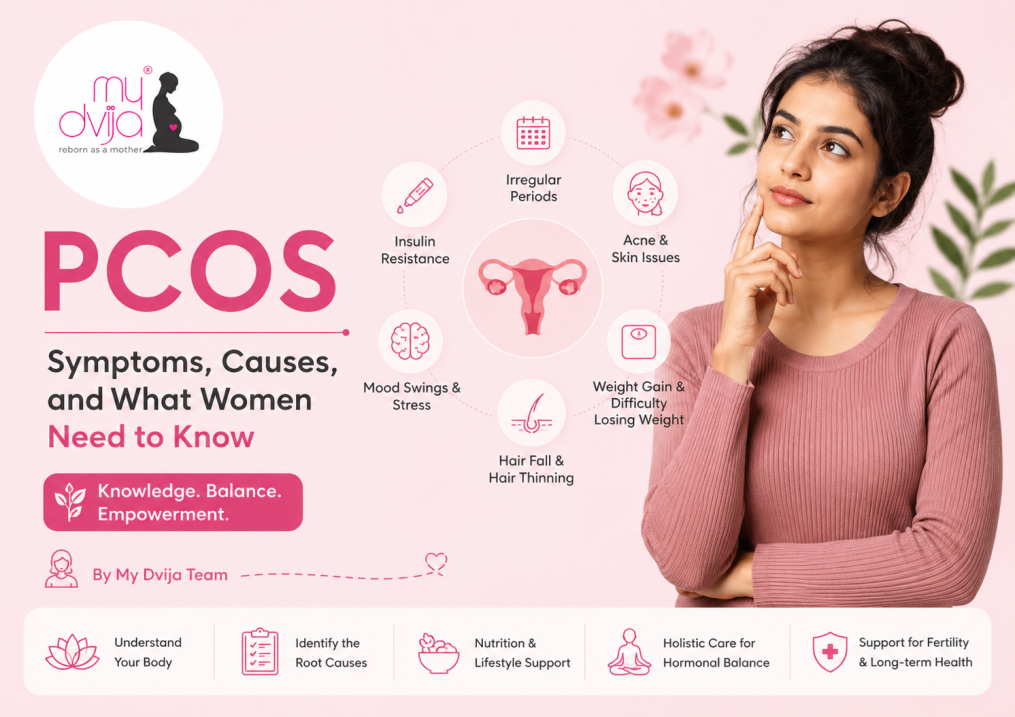
- Irregular or missed periods.
- Weight gain, particularly around the abdomen.
- Acne and oily skin.
- Excess facial or body hair growth, or hair thinning on the scalp.
- Difficulty conceiving.
The symptoms alone usually can’t tell you which one you have. That’s determined through a doctor’s evaluation – hormone levels, ultrasound findings, and how your body is actually responding. Symptoms alone don’t tell the whole story.
Why Getting the Right Label Actually Matters: –
This isn’t just semantics. PCOS carries real long-term metabolic risk that’s worth monitoring and managing proactively – blood sugar, cholesterol, blood pressure, not just periods and fertility. PCOD, while it deserves real attention too, generally doesn’t carry the same level of long-term risk. Knowing which one you’re actually managing changes what you should be watching for down the road, not just this month’s symptoms.
Quick Reference: –
- PCOD: more common, largely lifestyle-driven, generally more manageable.
- PCOS: less common, metabolic-endocrine disorder, higher long-term health risk, often needs medical management alongside lifestyle changes.
- Shared symptoms: irregular periods, weight gain, acne, excess hair growth, fertility difficulty.
- The only way to know which one: a proper evaluation with your doctor.
Whichever One You’re Managing, You Don’t Have to Do It Alone: –
MyDvija’s new Family Care programme offers one-on-one sessions covering mental wellness, personal fitness training, diet, and hormonal conditions including PCOD, PCOS, and menopause – built around your specific diagnosis, not a generic plan.
A 30-minute consultation with Shrreya Shah is a good place to start, especially if you’re still unsure which condition you’re actually dealing with.
Also Worth Reading: –
- PCOS Symptoms and Causes — What Every Woman Should Know
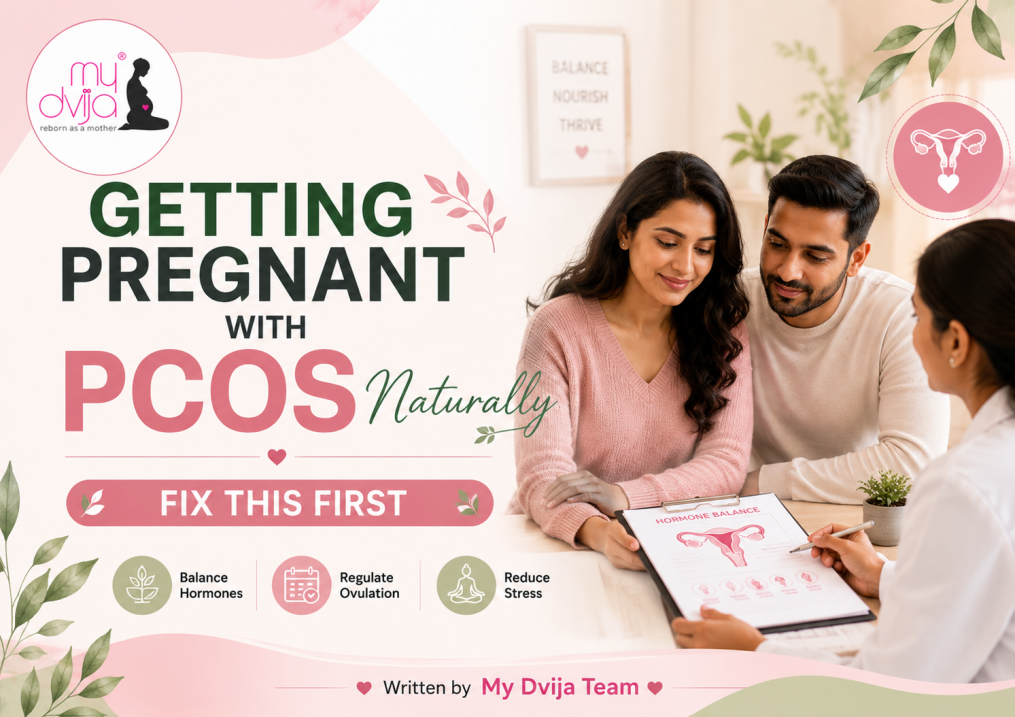
- Getting Pregnant With PCOS — What Actually Helps
- Menopause Symptoms: The Full List (Not Just Hot Flashes)
My cousin and her friend finally compared notes properly last year, after both feeling confused for way too long.
Different conditions. Different plans. Same starting point: actually, finding out which one you’re working with.