
Blog
Formula vs. Breast Milk – Making Peace with Your Choice

Formula vs. Breast Milk – Making Peace with Your Choice
A woman I’d never met before looked into my daughter’s pram, then at the bottle in my bag, and said, “oh, you’re not feeding her yourself?”
I had a whole paragraph ready to defend myself the surgery, the medication that wasn’t compatible with breastfeeding, the specialist who’d actually recommended formula for her. I didn’t owe this stranger any of it. But I said it anyway, all of it, standing in a shopping mall, because somewhere along the way I’d started needing to justify feeding my own child.
If you’ve ever found yourself explaining a feeding choice to someone who didn’t ask for a reason, this is for you. Not another comparison of what’s “better” you’ve likely already read those. This is about the part nobody prepares you for: the guilt, the judgment, and how to actually put it down.
Why This Question Gets So Loaded in India:
Feeding a baby is one of the most publicly commented-on decisions a new mother makes here, and rarely with any context about why a choice was made.
- Breastfeeding is often treated as a moral test rather than a health decision as if formula reflects a lack of effort or love.
- Relatives, neighbours, and strangers alike feel entitled to ask and comment, in a way that wouldn’t happen with almost any other parenting decision.
- The reasons formula becomes necessary or preferred low supply, medication, adoption, surgery, mental health, simple preference are rarely visible or asked about before the judgment arrives.
- Working mothers in particular face a specific bind praised for going back to work, then quietly blamed if that same job affects their milk supply.
Both Are Feeding Your Baby. Full Stop:
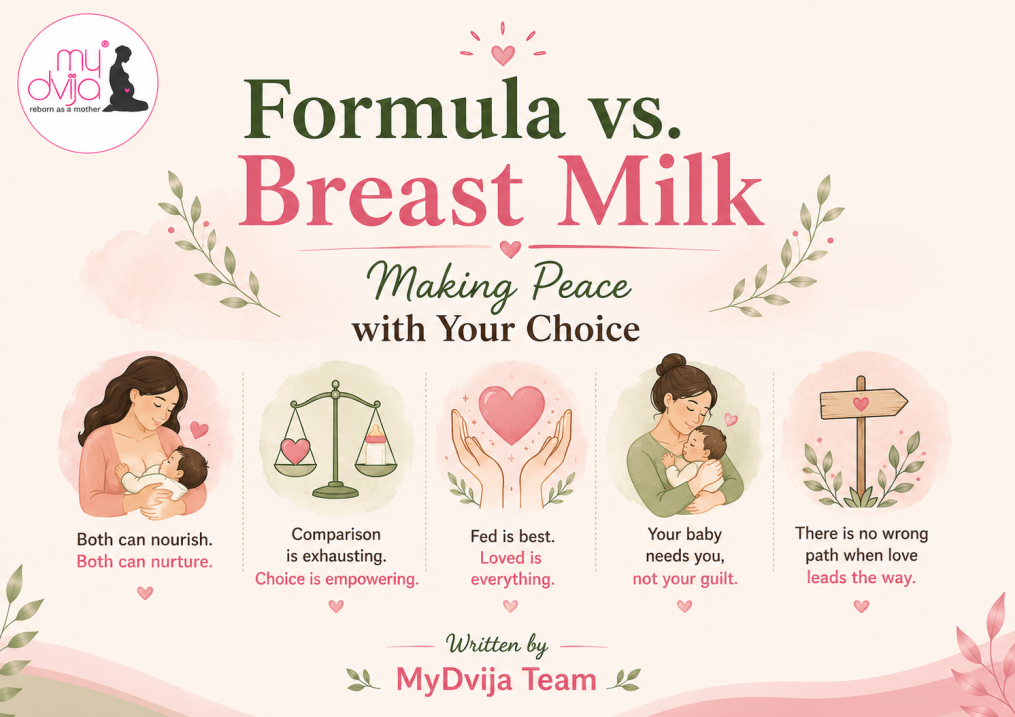
- Attachment and bonding come from responsiveness and touch during feeding, not from the contents of the bottle or breast.
- Modern formula is heavily regulated and designed to meet a baby’s core nutritional needs.
- A mother who is calmer, healthier, and less resentful because of her feeding choice is doing something genuinely good for her baby, even if it isn’t breast milk.
Watch this video to understand Shrreya Shah on Formula, Breastfeeding, and Guilt.
Reasons Formula Becomes the Right Choice – None of Them Need Defending:
- Low or insufficient milk supply that doesn’t respond to lactation support.
- Medication, illness, or surgery incompatible with breastfeeding.
- Adoption or surrogacy, where breastfeeding isn’t an option at all.
- Severe latch pain, mastitis, or trauma that makes breastfeeding unsustainable.
- Mental health – postpartum depression or anxiety made worse by the pressure to exclusively breastfeed.
- Simply not wanting to, which is also a complete and sufficient reason.
If you’re on the fence about your own supply and want to try increasing it before deciding, that’s a reasonable thing to explore too – just don’t let it become one more thing to feel guilty about while you figure it out.
Mixed Feeding Is Not “Failing at Both”:
Combination feeding some breast milk, some formula is common and completely valid, not a compromise to feel bad about. Many mothers do this to manage supply, return to work, or simply because it works better for their family. Your baby’s stomach doesn’t know or care what the last feed was; consistency in care, not in feeding method, is what actually matters day to day.
What Actually Helps with the Guilt:
- Decide once, on your own terms, and stop re-litigating it every time someone comments.
- Prepare one calm, short response for unsolicited questions “This is working well for us” closes most conversations without an argument.
- Talk to other mothers who formula-fed or combo-fed hearing it out loud from someone else usually does more than any article, including this one.
- Notice when you’re explaining yourself to someone who didn’t actually ask a real question that’s usually the moment to stop justifying and just answer plainly.
Quick Reference:
- Both are valid: a fed, cared-for baby is the goal, regardless of method.
- Mixed feeding: a legitimate choice, not a failure of either method.
- The guilt: usually comes from unsolicited outside opinion, not from your baby’s actual wellbeing.
When to Get Support, Not Just Reassurance:
If low supply is the reason and you’d genuinely like to try increasing it, that’s worth exploring with a lactation consultant or your doctor before deciding either way. And if the guilt around this decision feels heavier than guilt usually does — constant, exhausting, tied to a broader sense of failing as a mother that’s worth a closer look, not just more reassurance. We’ve written about that distinction in Am I a Good Parent? Dealing With Mom Guilt.
Support, Whichever Way You’re Feeding:
If you’d like to explore increasing your supply, Dvija Breastmilk Booster is a natural option some mothers use alongside lactation support worth trying only if it’s something you actually want to pursue, not an obligation.
For personalised guidance either way breastfeeding, formula, or a mix a 30-minute consultation with Shrreya Shah meets you where you actually are, not where anyone else thinks you should be.
Also Worth Reading:
- Will Only Formula-Fed Babies Have Strong Immunity and Intelligence?
- Am I a Good Parent? Dealing With Mom Guilt
- Postpartum Nutrition Guide — What Your Body Actually Needs After Delivery
I still think about that woman in the mall sometimes. Not with anger anymore mostly I wish I’d just said “she’s fed and happy, thanks,” and kept walking.
Your baby won’t remember what was in the bottle. She’ll remember being held while she drank it. Start there.