
Blog
Menopause Symptoms: The Full List

Menopause Symptoms: The Full List (Not Just Hot Flashes)
My aunt spent two years thinking she had arthritis before anyone mentioned menopause to her.
Her knees ached. Her shoulders felt stiff every morning. She went to an orthopaedic doctor twice. Nobody asked about her periods. It wasn’t until a friend, going through the same thing, said “wait, is this menopause?” that she even considered it.
This happens constantly, because most menopause content online talks about hot flashes first and everything else second. For a lot of Indian women, joint pain and exhaustion show up before a hot flash ever does. This is the fuller list – the one that actually matches what Indian women report experiencing.
Why This List Looks Different From What You’ve Read Elsewhere: –
Global menopause content is heavily built around Western research, where hot flashes dominate the conversation.
- In Indian studies, joint and muscular discomfort was reported by the vast majority of postmenopausal women, making it the single most common complaint ahead of hot flashes.
- Physical and mental exhaustion, depression, and irritability were also reported far more often than most global menopause content suggests.
- The average age of natural menopause in India is around 45, a few years earlier than the international average.
- None of this means hot flashes don’t matter. It means the full picture is wider, and worth knowing before symptoms get mistaken for something else entirely.
WATCH: Shrreya Shah on Menopause Symptoms Indian Women Actually Report
The Full Symptom List, by Category: –
Menopause symptoms tend to fall into four broad groups. Most women experience a mix, not just one.
- Physical: joint and muscle pain, headaches, heavy sweating, fatigue, weight gain, drier skin and hair, breast tenderness.
- Vasomotor: hot flashes, night sweats, heart palpitations, chills.
- Psychological: mood swings, irritability, anxiety, low mood or depression, brain fog, trouble concentrating, memory lapses.
- Urogenital: vaginal dryness, discomfort during sex, more frequent urinary tract infections, changes in libido.
Sleep disturbance deserves its own mention it’s extremely common, and it often makes every other symptom on this list feel worse than it would otherwise.
When Symptoms Start and How Long They Last: –
- Perimenopause the transition leading up to menopause can start years before periods stop entirely, sometimes in the late 30s or early 40s.
- Menopause itself is confirmed after 12 consecutive months without a period.
- Vasomotor symptoms like hot flashes can last several years for some women, though intensity usually decreases with time.
- Physical symptoms like joint pain and fatigue can persist well into the postmenopausal years if left unaddressed.
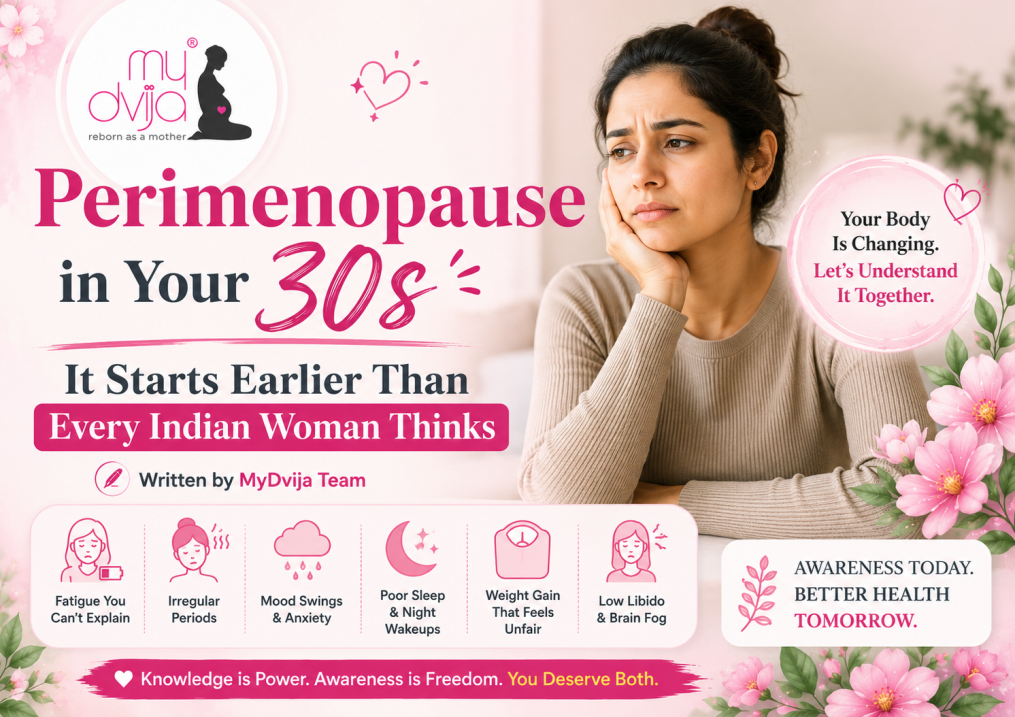
If you’re noticing symptoms earlier than expected, our post on Perimenopause in Your 30s covers that earlier window specifically.
The Symptoms Most Likely to Get Dismissed: –
Mood changes, brain fog, and irritability are frequently written off as “just stress” or “just getting older,” especially when a woman hasn’t connected them to menopause yet. These are real, hormonally driven symptoms not a personality change, and not something to push through silently.
When to See a Doctor: –
- Very heavy or prolonged bleeding, or bleeding after 12 months without a period.
- Symptoms severe enough to disrupt work, sleep, or relationships on most days.
- Joint pain, fatigue, or mood changes that get dismissed by other specialists without anyone considering menopause.
- Any new symptom that feels unusual for your body, even if it’s on this list a doctor can rule out anything unrelated.
Quick Reference: –
- Most common in India: joint and muscular pain, exhaustion, and mood changes — not just hot flashes.
- Average onset: around age 45 in India.
- Confirmed after: 12 consecutive months without a period.
- See a doctor if: bleeding is heavy or unusual, or symptoms are disrupting daily life.
You Don’t Have to Figure This Out Symptom by Symptom: –
MyDvija’s new Family Care programme was built for exactly this stretch of life one-on-one sessions covering mental wellness, personal fitness training, diet, and hormonal conditions including PCOD, PCOS, and menopause, together instead of scattered across five different specialists.
A 30-minute consultation with Shrreya Shah is a good starting point to talk through what you’re experiencing and whether Family Care’s 1:1 session is the right fit.
Also Worth Reading: –
- Perimenopause in Your 30s — It Starts Earlier Than Every Indian Woman Thinks
- Why We Forget to Love Ourselves — And How to Start Again
- Postpartum Nutrition Guide — What Your Body Actually Needs After Delivery
My aunt finally brought up menopause at her next appointment, not the orthopaedic one. Her joint pain didn’t disappear overnight, but at least it had a name that made sense.
You shouldn’t have to piece this together on your own, appointment by appointment. The full list exists so you don’t have to.