
Blog
How to Balance Hormones Naturally — A Complete Guide for Women


How to Balance Hormones Naturally — A Complete Guide for Women
I spent three years trying to fix individual symptoms without understanding they were connected.
The acne I treated with topical creams. The irregular periods I managed with the pill. The hair fall I blamed on stress and water quality. The weight around my abdomen that didn’t shift no matter what I ate. The 3pm energy crash every single day. The anxiety that had crept in so gradually I thought it was just my personality now.
It took a good gynaecologist and eventually a lot of reading to understand that these weren’t seven separate problems. They were one problem — presenting in seven different places. Hormonal imbalance doesn’t announce itself with a single symptom. It shows up in your skin, your cycle, your weight, your sleep, your mood, and your energy simultaneously. And treating each symptom separately, without understanding the underlying hormonal picture, is why so many women spend years not feeling well.
This blog is a practical guide to understanding what hormonal balance actually means — and what genuinely moves the needle.
What ‘Hormonal Balance’ Actually Means: –
Hormones are chemical messengers produced by glands throughout the body — the ovaries, adrenal glands, thyroid, pancreas, pituitary — that travel through the bloodstream and regulate virtually every function: metabolism, mood, sleep, reproduction, digestion, immune function, and more.
“Hormonal balance” doesn’t mean every hormone is at a fixed, identical level in every woman. It means the right hormones are present in the right proportions, at the right times in the cycle. A healthy 25-year-old and a healthy 45-year-old will have very different hormone profiles — both can be balanced for their stage of life.
Imbalance happens when hormones are too high, too low, or — more commonly — when they’re not in the right relationship with each other. Oestrogen and progesterone are meant to rise and fall in a coordinated rhythm through the menstrual cycle. When that rhythm is disrupted — by stress, diet, inflammation, poor sleep, or endocrine disruptors in the environment — the symptoms follow.
The key hormones most commonly implicated in the symptoms Indian women experience:
- Oestrogen: the dominant female sex hormone — drives the first half of the cycle, affects mood, skin, bone density, and cardiovascular health.
- Progesterone: produced after ovulation — balances oestrogen, supports sleep, reduces anxiety, essential for maintaining pregnancy.
- Testosterone: present in women in small amounts — affects libido, energy, and muscle mass. Elevated in PCOS.
- Cortisol: the stress hormone from the adrenal glands — when chronically elevated, disrupts virtually every other hormone.
- Insulin: produced by the pancreas — when cells stop responding to it (insulin resistance), androgens rise, ovulation disrupts, and the PCOS picture develops.
- Thyroid hormones (T3 and T4): regulate metabolism, energy, weight, mood, and body temperature — thyroid dysfunction is significantly more common in women than in men and is frequently missed.
Signs Your Hormones May Be Out of Balance: –
Many of these are things women are told are normal, or told are just stress, or told are just getting older. They aren’t always. They’re worth taking seriously:
- Irregular, very heavy, very painful, or absent periods.
- PMS that is genuinely disabling — not just mild discomfort but week-long mood changes, cramps that stop your functioning, breast tenderness.
- Persistent acne on the lower face, jawline, and chin — particularly in your late 20s and 30s when teenage acne should be behind you.
- Hair thinning at the scalp, particularly in the parting or crown.
- Unexplained weight gain, particularly around the abdomen, that doesn’t respond to diet changes.
- Fatigue that doesn’t improve with adequate sleep.
- Anxiety, low mood, or emotional flatness that feels different from situational stress.
- Sleep disturbances — difficulty falling asleep, waking between 2 and 4am, unrefreshing sleep.
- Brain fog — difficulty concentrating, forgetting words, mental slowness.
- Low libido.
- Digestive issues — bloating, constipation, alternating bowel habits — hormones regulate gut motility.
- Cold hands and feet, feeling cold when others are comfortable — potential thyroid signal.
If you’re ticking several of these boxes persistently — not occasionally but as a pattern — it’s worth getting a hormonal blood panel done: oestrogen, progesterone (on Day 21 of your cycle), testosterone, DHEA, fasting insulin, fasting glucose, TSH, Free T3, Free T4, and iron studies including ferritin.
What Actually Moves the Needle — The Evidence-Based Interventions: –
1. Fix insulin first — because it affects everything else: –
Insulin resistance is the hormonal disruptor most commonly driving symptoms in Indian women — driven by a diet high in refined carbohydrates, irregular meals, sedentary habits, and chronic sleep deprivation. Addressing it has a downstream effect on almost every other hormone.
What improves insulin sensitivity:
- Eating protein at every meal — protein blunts the glucose spike that follows carbohydrate consumption.
- Reducing refined carbohydrates — maida, white rice eaten in large quantities, packaged snacks, sugar in tea and coffee.
- Eating in a window — not necessarily strict intermittent fasting, but not eating within 2 hours of sleeping and not skipping breakfast, which destabilises the morning cortisol rhythm.
- Moving after meals — even a 10-minute walk after lunch and dinner significantly reduces post-meal insulin spikes.
- Strength training — muscle tissue is where insulin-driven glucose uptake primarily happens. Building muscle improves insulin sensitivity more effectively than cardio alone.
2. Lower cortisol — the hormone that disrupts everything else: –
Cortisol is the master disruptor. When it’s chronically elevated — from psychological stress, physical overtraining, poor sleep, or inflammatory diet — it suppresses progesterone, raises insulin, raises androgens, and disrupts thyroid conversion. Lowering cortisol is not about managing stress more cheerfully. It’s a physiological intervention.
What reliably lowers cortisol:
- Sleep — 7 to 8 hours minimum. Cortisol follows a diurnal rhythm that requires consistent sleep and wake times to regulate. Variable sleep schedules — common in mothers and shift workers — chronically dysregulate cortisol.
- Morning sunlight — 10 to 15 minutes of natural light within an hour of waking sets the cortisol awakening response and regulates the entire day’s hormonal rhythm.
- Pranayama — slow, controlled breathing activates the parasympathetic nervous system and measurably reduces cortisol within minutes. Anulom-vilom, bhramari, and box breathing are all evidence-supported. This is not soft advice. It’s physiology.
- Not overexercising — high-intensity exercise every day raises cortisol. Moderate, varied movement — walking, yoga, light strength training — is more hormonally supportive than daily intense workouts.
Get fit with MyDvja 100 Days Weightloss & Fitness Challenge With Mydvija - Reducing caffeine after noon — caffeine stimulates cortisol and adenosine blockade. Multiple coffees in the afternoon extends cortisol elevation into the evening and disrupts sleep.
3. Support progesterone — the most commonly deficient hormone in women: –
Progesterone is produced after ovulation. If ovulation doesn’t happen — which occurs in anovulatory cycles, common in PCOS and in perimenopause — progesterone is absent. Even when ovulation occurs, progesterone can be low if the luteal phase is short or if cortisol is chronically elevated (cortisol and progesterone compete for the same precursor: pregnenolone).
Low progesterone causes: PMS, anxiety, poor sleep, heavy periods, short cycles, difficulty maintaining early pregnancy.
What supports progesterone:
- Ovulation — progesterone is only produced after ovulation, so anything that supports regular ovulation (managing stress, improving insulin sensitivity, adequate body fat) directly supports progesterone.
- Zinc — a micronutrient directly involved in corpus luteum function (the structure that produces progesterone after ovulation). Found in pumpkin seeds, sesame, chickpeas, lentils.
- Vitamin C — supports progesterone production in the luteal phase. Found in amla, guava, capsicum, citrus.
- Reducing cortisol — directly reduces the steal of pregnenolone away from progesterone synthesis.
4. Support oestrogen metabolism — not just oestrogen levels: –
The problem isn’t always how much oestrogen you’re producing — it’s whether your body is processing and eliminating it efficiently. Oestrogen is metabolised in the liver and eliminated through the gut. A congested liver (from alcohol, processed food, or environmental chemicals) and poor gut health (constipation, dysbiosis) lead to oestrogen recirculating rather than being excreted. This is called oestrogen dominance — not always because oestrogen is high in absolute terms, but because relative to progesterone, it’s excessive.
- Cruciferous vegetables — broccoli, cabbage, cauliflower, kale — contain DIM (diindolylmethane), which supports healthy oestrogen metabolism in the liver.
- Fibre — supports the gut elimination of oestrogen. Constipation means oestrogen gets reabsorbed. Flaxseeds, oats, vegetables, legumes.
- Reducing alcohol — even moderate alcohol significantly impairs liver oestrogen metabolism.
- Reducing plastics in food and water storage — BPA and phthalates are xenoestrogens (environmental oestrogen mimics) that add to the total oestrogen load.
5. Support thyroid function: –
Thyroid dysfunction — particularly hypothyroidism — is significantly more common in women than men and is one of the most missed causes of the symptom cluster described above: fatigue, weight gain, hair loss, constipation, brain fog, feeling cold, low mood. Many women with subclinical hypothyroidism have TSH levels that fall within the “normal” range on standard testing but are not optimal for their symptoms.
What supports thyroid function:
- Selenium — a mineral essential for the conversion of T4 (inactive thyroid hormone) to T3 (active). Found in Brazil nuts (2 per day is sufficient), sunflower seeds, eggs.
- Iodine — required for thyroid hormone synthesis. Found in iodised salt, dairy, seaweed. Deficiency is common in Indian women who avoid salt or eat low-dairy diets.
- Avoiding raw cruciferous vegetables in very large quantities if thyroid function is already compromised — cooked is fine.
- Reducing fluoride exposure — fluoride competes with iodine in the thyroid. Filtered water is worth considering for women with thyroid conditions.
The Herbs That Actually Have Evidence: –
Shatavari (Asparagus racemosus): –
The most important herb in Ayurveda for female hormonal health. Shatavari is an adaptogen — it modulates the hormonal system rather than pushing it in one direction. Research confirms its role in supporting oestrogen modulation, LH and FSH regulation, reducing inflammation, improving insulin sensitivity, and supporting progesterone through its effects on ovulation regularity.
A 2025 placebo-controlled clinical trial demonstrated significant improvements in ovarian morphology, hormonal markers, and metabolic health in women with PCOS using a shatavari extract — one of the first high-quality trials validating what Ayurvedic practice has observed for centuries.
MyDvija’s Dvija Natural Shatavari is grown without fertilisers, naturally dried, and appropriate for women at every hormonal stage — cycling, pregnant, postpartum, and breastfeeding. ½ teaspoon in warm milk daily, with a pinch of black pepper and ghee for better absorption. Consistent use over 3–4 months shows the clearest results.
Ashwagandha (Withania somnifera): –
The most researched adaptogen for cortisol regulation. Multiple clinical trials confirm that ashwagandha supplementation significantly reduces cortisol levels, reduces anxiety, improves sleep quality, and — because of the cortisol-progesterone connection — has downstream benefits for the entire hormonal axis. It also shows evidence for thyroid support in subclinical hypothyroidism.
Important caveat: ashwagandha is not recommended during pregnancy and should be used with guidance during breastfeeding. For non-pregnant women managing stress, PCOS, or perimenopausal symptoms, it is one of the most useful supplements available.
Moringa (Moringa oleifera): –
One of the most micronutrient-dense plants available — exceptionally high in iron, calcium, magnesium, and vitamin C. Moringa’s anti-inflammatory properties and blood sugar regulatory effects make it directly relevant to the hormonal picture. Many Indian women are significantly deficient in iron and magnesium — both of which directly affect hormonal function — and moringa addresses both simultaneously.
MyDvija’s Moringa Powder can be added to smoothies, dal, warm water, or mixed into food daily. 1 teaspoon is a standard dose.
Turmeric (Curcuma longa): –
Curcumin — the active compound in turmeric — is one of the most studied anti-inflammatory compounds in existence. Since chronic inflammation drives hormonal imbalance (particularly in PCOS and endometriosis), turmeric’s anti-inflammatory effect is directly hormonally relevant. It also supports liver function, which affects oestrogen metabolism.
Bioavailability is poor without black pepper (piperine), which enhances curcumin absorption by up to 2000%. A daily golden milk — warm milk with ½ teaspoon turmeric, a pinch of black pepper, and ghee — is one of the simplest and most effective daily hormonal support habits an Indian woman can build.
The Lifestyle Foundation — In Order of Impact: –
If you’re going to prioritise, do these in this order:
- Sleep 7–8 hours consistently: no supplement compensates for chronic sleep deprivation. This is the foundation
- Eat protein at every meal: stabilises blood sugar, supports liver detoxification, provides amino acids for hormone synthesis
- Move daily — moderately: 30 minutes of walking plus 2–3 sessions of strength training weekly are the evidence-supported minimum
- Reduce refined sugar and flour: the single most impactful dietary change for insulin resistance and androgen excess
- Add shatavari daily: as a long-term tonic, not a short-term fix
- Add a daily breathing practice: 5 minutes of pranayama in the morning, consistently, over 3 months
- Get tested: none of this replaces knowing your actual hormonal picture. A blood panel tells you what you’re actually dealing with
The Things That Work Against You: –
Equally important as what to add is what to reduce. The biggest hormonal disruptors in the average Indian woman’s life:
- Chronic sleep deprivation — motherhood, work stress, scrolling late — this is the most common and most damaging.
- Refined carbohydrates eaten multiple times a day — bread, biscuits, white rice in excess, packaged snacks.
- Skipping meals — particularly breakfast, which sets the cortisol and insulin pattern for the whole day.
- Plastics in food and water — heating food in plastic containers, drinking from plastic bottles left in hot cars.
- Excess soy — phytoestrogens in soy, consumed in very large amounts, can add to oestrogen load. Normal amounts in Indian cooking are fine.
- Synthetic fragrance in personal care products — many contain phthalates, which are endocrine disruptors.
When Self-Care Isn’t Enough — Getting Proper Help: –
Lifestyle and herbal support are powerful. They are not a substitute for medical investigation when symptoms are significant, persistent, or affecting quality of life. If you’ve been implementing changes for 3–4 months and not seeing improvement, or if symptoms are severe — please see a doctor and ask for a full hormonal blood panel.
For women navigating hormonal health in the context of pregnancy planning, postpartum recovery, or breastfeeding — a consultation with Shrreya Shah covers the intersection of hormonal health, reproductive wellbeing, and natural management in a way that most standard appointments don’t have time for.
MyDvija covers women’s hormonal health, PCOS, postpartum recovery, and self-care extensively on our MyDvija YouTube channel — in Hindi, practically, for real Indian women’s lives.
Also Worth Reading: –
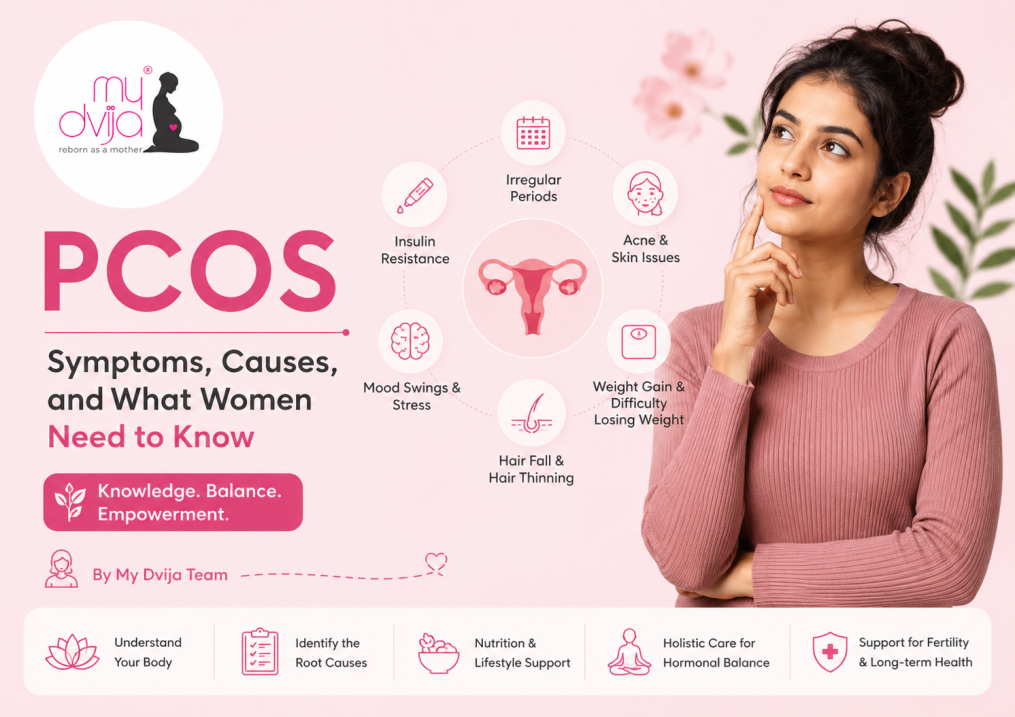
- PCOS — Symptoms, Causes and What Every Woman Needs to Know
- Getting Your Period Back After Baby — What’s Normal, What’s Not
- Why Your Body Looks Different After Birth (And Why That’s Okay)
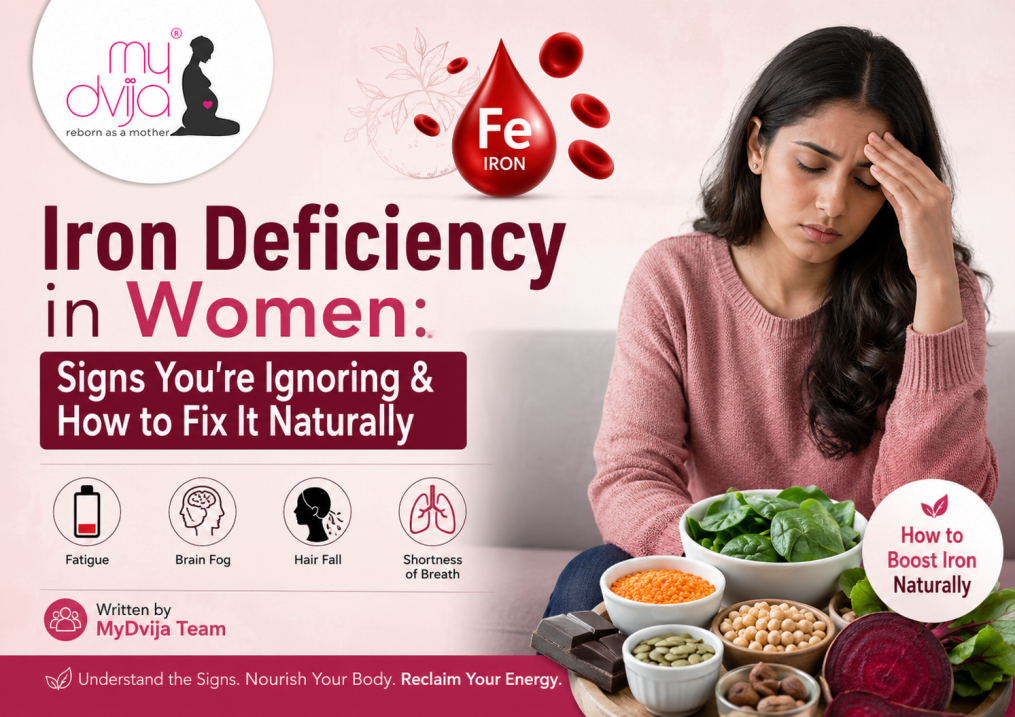
- Iron Deficiency in Indian Women — Signs You’re Ignoring
- Essential Supplements for Mothers
- Subscribe to our MyDvija YouTube channel →
- Explore all blogs →
Hormonal balance isn’t a destination you arrive at and maintain effortlessly. It’s a daily practice of the basics — sleep, food, movement, stress, and the right support.
The good news is that the basics are genuinely powerful. Most women who implement even three of the changes listed here consistently for three months’ notice a difference they can feel. Not everything, not immediately — but enough to know the direction they’re moving.
Your symptoms were trying to tell you something. Now you have a language to hear them.