
Blog
Postpartum Depression – Signs Indian Families Mistake for “Just Tiredness”

Postpartum Depression – Signs Indian Families Mistake for “Just Tiredness”
“You just need more rest.” I heard that sentence more times in my first two months postpartum than I heard my own name.
I was crying in the bathroom most mornings, not because anything specific had happened, but because I couldn’t locate the person I used to be. My mother said it was normal. My husband said I was tired. I said it too, out loud, to anyone who asked – because “I’m just tired” was so much easier to say than the truth, which was that I didn’t recognise my own thoughts anymore.
It took me six weeks to say the words “postpartum depression” out loud. If you’re reading this because something feels off and everyone around you keeps calling it tiredness, this is for you.
Why This Gets Missed So Often in Indian Households: –
Postpartum depression affects a significantly higher share of new mothers in India than the global average, yet it goes underreported constantly – largely because of guilt, shame, and a simple lack of awareness about what it actually looks like.
- Exhaustion is expected and normalised after childbirth, so real depression symptoms get folded into “new mom tiredness” by default.
- Talking about low mood after having a baby can feel like admitting ingratitude for a baby everyone worked hard to welcome.
- Joint family structures mean a mother is rarely alone with her thoughts long enough for anyone to notice a pattern, only isolated moments.
- Postpartum depression is a medical condition with a real biological basis – a sharp hormonal shift after delivery, not a reflection of how much a mother loves her baby.
Baby Blues vs. Postpartum Depression – The Line That Matters: –
These get treated as the same thing constantly. They aren’t, and the difference is mostly about time and severity.
- Baby blues: weepiness, mood swings, and overwhelm that show up in the first week and resolve on their own within about two weeks.
- Postpartum depression: symptoms that persist beyond two weeks, get worse rather than better, and start interfering with daily functioning – sleep, eating, caring for the baby, or basic decision-making.
If it’s been more than two weeks and it isn’t lifting, that’s the signal to stop calling it tiredness. watch this Baby Blues or Something More?
Signs Families Usually Mistake for “Just Tiredness”: –
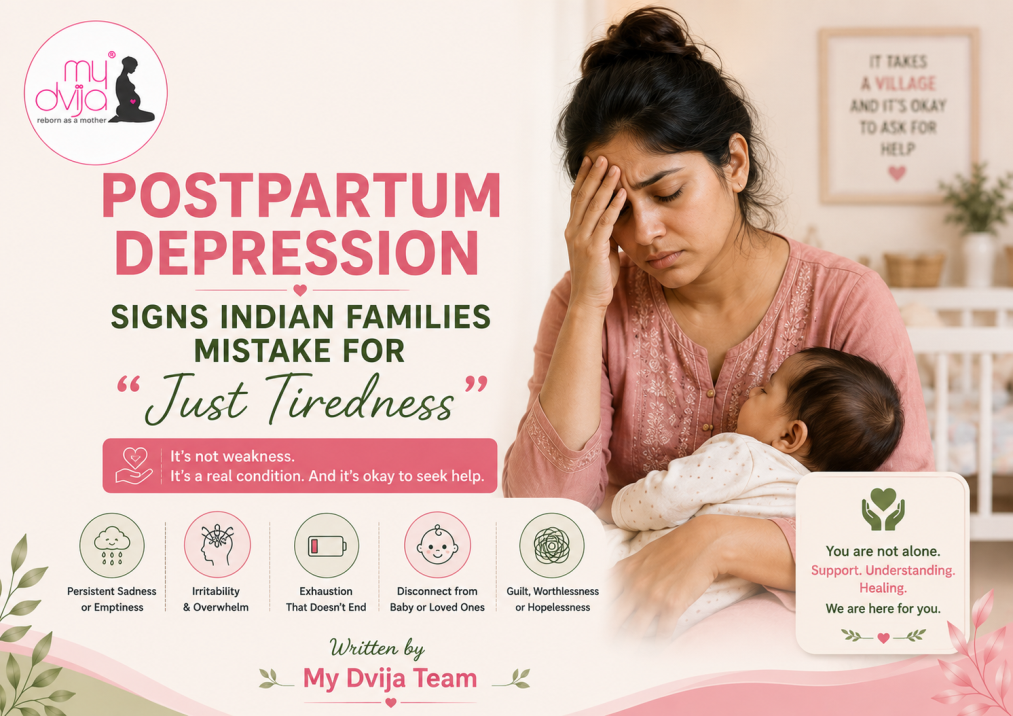
- Persistent sadness or a flat, numb feeling most of the day, not tied to any single bad night.
- Loss of interest in things that used to feel normal food, conversation, even the baby.
- Constant worry that something is wrong with the baby, far beyond what the situation calls for.
- Feeling like a failure as a mother, or a persistent sense of not being “good enough,” regardless of reassurance.
- Difficulty concentrating or making even small decisions.
- Withdrawing from family, avoiding visitors, or wanting to be left completely alone.
- Sleep problems that don’t match the baby’s schedule unable to sleep even when the baby is sleeping, or sleeping far more than usual.
None of these looks dramatic from the outside. That’s exactly why they get waved off as tiredness they don’t look like a crisis; they look like a hard week. The difference is that a hard week ends.
It Isn’t Always “Just” Depression: –
Postpartum anxiety racing thoughts, constant dread, physical restlessness is just as common as depression and often overlaps with it. Frightening, intrusive thoughts about the baby’s safety are also a recognised symptom of postpartum anxiety and postpartum OCD, and having them doesn’t mean a mother would ever act on them or that she’s unfit to parent. In rare cases, symptoms escalate to postpartum psychosis confusion, hallucinations, or disorganised thinking which is a medical emergency requiring immediate care, not a wait-and-see situation.
What Actually Helps Beyond “Get More Rest”: –
- Therapy: Cognitive Behavioural Therapy (CBT) and Interpersonal Therapy (IPT) both have strong evidence behind them for postpartum depression specifically.
- Medication: several antidepressants are considered safe during breastfeeding; this is a conversation for a doctor, not a reason to avoid treatment out of fear of “passing something” to the baby.
- Practical help, not just emotional support: someone taking a few hours of childcare so a mother can sleep uninterrupted often does more than well-meaning advice.
- Naming it out loud, to even one person a partner, a doctor, a friend who’s been through it tends to be the actual turning point, more than any single treatment.
If You’re the Family, Not the Mother: –
If someone around you seems “off” for more than two weeks, the most useful thing you can do isn’t advice it’s specific, practical help. Take a night shift. Sit with the baby so she can shower alone. Ask directly, “How are you, really?” and let the answer be uncomfortable if it needs to be. Avoid “be grateful, other mothers have it harder” comparison rarely helps and often makes a mother feel guiltier about needing help in the first place.
Postpartum Depression Quick Reference: –
- Baby blues: first 1–2 weeks, resolves on its own.
- PPD: beyond 2 weeks, worsening, interferes with daily life.
- Postpartum anxiety: racing thoughts, dread, intrusive worries about the baby.
- Postpartum psychosis: confusion or hallucinations seek emergency care immediately.
Ongoing Support Through MyDvija:
The Care Club for Mom & Baby provides continuous postpartum support — nutrition, recovery, and check-ins — from the early weeks through your baby’s third year, so you’re not navigating this stretch without anyone checking in.
If you want to talk through what you’re feeling with someone directly, a 30-minute consultation with Shrreya Shah is a good, low-pressure first step — and she can help point you toward a mental health professional if that’s the right next step.
Also Worth Reading: –
- Postpartum Nutrition Guide — What Your Body Actually Needs After Delivery
- Sleep Training Without Crying It Out: Gentle Methods That Actually Work
- Supplements for Newborn Babies — What Every Indian Parent Needs to Know
I said “just tired” for six weeks because it was the smaller sentence. The truth needed more room than that, and once I gave it the room, things actually started to change.
You don’t owe anyone the smaller sentence. Say the real one, to someone, today.